Hoteliers, resort developers, and eco-lodge operators frequently ask a deceptively simple question: what size hotel tent should I buy? The honest answer is that there is no universal number. The correct dimension depends on guest capacity targets, the function of the space (overnight lodging versus dining or events), site terrain, and the level of interior amenity a property wants to deliver. Below is a fact-based breakdown of how geodesic dome tent sizing actually works across hospitality applications, drawn from documented product specifications used in glamping, resort, and event-venue projects.
Matching Tent Size to Your Hospitality Use Case
The first decision point is function. A tent designed for overnight guest accommodation is engineered differently than one designed for banquet seating or dining service, and sizing should follow that distinction rather than an arbitrary square-footage target.
Guest Accommodation Domes
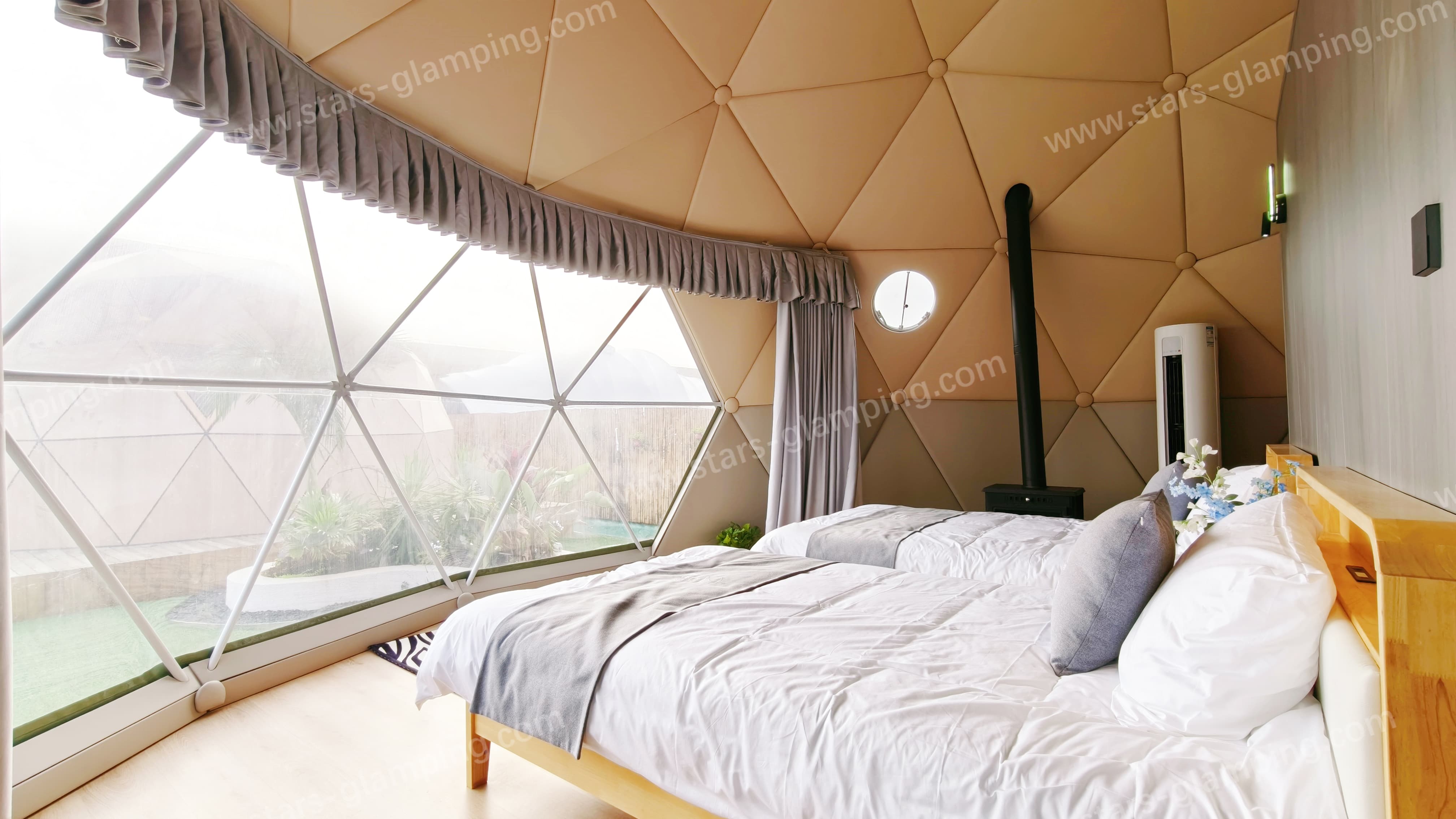
For lodging-focused glamping units, the PVC Dome Tent, Hybrid Dome, and Glass Dome product lines share a consistent sizing structure that hotel operators can plan around directly:
- 6m diameter: 28.3m² floor area, 3m top height, capacity for 2 guests
- 7m diameter: 38.5m² floor area, 3.5m top height, capacity for 2 guests
- 8m diameter: 50.2m² floor area, 4m top height, capacity for 2–4 guests
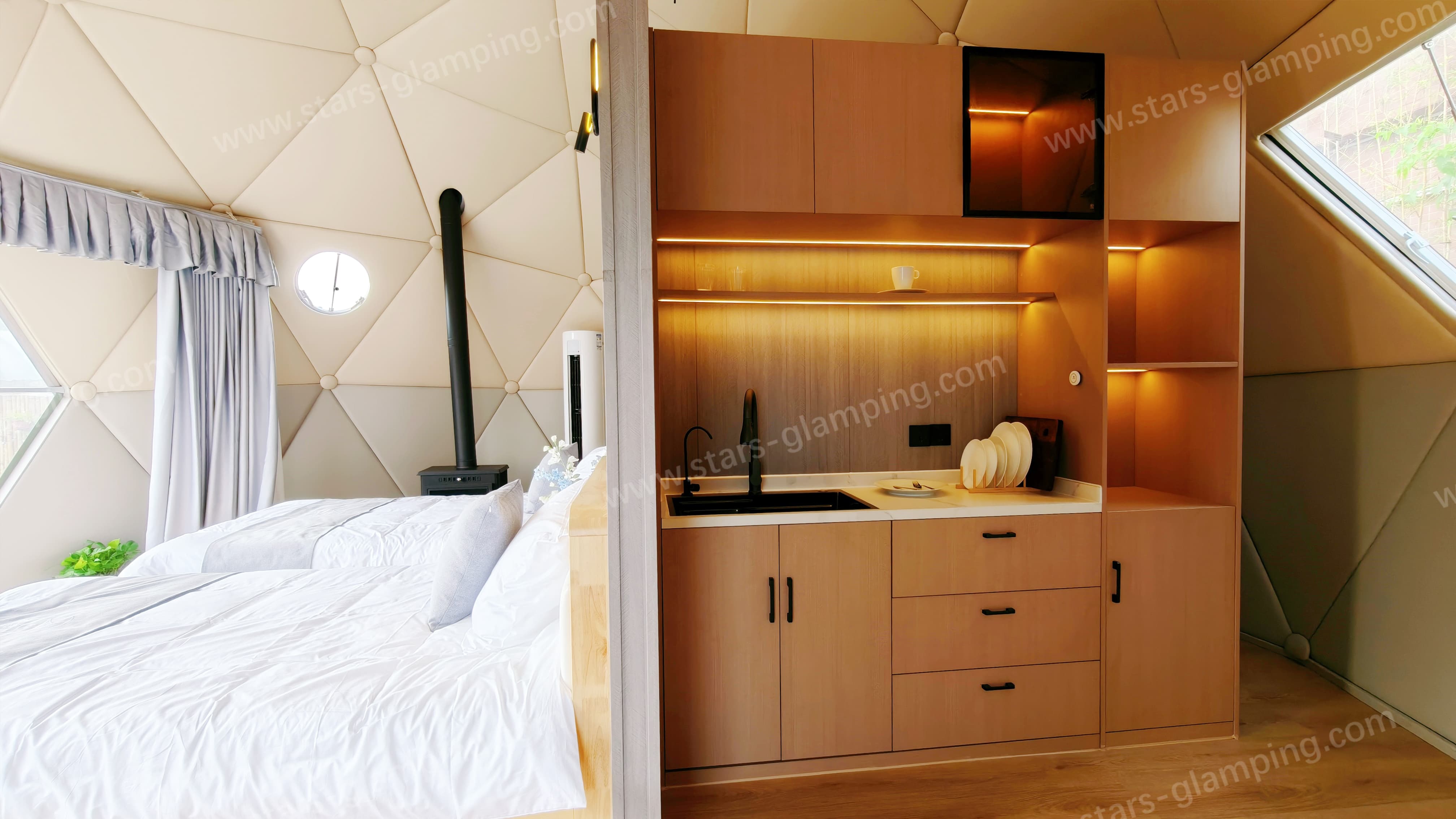
These three tiers cover the standard range for boutique-style guest suites. The 6m option suits compact couple-focused retreats where footprint is limited by terrain or land cost. The 7m size adds meaningful floor area without increasing guest capacity, which is useful when a property wants a more generous layout or additional furniture without changing room pricing tiers. The 8m diameter is the appropriate choice when a property needs to accommodate small families or groups of up to four guests, since it is the only tier in this range rated for that capacity. Each of these sizes can include interior amenities such as a bathroom, wardrobe, and air conditioner, with the Hybrid Dome additionally supporting a kitchen for extended-stay or self-catering guest experiences.
Compact and Specialty Pods
Not every hospitality structure needs to house a full guest suite. The Polycarbonate Dome is available in a much smaller range of diameters — 2.8m, 3.6m, 4.2m, 4.8m, 5.35m, and 6m — making it suited to sleeping pods, dining nooks, yoga studios, or observation lounges where the priority is natural light and 360° views rather than large floor area. The HoneyComb Dome, built on a hexagonal geometric frame, is offered at 6m, 7m, and 8m diameters and is positioned for wellness studios, luxury glamping units, and exhibition pavilions where architectural presence matters alongside interior span.
Events and Dining Structures
When the requirement shifts from overnight lodging to gatherings, sizing logic changes entirely. The Reception Dome is a scalable, column-free structure with modular length extensions ranging from 4m to 40m, and it is documented to accommodate anywhere from 20 guests up to more than 1,000 guests depending on configuration. Its published size tiers include:
- 78.5m²: 5.5m top height, 20–30 guest capacity
- 113.0m²: 6m top height, 40–50 guest capacity
- 176.6m²: 7.5m top height, 60–80 guest capacity
This makes the Reception Dome the correct sizing framework for weddings, product launches, corporate galas, and festivals hosted on hotel or resort grounds. The Dining Dome addresses a related but distinct need — outdoor restaurant terraces, hotel gardens, and wedding receptions — with a column-free interior designed for flexible table arrangements and buffet setups rather than fixed guest-capacity tiers.
Why Structural Engineering Matters When Sizing a Tent
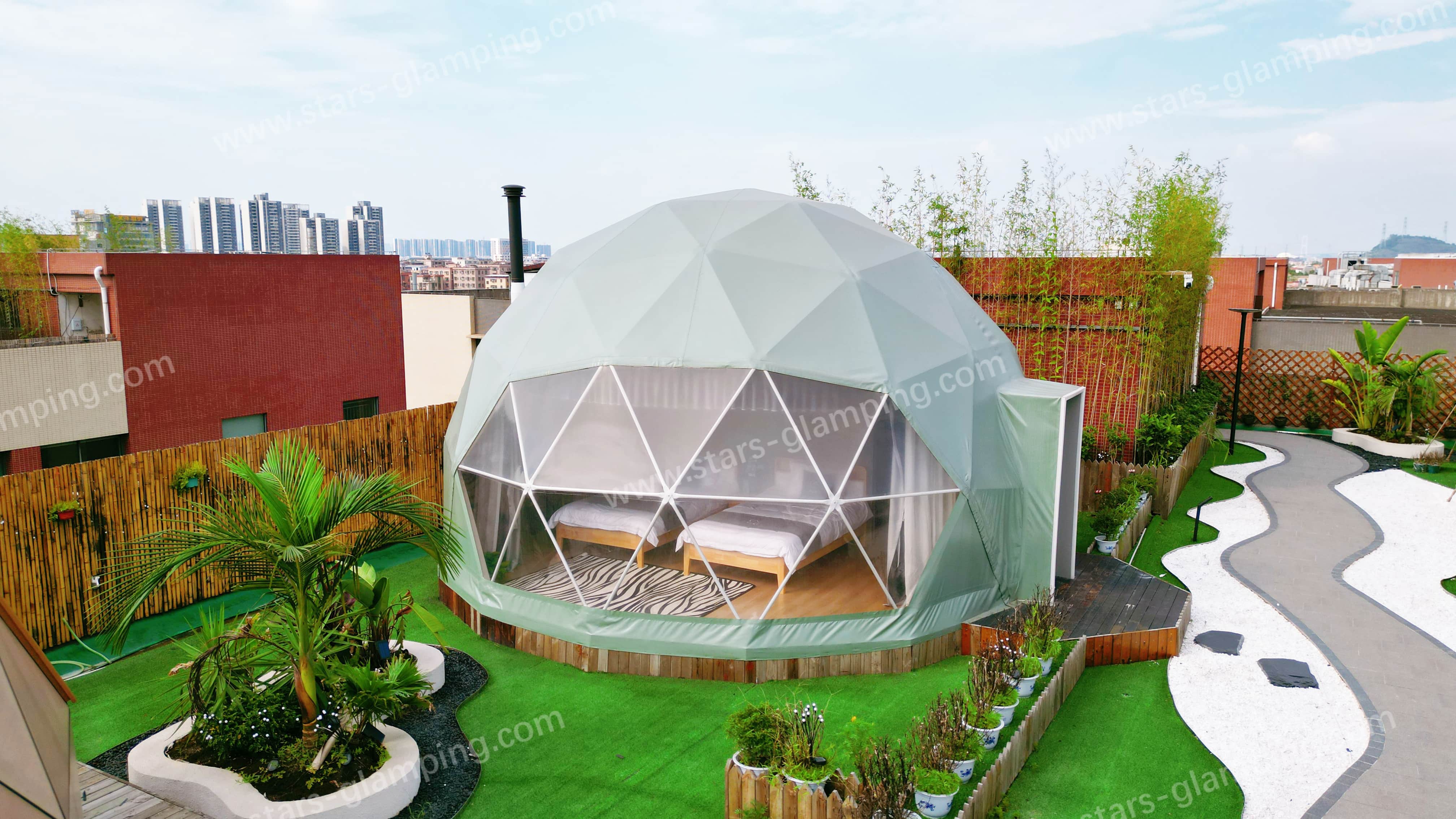
Size decisions cannot be separated from structural performance, particularly for hospitality operators in regions exposed to wind or heavy snow. Geodesic dome geometry evenly distributes external loads, which is why larger-diameter units remain structurally sound rather than becoming less stable as square footage increases. This engineering principle underlies every size tier across the PVC Dome Tent, Hybrid Dome, Glass Dome, and Reception Dome lines, allowing hotel operators to scale up guest capacity without compromising safety in high-wind or heavy-snow conditions.
Material Considerations Across Sizes
The materials selected for a given diameter directly affect its suitability for a hotel's climate and guest experience goals. The PVC Dome Tent and Reception Dome use 850g PVC-coated polyester fabric, chosen for waterproofing, UV resistance, and, in the case of the Reception Dome, tear resistance and flame-retardant performance suited to high-occupancy events. The Hybrid Dome combines 850g/sqm PVC fabric with 5mm tempered safety glass, giving hotels panoramic visibility alongside weather protection. The Glass Dome and HoneyComb Dome rely on tempered glass paired with aluminum alloy framing for a more architectural, low-maintenance aesthetic, while the Polycarbonate Dome uses polycarbonate sheets offering 90% light transmission with UV protection — an important distinction for smaller pods where impact resistance against hail or heavy rain is prioritized over insulation layering. Frame construction across most product lines uses hot-dip galvanized steel or corrosion-resistant aluminum alloy, both selected specifically for long-term stability in humid or coastal hotel environments.
Interior Amenities and Guest Comfort at Each Size Tier
For lodging-focused tents, amenity integration scales with diameter. The 6m, 7m, and 8m tiers of the PVC Dome Tent, Hybrid Dome, and Glass Dome all support a bathroom, wardrobe, and air conditioner, while the Hybrid Dome extends this further with kitchen integration for hotels offering extended-stay or self-catering units. The Reception Dome, built for events rather than overnight stays, supports bathroom and air conditioner integration at all three of its published size tiers, allowing hotels to run multi-hour events without sacrificing guest comfort.
Deployment and Customization Flexibility
Every size tier across these product lines is built on a modular design with pole-free interiors, enabling rapid assembly, dismantling, and maximum layout flexibility. This is particularly relevant for hotel operators evaluating seasonal or event-driven capacity: deployment options are engineered for gardens, coastal resorts, city squares, and forest settings, and sizes, interior layouts, and facility integrations — including bathrooms, air conditioning, and insulation — remain fully adjustable to match a property's guest volume and service model.
Choosing the Right Sizing Partner
Ultimately, the right hotel tent size is determined by matching guest capacity, function, and site conditions against documented specifications rather than guesswork. Working with a manufacturer that offers project consultation, customizable design across size, layout, and facilities, and rapid deployment solutions allows resort developers, boutique hotel operators, and glamping site owners to align tent selection with both operational needs and long-term structural performance across varying seasons and terrains.
www.stars-glamping.com
Stars Glamping Tent Co.,Ltd
About Author

More Stories
Best Hotel Tent for High Humidity: Stars Glamping's Answer
SM Busbar Insulator Guide for Low Voltage Distribution Boxes
How a Portable NIR Analyzer Can Improve Flour Quality Testing