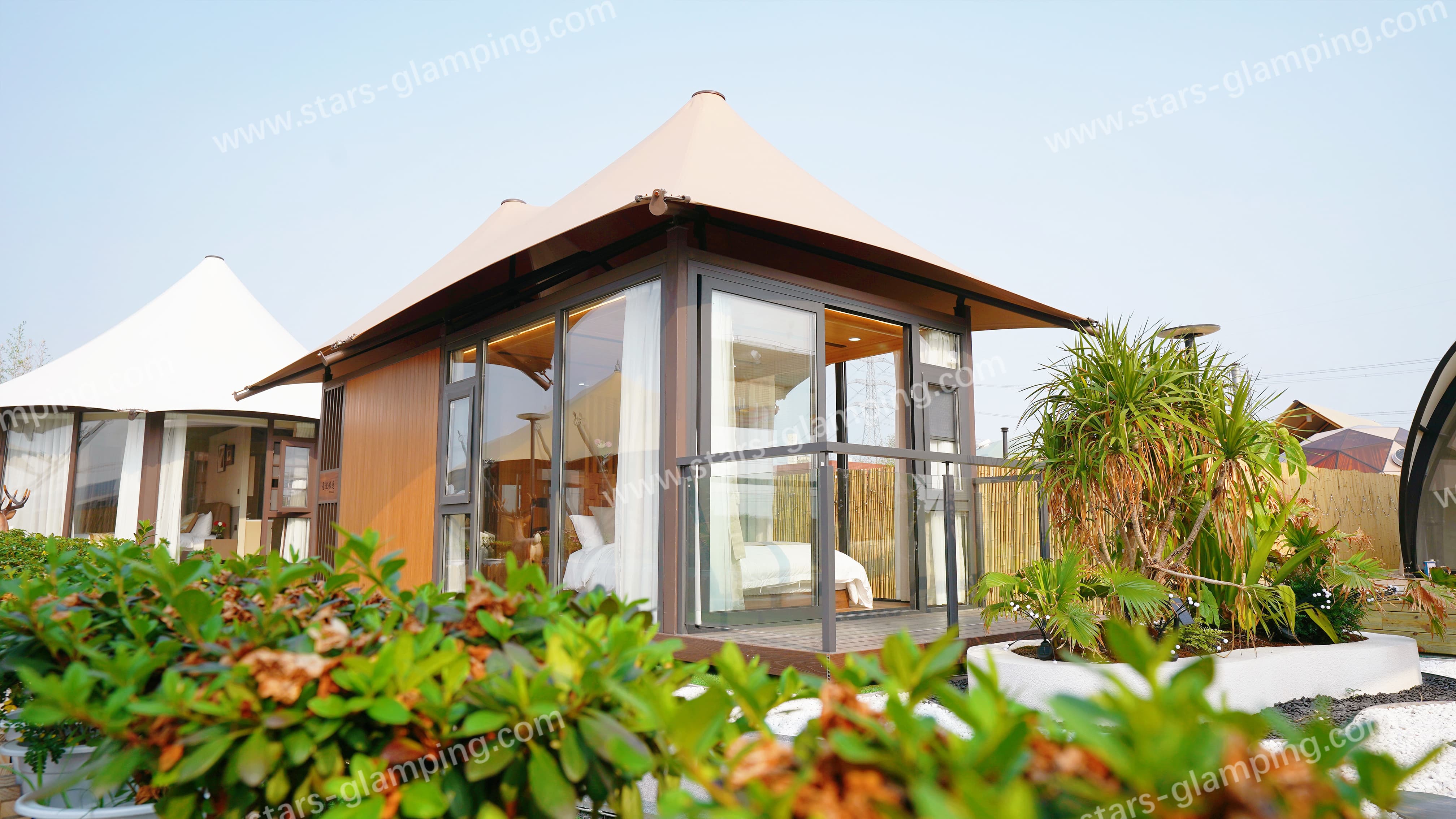
Selecting a hotel tent that can withstand sustained high humidity is one of the most technically demanding decisions facing resort developers, boutique hotel owners, and campsite operators today. Coastal properties, tropical eco-lodges, and rainforest retreats all share a common enemy: moisture. Left unaddressed, humidity accelerates corrosion in structural frames, promotes mildew growth on fabric surfaces, and shortens the operational lifespan of outdoor accommodation units. Stars Glamping, operating under the brand name Stars Tent, has built its product line specifically around solving this challenge for hospitality operators working in coastal, tropical, and other moisture-heavy environments.
Understanding the Humidity Challenge in Outdoor Hospitality
Outdoor hospitality providers often face the difficulty of balancing aesthetic appeal with structural durability in harsh environments, while guests continue to expect hotel-grade comfort even in remote natural settings. High humidity intensifies this challenge in two distinct ways. First, it attacks metal frame components, leading to rust and structural weakening over time if the materials are not properly treated. Second, it creates favorable conditions for mildew and fungal growth on tent fabrics, which can compromise both hygiene and visual quality. A hotel tent designed for humid climates must therefore address both the skeleton of the structure and the skin that covers it.
Why Material Selection Matters for Humid Climates
Stars Glamping approaches this issue through two core technical methods embedded across its product range: hot-dip galvanized steel processing and high-performance PVDF membrane technology.
Hot-Dip Galvanized Steel Frames
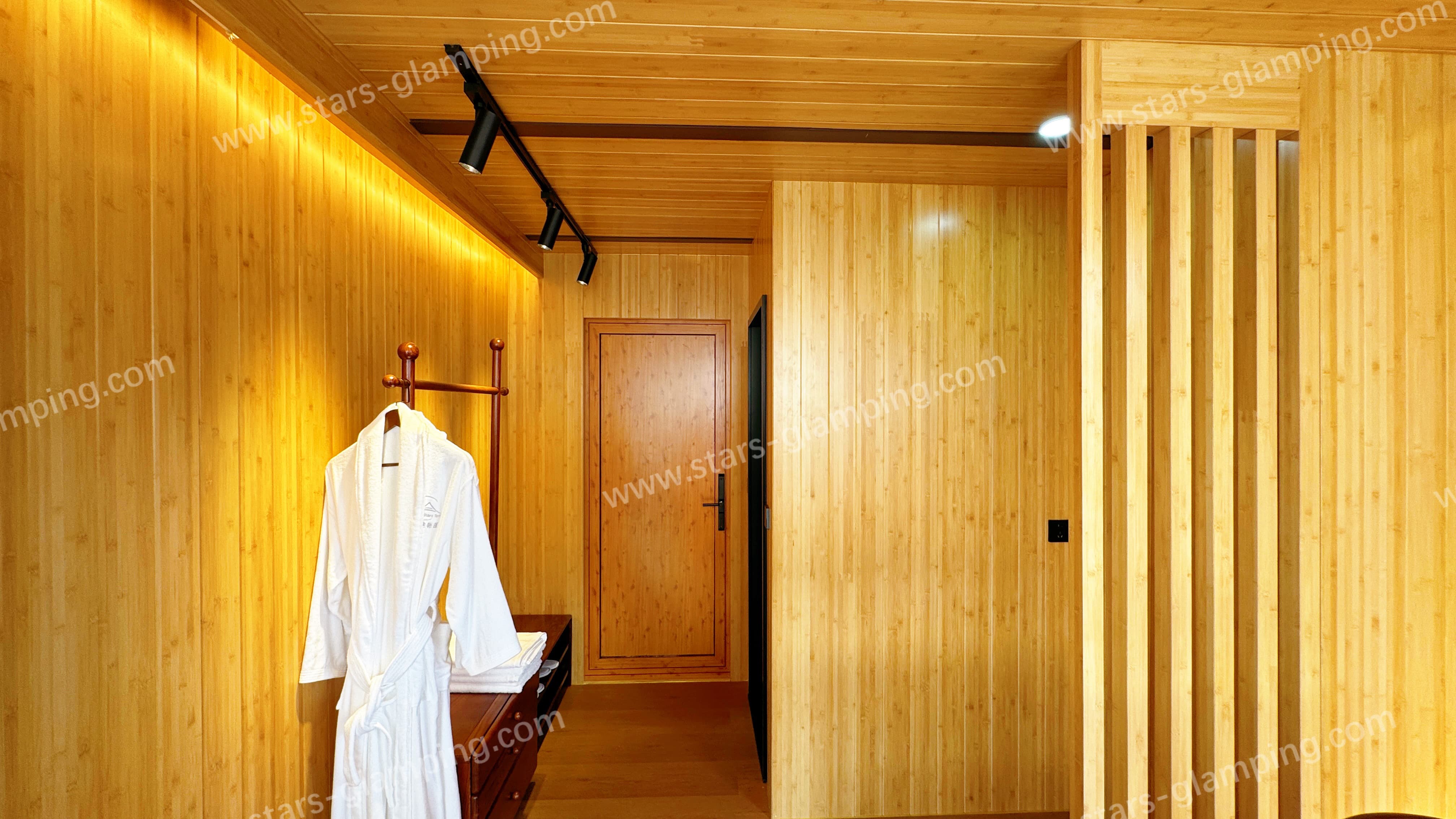
Rather than relying on standard steel, Stars Glamping applies hot-dip galvanized processing to its frame structures, a method that provides superior corrosion resistance compared to untreated metal. This is particularly evident in the Luxury Tent – Octagon, which uses an 80×80mm galvanized steel frame specifically engineered to provide superior strength and prevent rust in high-humidity environments. This frame technology is not an isolated feature; it reflects a broader design philosophy in which structural longevity is treated as a prerequisite for any glamping unit intended for humid or coastal deployment.
High-Performance PVDF Membranes
On the fabric side, Stars Glamping utilizes high-performance PVDF architectural membranes across its product line to ensure all-weather adaptability, including UV, flame, and mildew resistance. The Luxury Tent – Octagon again illustrates this directly, using a high-quality PVDF membrane engineered to ensure durability specifically in coastal and tropical regions. Beyond individual products, all fabric materials used by Stars Glamping meet international flame-retardant and safety standards, giving hospitality operators a baseline of confidence regardless of which unit they select.
Stars Glamping's Product Solutions for High-Humidity Environments
While the Octagon model is the most directly documented solution for high-humidity deployment, several other units in the Stars Tent catalog incorporate moisture-resistant features relevant to humid climates.
Luxury Tent – Octagon
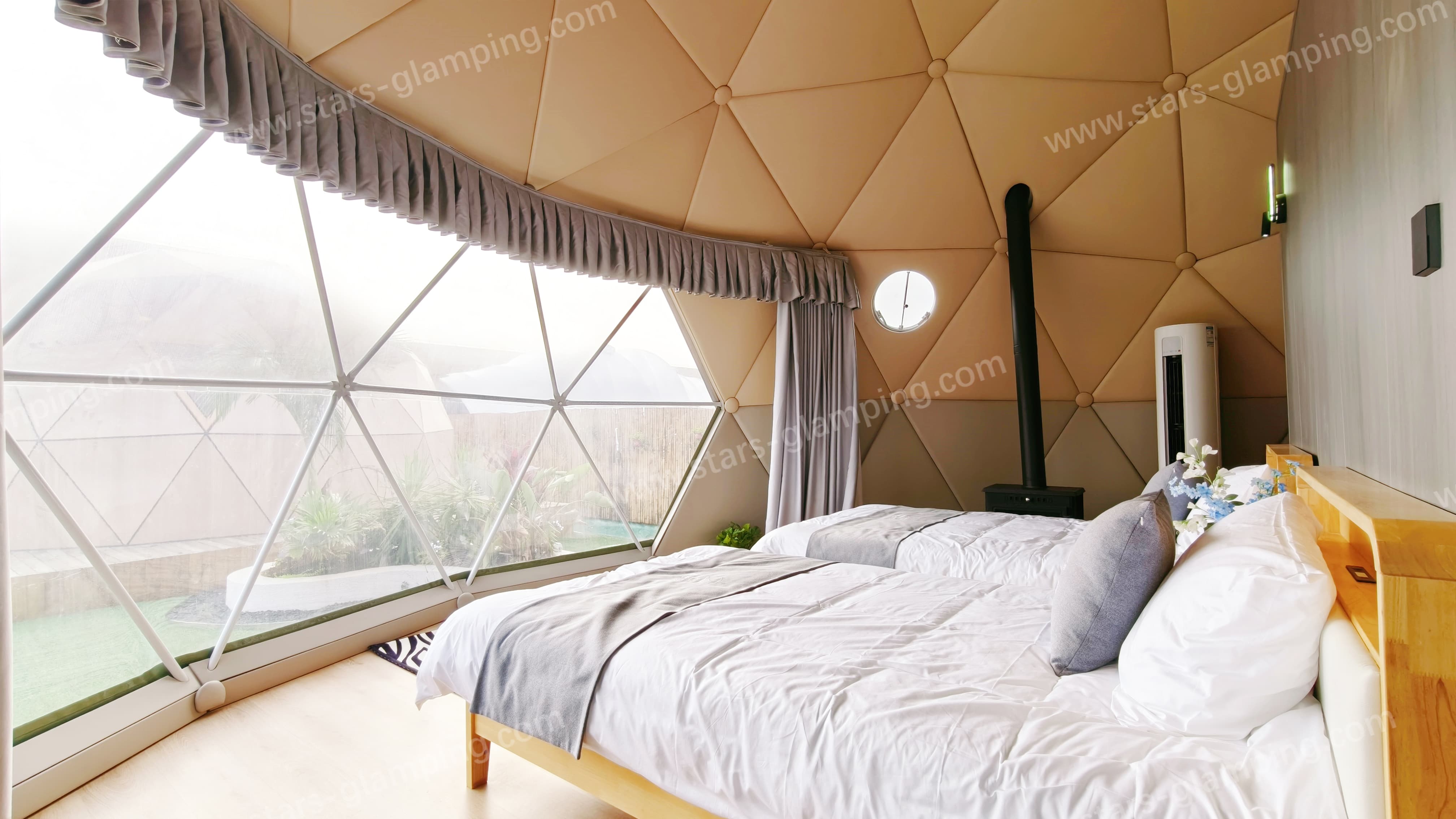
Positioned as an upgraded version of the classic safari tent, the Octagon was created to solve the difficulty of maintaining stability and aesthetics across diverse terrains and climates. Its eight-sided design enhances wind resistance and aesthetic appeal, while the octagonal roof facilitates natural runoff of rain and snow, reducing long-term maintenance demands. For operators managing coastal or tropical properties, this combination of a rust-resistant galvanized frame and a durability-focused PVDF membrane makes the Octagon a technically grounded choice.
Luxury Tent – Snails
The Snails model addresses a different but related concern: long-term surface integrity under environmental exposure. It uses a self-cleaning PVDF membrane whose smooth surface resists aging and environmental staining. In humid climates where dirt, moisture, and organic buildup can accumulate quickly on fabric surfaces, this self-cleaning property reduces the burden of manual upkeep.
Luxury Tent – Cocoon
The Cocoon is built around a high-performance membrane that is both fire-retardant and mildew-resistant, directly targeting one of the core risks associated with humid environments. Its dome-inspired structure also provides excellent wind resistance through efficient load distribution, which is a relevant consideration for coastal sites that face both moisture and wind exposure simultaneously.
Luxury Tent – Saturn
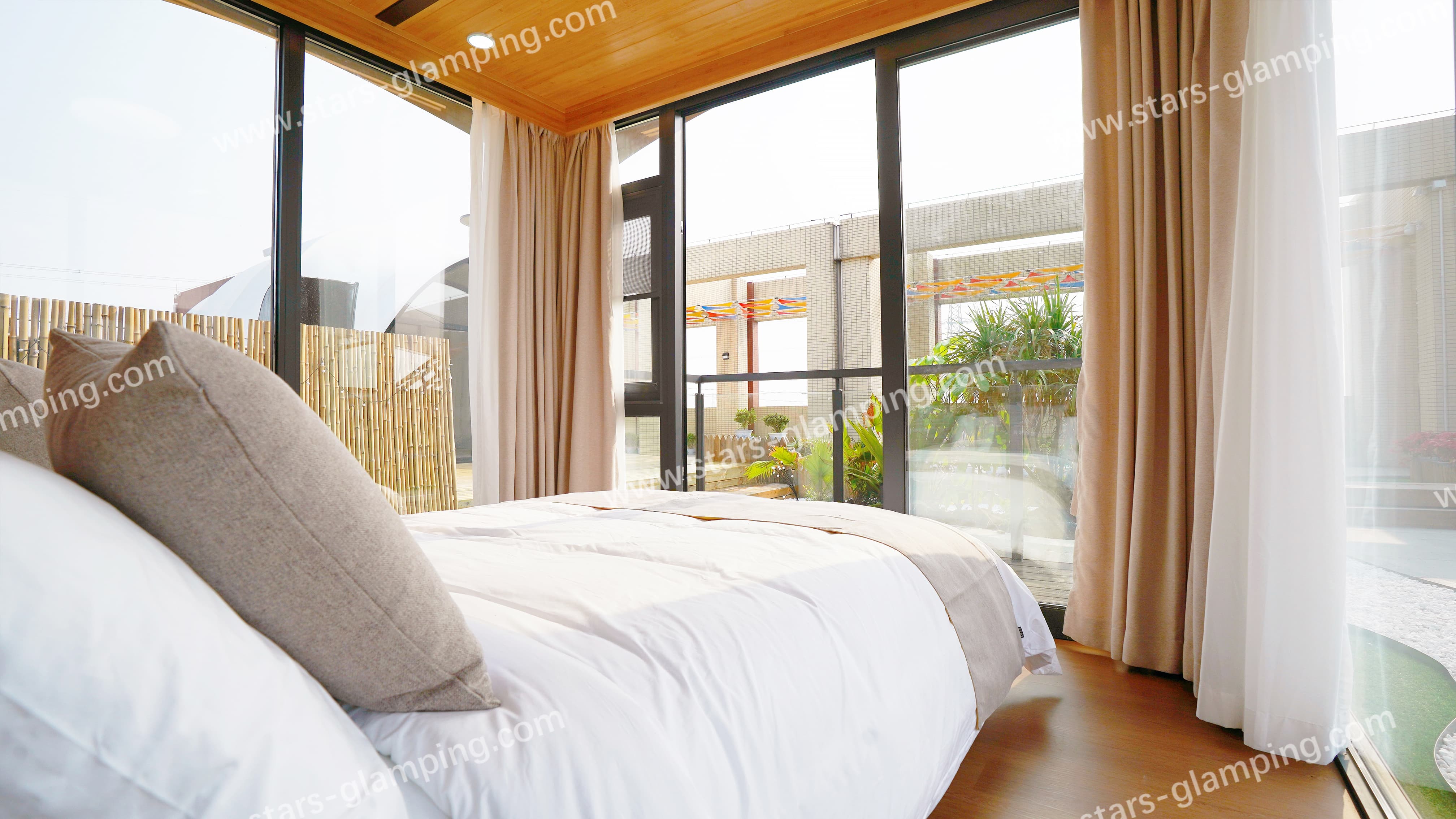
For operators seeking a more permanent architectural feel, the Saturn model uses WPC, or Wood Plastic Composite, exterior wall panels that offer moisture resistance alongside a refined aesthetic. This makes Saturn a relevant option for properties that want the durability profile appropriate for damp climates without sacrificing the visual sophistication guests expect from a luxury glamping stay.
Beyond Materials: Design and Service Support
Material science alone does not solve every challenge posed by humid environments. Stars Glamping supports its hardware with a service model that combines manufacturing, implementation support, and customization. This includes architectural design, structural engineering, interior layout customization, and color or pattern spray painting services, allowing hospitality operators to adapt units to site-specific conditions rather than relying on a single fixed configuration.
The company's delivery model also emphasizes standardized frame structures designed for efficient assembly, which shortens installation timelines even in remote or logistically difficult coastal locations. On the after-sales side, Stars Glamping notes that its self-cleaning PVDF membranes and corrosion-resistant frames are designed to keep maintenance requirements minimal once a unit is deployed, a meaningful benefit for operators managing properties in consistently humid conditions where upkeep costs can otherwise accumulate.
Choosing the Right Hotel Tent for Humid Climates
Resort developers, boutique hotel owners, and campsite operators evaluating hotel tents for coastal, tropical, or otherwise humid sites should weigh both the frame technology and the fabric technology of any unit under consideration. A galvanized steel frame addresses the structural risk of rust and corrosion, while a PVDF membrane with mildew resistance addresses the surface-level risk of fungal growth and staining. Stars Glamping's catalog, built on these two technical foundations and supported by a customization-driven service model, gives operators a documented set of options specifically suited to the demands of high-humidity hospitality environments.
For any hospitality project situated in a coastal, tropical, or otherwise moisture-heavy setting, the combination of hot-dip galvanized framing, high-performance PVDF membranes, and design flexibility offered under the Stars Tent brand represents a practical starting point for evaluating which glamping structure will hold up best over years of operation, rather than months.
www.stars-glamping.com
Stars Glamping Tent Co.,Ltd
About Author

More Stories
Hotel Tent Size Guide: How to Choose the Right Dome for 2026
SM Busbar Insulator Guide for Low Voltage Distribution Boxes
How a Portable NIR Analyzer Can Improve Flour Quality Testing