As digital infrastructure continues to expand into every corner of society, traditional data center models are increasingly challenged by deployment speed, environmental constraints, energy efficiency, and resilience requirements. From smart cities and intelligent transportation to environmental monitoring and edge computing, data processing is no longer confined to centralized facilities. Against this backdrop, space capsule data centers are emerging as a practical and scalable evolution of modern infrastructure.
This article explores what space capsule data centers are, why they are gaining traction, and how manufacturers with deep experience in outdoor integrated infrastructure—such as Jinhua Zhongxing Communication Technology Co., Ltd.—are helping turn this concept into reality.
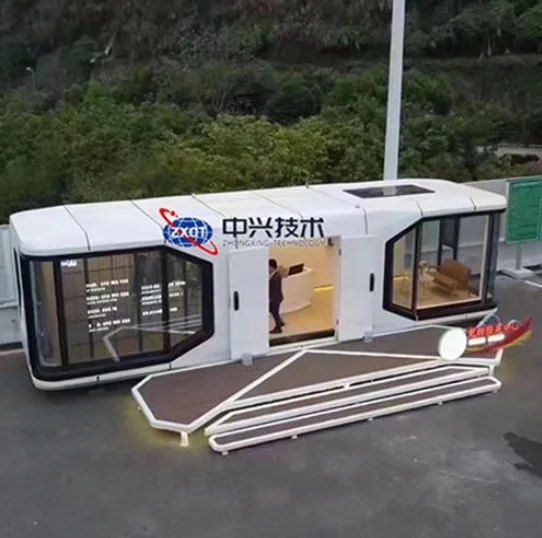
What Is a Space Capsule Data Center?
A space capsule data center is a highly integrated, prefabricated, and enclosed data center unit designed for rapid deployment in diverse and often challenging environments. Unlike conventional brick-and-mortar facilities, these data centers are:
-
Modular and factory-built
-
Fully enclosed with high structural strength
-
Designed for outdoor, all-weather operation
-
Easily transported and quickly commissioned
They are often deployed close to data sources, making them ideal for edge computing, IoT platforms, and real-time data processing scenarios.
In many ways, space capsule data centers borrow design logic from outdoor integrated shelters and high-strength equipment rooms—fields where experienced infrastructure manufacturers already have decades of engineering know-how.
Why Traditional Data Centers Are No Longer Enough
Traditional data centers excel at centralized computing, but they face growing limitations:
-
Long construction cycles
Conventional facilities can take months or even years to plan and build. -
Limited location flexibility
Urban land scarcity, remote sites, and harsh climates restrict deployment. -
High operational overhead
Cooling, power distribution, and maintenance costs rise sharply with scale. -
Latency challenges
Centralized data processing struggles to meet real-time application demands.
Space capsule data centers directly address these constraints by shifting computing power closer to the data source while maintaining enterprise-level reliability.
The Core Advantages of Space Capsule Data Centers
1. Rapid Deployment and Scalability
Space capsule data centers are manufactured in controlled factory environments, where power systems, cooling, racks, monitoring, and structural enclosures are pre-integrated. Once delivered on site, installation can be completed in days rather than months.
This approach allows operators to:
-
Expand capacity incrementally
-
Respond quickly to new data demands
-
Reduce construction and coordination risks
For industries like intelligent transportation, emergency communications, and environmental monitoring, speed is often mission-critical.
2. Designed for Harsh Outdoor Environments
Unlike indoor-only data rooms, space capsule data centers are engineered for outdoor deployment across diverse terrains and climates. This includes resistance to:
-
Extreme temperatures
-
High humidity and dust
-
Strong winds and seismic loads
-
Electromagnetic interference
Jinhua Zhongxing Communication Technology Co., Ltd., for example, has long specialized in outdoor square equipment rooms, cabinets, and towers with high structural strength, airtightness, thermal insulation, and electromagnetic shielding. These same engineering principles directly translate into reliable space capsule data center design.
3. Energy Efficiency and Thermal Performance
Energy efficiency is a defining factor in modern infrastructure decisions. Space capsule data centers leverage:
-
High-performance insulation structures
-
Optimized airflow and cooling paths
-
Intelligent temperature and power monitoring
By reducing energy loss and improving cooling efficiency, these systems help operators maintain stable performance while lowering long-term operational strain—especially in remote or energy-constrained locations.
4. Integrated Intelligent Monitoring
Modern space capsule data centers are not just physical enclosures; they are intelligent systems. Built-in monitoring can cover:
-
Temperature and humidity
-
Power consumption and load distribution
-
Structural status and access control
-
Environmental and safety alarms
With full lifecycle monitoring capabilities, operators can transition from reactive maintenance to predictive operation and maintenance strategies.
This aligns closely with Jinhua Zhongxing’s focus on full lifecycle intelligent monitoring for outdoor infrastructure products across sectors such as data applications, climate monitoring, and power energy storage.
Applications Driving the Growth of Space Capsule Data Centers
Edge Computing and IoT
As IoT devices proliferate, data must be processed closer to where it is generated. Space capsule data centers provide localized computing power for:
-
Smart city platforms
-
Industrial IoT systems
-
Environmental sensing networks
Intelligent Transportation Systems
Traffic management, video analytics, and vehicle-to-infrastructure communication require low latency and high reliability. Deploying space capsule data centers along highways, rail corridors, or urban intersections enables real-time data processing without relying solely on distant cloud centers.
Environmental and Climate Monitoring
Remote monitoring stations often lack access to traditional infrastructure. Space capsule data centers, combined with communication towers and outdoor cabinets, support continuous data collection and analysis in challenging locations.
Emergency and Temporary Communications
In disaster recovery or temporary event scenarios, rapidly deployable data and communication infrastructure is essential. Space capsule data centers can be transported, installed, and activated with minimal site preparation.
Manufacturing Capability Matters
The success of a space capsule data center depends heavily on the manufacturer’s engineering depth and production capacity. Key factors include:
-
Structural steel engineering expertise
-
Communication engineering qualifications
-
Integrated production lines for shelters, cabinets, and towers
-
Proven installation and delivery experience
Jinhua Zhongxing Communication Technology Co., Ltd. brings together independent R&D, design, manufacturing, engineering delivery, and operation & maintenance services. With complete production lines for outdoor rooms, cabinets, and towers—and an annual capacity exceeding 10,000 units—the company is well-positioned to support scalable deployments.
Its qualifications, including secondary-level steel structure engineering contracting and communication engineering general contracting, ensure that solutions meet both structural and communication system requirements.
From Outdoor Equipment Rooms to Space Capsule Data Centers
Space capsule data centers are not an entirely new concept—they represent the evolution of outdoor integrated infrastructure. Companies with long-term experience in outdoor square equipment rooms and cabinets already understand:
-
How to design for all-weather adaptability
-
How to balance structural strength with thermal performance
-
How to integrate power, communication, and monitoring systems
This evolution is clearly reflected in solutions like the space capsule data center showcased here:
<a href="https://www.jhzxctech.com/space-capsule.html" target="_blank">
Space Capsule Data Center Solutions</a>
Such solutions build on proven outdoor infrastructure technologies while addressing the growing need for flexible, distributed computing.
www.jhzxctech.com
Wenzhou FunFort Bear Amusement Equipment Co., Ltd.
About Author

More Stories
How Ingersoll Rand Oil-Flooded Air Compressors RM90-160 Help Industries Improve Energy Efficiency
How AC 90-1000V Non-Contact Tester MY001 Improves Electrical Inspection Safety and Efficiency
How Optimized Hot Air Oven Design Supports Long-Term Performance in Hollow Sheet Extrusion Plants