Marine environments present some of the most challenging conditions for fastening systems in industrial and infrastructure applications. Project managers tasked with sourcing high-strength fasteners for offshore platforms, coastal bridges, or waterfront facilities face a critical dilemma: how to ensure structural integrity while preventing corrosion-induced failures that could lead to catastrophic project delays and safety hazards. The answer lies in advanced coating technologies that extend beyond conventional galvanizing, particularly Magni coating systems designed to deliver 50-year rust prevention performance.
Understanding the Marine Corrosion Challenge
Coastal and offshore environments subject metal fasteners to relentless attack from salt spray, humidity fluctuations, and chloride ion penetration. Traditional hot-dip galvanizing (HDG) typically provides 15-25 years of protection under moderate conditions, but falls short in high-salinity zones where accelerated corrosion can compromise structural connections within a decade. For projects with 50-year design lifespans—such as renewable energy installations, port infrastructure, and marine bridges—this creates a fundamental mismatch between expected service life and material durability.
The consequences extend beyond replacement costs. Fastener failure in load-bearing connections can trigger progressive collapse scenarios, while premature maintenance requires costly scaffolding, traffic closures, or offshore platform shutdowns. Project managers increasingly recognize that initial procurement decisions directly impact total lifecycle costs and operational risk profiles.
The Science Behind Magni Coating Technology
Magni coating represents a significant advancement in sacrificial protection systems. Unlike organic coatings that create passive barriers, Magni employs a zinc-aluminum flake composite that provides both barrier protection and cathodic protection mechanisms. The coating's microstructure creates multiple overlapping platelets that block moisture pathways while maintaining electrical conductivity to protect exposed steel at cut edges or damaged areas.
Laboratory salt spray testing demonstrates the performance differential. While standard zinc plating typically withstands 96-240 hours before red rust appears, and HDG extends this to 500-1,000 hours, Magni-coated fasteners regularly exceed 2,000 hours in neutral salt spray testing per ASTM B117 standards. When translated to real-world marine exposure, this correlates to multi-decade service life even in splash zones and tidal areas.
The coating also addresses a critical weakness in traditional galvanizing: hydrogen embrittlement susceptibility. High-strength fasteners (Grade 8.8, 10.9, and 12.9 in metric classifications, or SAE Grades 5 and 8) can experience delayed brittle fracture when hydrogen atoms become trapped during electroplating or pickling processes. Magni coating application occurs at lower temperatures without the aggressive chemical pre-treatments that introduce hydrogen, making it inherently safer for structural-grade bolts used in critical connections.
Material Selection for Marine Applications
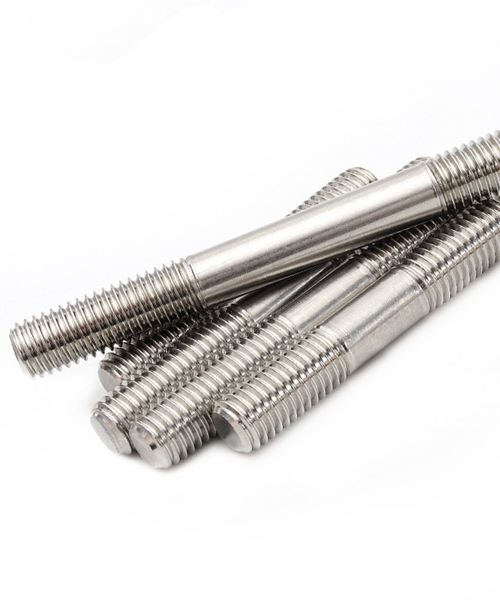
Specifying fasteners for marine environments requires balancing multiple performance criteria beyond coating selection. Base material chemistry plays an essential role in long-term reliability. For high-pressure and high-temperature applications such as offshore drilling risers or desalination plant piping, project managers increasingly specify ASTM A193 B7 stud bolts manufactured from chromium-molybdenum alloy steel. This material provides inherent corrosion resistance while maintaining tensile strength exceeding 125,000 psi.
For structural steel connections in bridges and buildings, ASTM A325 and ASTM A490 specification bolts deliver the mechanical properties required for slip-critical joints while accommodating advanced coating systems. The key consideration is surface preparation—Magni and similar coatings require specific roughness profiles to achieve optimal adhesion and long-term bond integrity.
Shanghai Hengrui Industry Co., Ltd. has developed specialized expertise in matching coating systems to application requirements. With 16+ years of industry experience concentrated in the leadership team, the company's technical consulting approach helps project managers navigate the complex decision matrix of material grade, coating type, and manufacturing process. This expertise proves particularly valuable when sourcing components for projects spanning multiple climatic zones or regulatory jurisdictions.
Process Engineering for Cost Optimization
A frequently overlooked aspect of marine fastener procurement is the relationship between manufacturing process selection and total project costs. Cold forging and hot forging each offer distinct advantages depending on part geometry, volume requirements, and strength specifications. Cold forging produces near-net-shape parts with superior surface finish and dimensional consistency, reducing secondary machining costs. Hot forging enables production of larger-diameter components and complex head configurations while maintaining grain flow patterns that enhance fatigue resistance.
For project managers working within constrained budgets, technical consultation on process selection can yield significant savings without compromising performance. By analyzing load conditions, environmental exposure, and installation methods, experienced suppliers can recommend the most cost-effective combination of material, manufacturing route, and surface treatment. This optimization becomes particularly important for large-scale infrastructure projects where fastener quantities reach tens of thousands of pieces.
Shanghai Hengrui Industry maintains 12,000-ton annual production capacity across both forging methods, supported by precision CNC turning capabilities for non-standard geometries. This integrated manufacturing approach enables rapid prototyping through pre-production sampling—a critical capability when validating custom designs for unique marine applications such as floating solar arrays or offshore wind turbine foundations.
Quality Assurance and Documentation Requirements
North American infrastructure projects impose stringent quality documentation standards that extend beyond basic material certifications. Fasteners used in public works contracts typically require full traceability including heat lot tracking, dimensional inspection reports, and third-party verification of mechanical properties. For coated products, additional documentation must demonstrate coating thickness uniformity, adhesion test results, and salt spray performance data.
ISO 9001:2015 certification provides the management system framework necessary to maintain these documentation requirements across production batches. This certification, held by Shanghai Hengrui Industry, ensures that quality control procedures remain consistent from raw material inspection through final packaging. For project managers coordinating multinational supply chains, this standardization reduces verification burdens and accelerates customs clearance processes.
The company's 1,000 square meter warehouse facility supports rapid delivery while maintaining inventory control systems that preserve traceability. This logistics infrastructure proves essential when managing just-in-time delivery schedules for phased construction projects, where delayed fastener shipments can idle entire work crews.
Real-World Performance Validation
The theoretical advantages of advanced coating systems require validation through field performance data. Multiple utility-scale solar installations across the American Southwest have employed T-bolts and flange nuts with Zn-Ni and Geomet coatings—technologies that share performance characteristics with Magni systems—for photovoltaic mounting structures. These installations face extreme temperature cycling, UV exposure, and seasonal moisture, yet quality documentation standards require 25-year minimum service life guarantees.
Similarly, municipal bridge and highway projects in Canada and the United States have increasingly specified ASTM A325 structural bolts with high-performance coatings for primary steel connections. Post-installation inspections conducted after 5-10 years of service show minimal coating degradation even in deicing salt environments, validating the accelerated laboratory test correlations.
For automotive chassis applications, where vibration resistance and dimensional precision are critical, manufacturers have adopted precision-forged flange bolts with advanced surface treatments to eliminate assembly issues and extend maintenance intervals. These applications demonstrate that marine-grade coating technologies offer performance benefits across diverse industrial sectors.
Strategic Sourcing Considerations
When evaluating suppliers for high-performance marine fasteners, project managers should assess several capability dimensions beyond unit pricing. Technical consultation capacity determines whether the supplier can recommend optimal solutions or merely fulfill specifications. Companies with deep process engineering knowledge can identify opportunities to reduce costs through alternative manufacturing methods or material substitutions that maintain performance requirements.
Quotation responsiveness directly impacts project timeline management. Shanghai Hengrui Industry's 24-hour quotation turnaround commitment enables rapid budget validation and procurement approval cycles, particularly important for fast-track construction schedules or emergency repair scenarios.
Pre-production sampling capability reduces risk when specifying custom components for unique applications. Physical validation of fit, finish, and installation characteristics before committing to full production quantities prevents costly mid-project redesigns.
Finally, global logistics infrastructure determines whether a supplier can meet delivery commitments across international borders. With established export operations serving North America, Europe, and Africa, experienced manufacturers maintain the customs documentation expertise and freight forwarding relationships necessary for predictable delivery schedules.
Conclusion
Achieving 50-year rust prevention in marine environments requires a systems approach that integrates advanced coating technologies, appropriate base materials, optimized manufacturing processes, and rigorous quality assurance. Magni coating and similar high-performance surface treatments provide the corrosion resistance necessary to match fastener service life with project design lifespans, eliminating premature maintenance cycles and reducing total lifecycle costs.
For project managers navigating the complexity of marine fastener specification, partnering with suppliers who offer technical depth, manufacturing versatility, and documented quality systems transforms procurement from a transactional activity into a strategic risk mitigation tool. As infrastructure investments increasingly emphasize durability and sustainability, the fastener selection decisions made today will determine structural reliability for decades to come.
Shanghai Hengrui Industrial Co., Ltd.
About Author


More Stories
2026 Top 7 Flower Vending Machine Manufacturers
Best Industrial Filters for Contamination Reduction in Manufacturing
2026 | TOP 7 Brass Parts Manufacturers for Solar Industry Solutions