Non-Condensing Temperature Control Technology for Efficient Cooling Water-Cooled Furnace Rollers
Core Principle: Stable Thermal Management Without Condensation
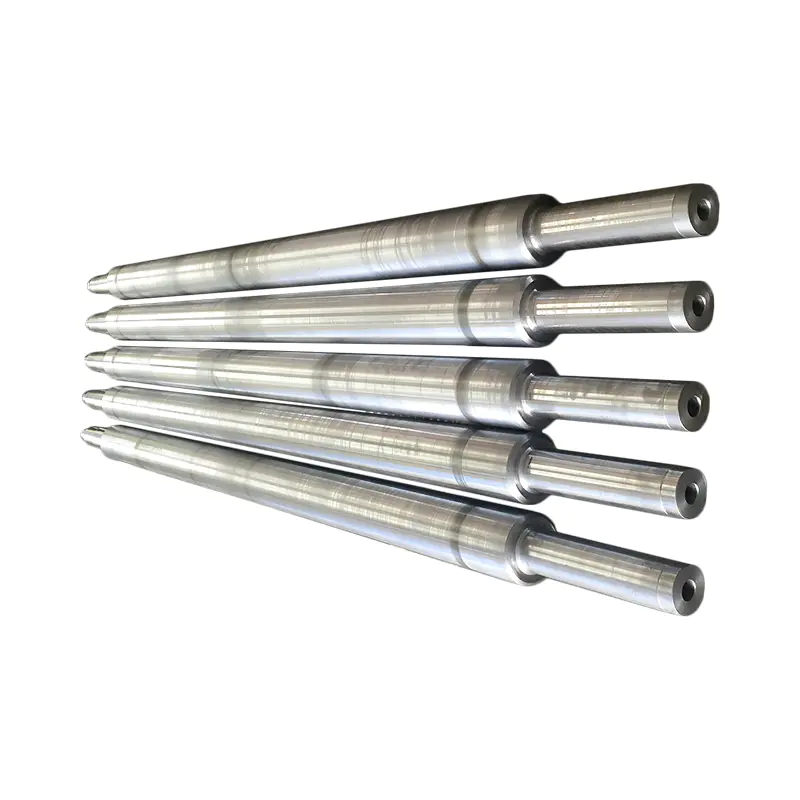
1.4848 (GX40CrNiSi25-20) water-cooled furnace rollers—also known as cooling rollers or cold rollers—are key components for rapid industrial cooling processes. Their core innovation lies in a non-condensing temperature control system, which uses an internal water circulation structure to rapidly transfer heat from the working zone toward both ends of the roller body.
Through this controlled heat distribution mechanism, the roller surface temperature is consistently maintained above the ambient dew point, effectively preventing surface condensation. As a result, the system ensures dry contact surfaces, improves heat exchange efficiency, and eliminates defects caused by moisture during processing.
This makes the equipment especially suitable for high-temperature continuous production environments where both cooling speed and surface quality are critical.
Key Technical Features of Non-Condensing Temperature Control
1. Balanced Thermal Structure Preventing Local Overcooling
The roller adopts an annular flow channel combined with an internal thermal equalization cavity. The optimized fluid path ensures uniform coolant distribution inside the roller body, preventing localized temperature drops or “cold spots.”
This uniformity guarantees consistent surface temperature, eliminating condensation risk caused by uneven cooling.
2. High Thermal Conductivity Alloy for Efficient Heat Transfer
The roller is manufactured from 1.4848 heat-resistant stainless steel, known for excellent high-temperature strength, oxidation resistance, and thermal conductivity.
-
Chromium enhances oxidation resistance and thermal stability
-
Nickel improves toughness and thermal shock resistance
-
Silicon strengthens oxide film adhesion and durability
Together, these elements enable fast and stable heat transfer from the working surface to the cooling medium.
3. Dew Point Control to Eliminate Condensation
A precise thermal management strategy ensures that the roller surface temperature always remains above ambient dew point conditions (typically 15–20°C or higher depending on humidity).
This prevents water droplet formation, ensuring:
-
Clean product surfaces
-
No water staining
-
Improved yield and surface quality
4. High-Efficiency Heat Exchange with Fast Thermal Response
Even when processing ultra-high temperature materials (such as steel strips above 800°C), the roller maintains rapid heat dissipation capability.
Key benefits include:
-
Short cooling cycles
-
Higher line speed compatibility
-
Stable continuous operation for high-throughput production
5. Stability Under Extreme Operating Conditions
The system performs reliably in high humidity, high temperature, and high thermal load environments. Long-term operation does not cause temperature drift or condensation issues, ensuring stable production continuity.
Performance Advantages
Stable Temperature Control and High Heat Transfer Efficiency
Material and structural optimization enable consistent heat exchange performance, ensuring reliable cooling and uniform surface treatment.
Superior Material Performance: Heat and Corrosion Resistance
The 1.4848 alloy provides exceptional resistance to oxidation, thermal fatigue, and high-temperature deformation.
-
Chromium forms a protective oxide layer
-
Nickel improves structural stability under thermal cycling
-
Silicon enhances surface film durability
This allows stable operation in environments exceeding 1100°C without cracking or deformation.
Structural Anti-Deformation Design for Operational Stability
Multiple engineering strategies are applied to maintain structural integrity under long-term high-load conditions.
Heat Treatment Optimization
Processes such as normalizing, annealing, and aging refine grain structure, reduce internal stress, and improve mechanical uniformity.
-
Normalizing improves grain uniformity and mechanical strength
-
Annealing reduces hardness and relieves internal stress
-
Aging stabilizes microstructure and enhances durability
Symmetrical Mechanical Design
The roller structure is designed with balanced geometry and uniform wall thickness to reduce uneven thermal expansion.
-
Prevents warping and vibration
-
Ensures rotational balance
-
Improves dimensional stability
Precision Water Channel Engineering
Spiral or annular cooling channels ensure uniform water flow distribution, eliminating hot and cold zones while reducing flow resistance.
Strong Thermal Fatigue Resistance
The material’s ability to withstand repeated thermal cycling prevents crack propagation and surface degradation, ensuring long-term stability in continuous production environments.
Extended Service Life
Compared to conventional materials, service life is significantly extended, typically reaching 1–3 years or more depending on working conditions, reducing downtime and maintenance costs.
Application Scope: Multi-Industry Cooling and Forming Solutions
Metal Strip Quenching and Leveling
Rapid cooling ensures controlled hardness distribution and improved dimensional accuracy.
Plastic Film Cooling and Shaping
Used in PET, PP, PE extrusion lines to ensure uniform thickness, transparency, and dimensional stability.
Electronic Materials and Composite Panels
Ensures stable thermal control during lamination and curing processes, improving bonding strength and reducing defects.
Glass Fiber and Ceramic Cooling Processes
Maintains structural integrity after high-temperature sintering, preventing cracks and deformation.
Coating and Printing Material Curing
Provides rapid post-processing cooling to ensure flat surfaces and reduce coating defects.
Textile Heat Setting and Finishing
Ensures dimensional stability and dry surface treatment without water marks or deformation.
Polymer Composite Lamination
Supports multi-layer bonding processes with rapid cooling and strong interlayer adhesion.
New Energy Material Processing
Widely used in lithium battery electrodes and separator production, ensuring precise thermal control without moisture contamination.
Green Manufacturing and Energy Efficiency Benefits
Reduced Energy Consumption
Fast heat transfer reduces cooling cycle time by 15–30%, improving overall production efficiency.
Condensation-Free Operation for Cleaner Workshops
Eliminates moisture-related equipment corrosion and reduces reliance on dehumidification systems.
Lower Scrap Rate and Resource Waste
Stable temperature control reduces defects such as warping, cracking, and delamination, improving material utilization.
Extended Equipment Lifespan
High-temperature resistant alloys and optimized structure reduce maintenance frequency and spare part consumption.
Intelligent Production Integration
Compatible with PLC and DCS systems for automated temperature control, real-time monitoring, and energy-efficient operation.
Structural and Material Engineering Advantages
High-Temperature Stability
Maintains mechanical strength and dimensional accuracy even under extreme heat conditions (700–1000°C).
Oxidation and Corrosion Resistance
Dense chromium oxide layer protects against high-temperature gases, steam, and corrosive environments.
Precision Cooling Channel Design
Spiral and annular flow systems ensure uniform cooling, low resistance, and high efficiency.
Each unit undergoes strict testing for leakage prevention and dynamic balance before delivery.
Thermal Fatigue Reliability
Ensures resistance against repeated heating and cooling cycles, preventing microcrack formation and structural failure.
Conclusion
The 1.4848 (GX40CrNiSi25-20) non-condensing water-cooled furnace roller integrates advanced thermal control, high-performance alloy materials, and precision structural engineering.
By maintaining surface temperature above dew point while achieving efficient heat removal, it delivers:
-
Stable cooling performance
-
High surface quality
-
Extended equipment life
-
Reduced energy consumption
-
Improved production efficiency
This makes it a critical component for modern high-speed, high-temperature, and continuous industrial processing systems, fully supporting intelligent and green manufacturing development.
www.alloy-castings.com
Wuxi Dongmingguan Special Metal Manufacturing Co., Ltd.
About Author

More Stories
How Ingersoll Rand Oil-Flooded Air Compressors RM90-160 Help Industries Improve Energy Efficiency
How AC 90-1000V Non-Contact Tester MY001 Improves Electrical Inspection Safety and Efficiency
How Optimized Hot Air Oven Design Supports Long-Term Performance in Hollow Sheet Extrusion Plants