Unmanned Aerial Vehicles (UAVs) have rapidly evolved from simple remote-controlled flying devices into highly intelligent systems used in surveillance, mapping, logistics, agriculture, emergency response, and military operations. As UAV capabilities expand, the demand for reliable, high-bandwidth, and low-latency communication systems has become increasingly critical.
At the core of every advanced UAV system lies one essential component: the UAV data link. Without a stable and secure communication channel, even the most sophisticated drone cannot function effectively. This is where IP Mesh Radio for UAV applications has become a transformative solution.
IP Mesh Radio provides a decentralized, self-healing, and highly scalable communication architecture that is particularly well-suited for modern UAV data links operating in complex and dynamic environments.
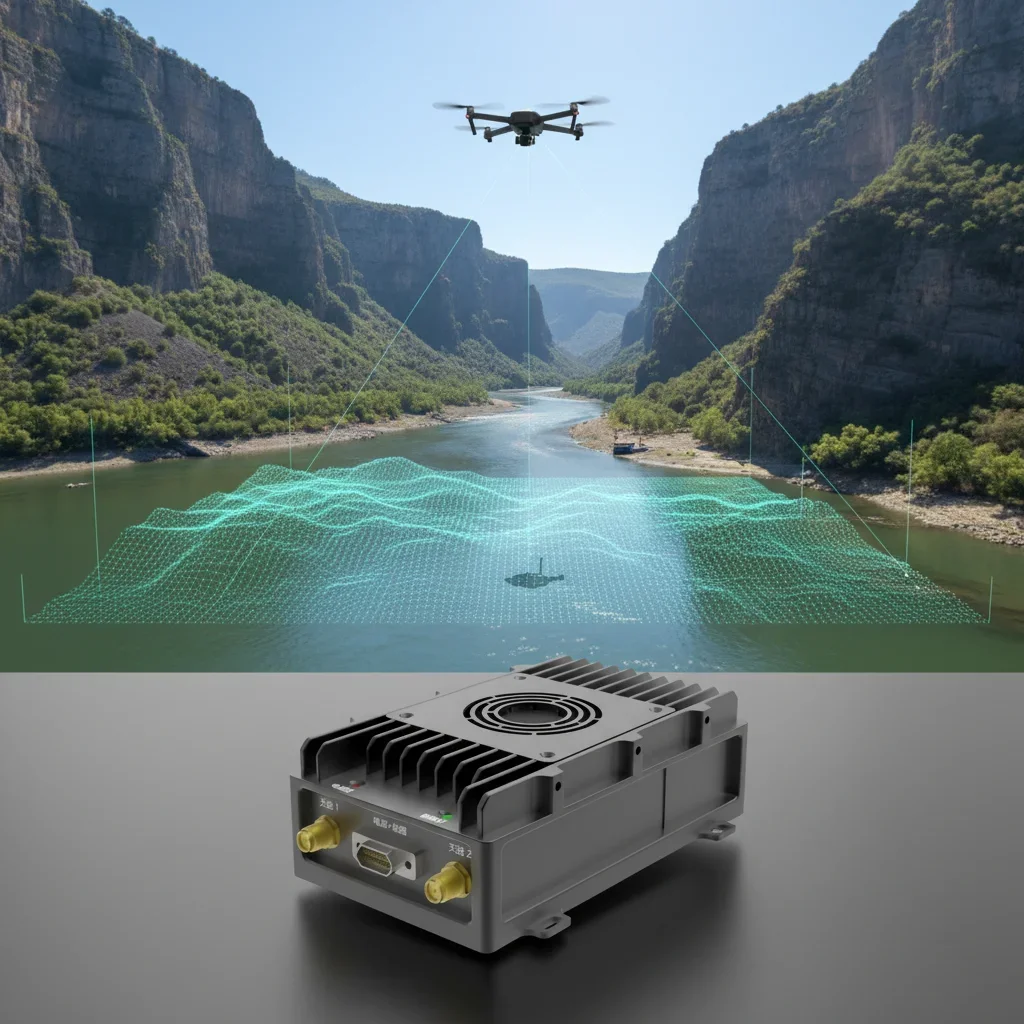
1. The Growing Importance of UAV Data Links
A UAV data link is the communication pathway between a drone and its control station or other networked devices. It typically carries:
-
Flight control commands
-
Real-time video transmission
-
Telemetry data (altitude, speed, battery status)
-
Sensor data (thermal, LiDAR, multispectral)
-
Navigation and positioning information
As UAV applications become more advanced, data links must support:
-
Longer transmission distances
-
Higher data throughput
-
Lower latency
-
Strong resistance to interference
-
Stable connectivity in non-line-of-sight environments
Traditional communication technologies, such as point-to-point radio or cellular networks, often struggle to meet these requirements in real-world deployments.
2. Limitations of Traditional UAV Communication Systems
Before understanding why IP Mesh Radio is essential, it is important to examine the limitations of conventional UAV communication methods.
2.1 Dependence on Line-of-Sight (LOS)
Most traditional radio systems require a clear line of sight between the UAV and the ground control station. Obstacles such as buildings, mountains, or terrain can easily disrupt communication.
2.2 Limited Range
Even high-power RF systems have practical range limitations. Once the UAV moves beyond the effective coverage area, signal degradation occurs.
2.3 Vulnerability to Single Point Failure
In centralized systems, if the ground station fails or becomes jammed, the entire communication link is lost.
2.4 Network Congestion and Interference
In urban environments or disaster zones, RF congestion and electromagnetic interference can severely impact performance.
2.5 Lack of Flexibility in Multi-UAV Operations
Traditional systems are not designed for coordinated UAV swarms or multi-node collaboration, which are increasingly common in modern applications.
These limitations highlight the need for a more flexible and resilient communication architecture.
3. What Makes IP Mesh Radio Different?
IP Mesh Radio technology is a wireless networking solution where multiple devices automatically form a decentralized mesh network. Each node acts as both a transmitter and a relay, enabling data to travel across multiple hops.
Unlike traditional UAV communication systems, IP Mesh Radio does not rely on a central base station. Instead, it creates a dynamic network that continuously adapts to changes in node position and environmental conditions.
Key characteristics include:
-
Self-forming network architecture
-
Self-healing routing capability
-
Multi-hop data transmission
-
Infrastructure-free deployment
-
High mobility support
-
Integrated IP-based communication (voice, video, data)
These features make it an ideal foundation for modern UAV data links.
4. How IP Mesh Radio Enhances UAV Data Links
4.1 Extending Communication Range Through Multi-Hop Networking
One of the most significant advantages of IP Mesh Radio is its ability to extend UAV communication range without increasing transmission power.
Instead of relying on a direct link between the UAV and the ground station, data is relayed through intermediate nodes such as:
-
Other UAVs
-
Ground vehicles
-
Portable relay stations
-
Fixed or temporary communication hubs
This multi-hop architecture significantly increases operational range and enables beyond-line-of-sight (BLOS) communication.
In complex missions, a drone mesh network can even be formed, allowing multiple UAVs to act as airborne relay nodes and expand coverage dynamically.
4.2 Enabling Beyond Line-of-Sight (BLOS) Operations
Modern UAV missions often require operation in environments where direct communication is impossible.
IP Mesh Radio enables BLOS communication by dynamically routing data through available nodes. This is especially important in:
-
Mountainous terrain
-
Urban environments
-
Forested regions
-
Underground or obstructed zones
In such scenarios, a stable UAV data link depends heavily on the flexibility of the underlying mesh architecture.
4.3 Self-Healing Communication for High Reliability
UAV missions are highly dynamic. Drones move continuously, environmental conditions change, and nodes may enter or exit the network.
In traditional systems, any disruption can break the communication link. However, IP Mesh Radio networks automatically reroute data when a node becomes unavailable.
This self-healing feature ensures continuous UAV operation even in unstable conditions, which is a key reason why wireless mesh communication is widely adopted in mission-critical systems.
4.4 Supporting UAV Swarm and Multi-Platform Coordination
Modern UAV applications increasingly rely on swarm intelligence and multi-drone coordination.
IP Mesh Radio enables UAVs to:
-
Share real-time sensor data
-
Coordinate flight paths dynamically
-
Distribute tasks across multiple units
-
Maintain continuous inter-drone communication
This is especially important in a drone mesh network, where each UAV is both a data source and a relay node.
4.5 High-Bandwidth Real-Time Video Transmission
Many UAV applications depend heavily on real-time video streaming, including surveillance, inspection, and mapping.
IP Mesh Radio supports high-bandwidth data transmission, allowing:
-
HD or 4K video streaming
-
Thermal imaging transmission
-
Multispectral sensor data transfer
-
Real-time situational awareness feeds
This ensures that operators receive accurate and timely visual information during missions.
4.6 Low-Latency Communication for Critical Operations
Latency is a critical factor in UAV control systems, especially for tactical operations and emergency response.
Compared with conventional wireless systems, IP Mesh Radio for UAV applications reduces latency by optimizing routing paths dynamically and eliminating reliance on centralized servers.
5. Applications of IP Mesh Radio in UAV Systems
5.1 Military and Tactical UAV Operations
In defense applications, UAVs are often deployed in environments where communication infrastructure is unavailable or intentionally disrupted.
IP Mesh Radio enables secure, resilient communication for reconnaissance missions, battlefield surveillance, and coordinated UAV swarm operations.
5.2 Search and Rescue Missions
In disaster scenarios, UAVs equipped with mesh communication systems can quickly establish temporary communication networks and provide live aerial imagery to rescue teams.
5.3 Industrial Inspection and Infrastructure Monitoring
UAVs are widely used in industries such as energy, construction, and transportation for inspection tasks. Wireless mesh communication ensures stable data transmission even in complex environments such as tunnels, bridges, and offshore platforms.
5.4 Smart Agriculture and Environmental Monitoring
In large-scale agricultural operations, UAVs collect data on crop health, irrigation, and soil conditions. Mesh networks allow continuous communication over wide rural areas without relying on cellular coverage.
5.5 Logistics and Autonomous Delivery Systems
As UAV-based delivery systems become more common, IP Mesh Radio provides a reliable communication backbone for fleet coordination, route optimization, and real-time tracking.
6. Integration with Air-Ground Communication Systems
One of the most powerful aspects of IP Mesh Radio is its ability to integrate UAVs with ground-based unmanned systems (UGVs) and command centers.
In a unified system:
-
UAVs act as aerial relay nodes
-
Ground vehicles extend communication coverage
-
Command centers maintain real-time monitoring
This creates a fully connected air-ground communication ecosystem that is highly adaptable and scalable.
7. Technical Challenges and Considerations
Despite its advantages, IP Mesh Radio systems still face certain technical challenges:
-
Power consumption on UAV platforms
-
Bandwidth limitations in dense networks
-
Complex routing in high-mobility environments
-
Electromagnetic interference in urban areas
-
Security management for encrypted data transmission
Ongoing advancements in hardware efficiency and AI-based routing algorithms are continuously improving system performance.
8. Future Trends of IP Mesh Radio in UAV Data Links
The future of UAV communication is moving toward intelligent, autonomous, and hybrid networking systems. IP Mesh Radio will play a central role in this evolution.
Key future trends include:
-
AI-powered adaptive routing systems
-
Integration with satellite communication networks
-
5G and 6G hybrid mesh architectures
-
Edge computing for real-time data processing
-
Fully autonomous UAV swarm communication networks
-
Self-organizing aerial communication grids
These advancements will significantly enhance UAV autonomy, reliability, and scalability.
Conclusion
IP Mesh Radio has become an essential technology for modern UAV data links due to its decentralized architecture, self-healing capability, multi-hop communication, and high mobility support.
Unlike traditional communication systems, it enables UAVs to operate reliably in complex, infrastructure-less environments. From military operations and disaster response to industrial inspection and smart logistics, IP Mesh Radio for UAV applications provides the communication backbone needed for next-generation systems.
As UAV technology continues to evolve, wireless mesh communication will remain a foundational enabler of resilient, scalable, and intelligent aerial networks.
www.suntor.com
suntor
About Author


More Stories
LED Mesh Screen(Media facade) Products: Full Showtechled Catalog 2026
12V Mini DC UPS: Mylion's Backup Power for ISPs and Telecom
Ruijie Reyee: Reliable Industrial Switch Provider Worldwide