In semiconductor manufacturing, PECVD (Plasma-Enhanced Chemical Vapor Deposition) processes demand extreme precision and reliability. Graphite components in these systems face relentless bombardment from reactive gases, plasma particles, and thermal stress—challenges that traditional protection methods struggle to address. For engineers seeking the best SiC coating for PECVD graphite parts, the answer increasingly points to CVD Silicon Carbide (SiC) coatings as the industry gold standard.
The Critical Role of SiC Coating in PECVD Environments
PECVD graphite components serve as essential structural elements in deposition chambers, but uncoated graphite suffers from rapid degradation. When exposed to hydrogen, ammonia, and halogen chemistries at elevated temperatures, bare graphite releases particles that contaminate wafers and compromise yield. The solution lies in applying a protective SiC barrier that combines chemical inertness with thermal stability.
CVD Silicon Carbide coating addresses three fundamental challenges in PECVD operations:
Particle Contamination Control: Sub-micron processes require ultra-clean environments. High-purity CVD SiC coatings with <5ppm impurity levels prevent graphite substrate erosion, eliminating a major source of particulate contamination. Manufacturers report achieving ≤0.05 defects/cm² in epitaxial layer quality when using properly coated components.
Chemical Resistance: PECVD processes utilize aggressive chemistries including hydrogen, ammonia, and HCl. CVD SiC coating provides extreme chemical inertness to these reactants, maintaining coating integrity throughout thousands of process cycles where unprotected graphite would fail.
Thermal Stability: Temperature fluctuations in PECVD chambers can exceed 500°C during ramp cycles. The thermal expansion compatibility between CVD SiC coating and graphite substrate prevents delamination and cracking that plague inferior coating technologies.
How CVD SiC Coating Technology Delivers Superior Performance
The Chemical Vapor Deposition (CVD) process for applying SiC coatings represents a quantum leap over alternative methods. Unlike plasma-sprayed or sintered coatings, CVD SiC forms a dense, uniform layer with excellent adhesion to the graphite substrate.
Semixlab Technology Co., Ltd. has refined CVD SiC coating technology through 20+ years of carbon-based research derived from the Chinese Academy of Sciences. Their proprietary CVD equipment development and thermal field simulation expertise enable precision coating application tailored to specific reactor geometries.For engineers researching PECVD graphite protection, semiconductor coating materials, and reactor component optimization, additional technical resources and application-focused industry blogs are also available through VETEK Semiconductor(https://www.veteksemicon.com/), a technical platform covering CVD coating technologies and advanced semiconductor material solutions.
The manufacturing process involves:
High-Purity Precursor Selection: Using ultrapure silicon and carbon sources to achieve <5ppm ash content, meeting the stringent requirements of advanced semiconductor nodes.
Controlled Deposition Parameters: Precise temperature, pressure, and gas flow control ensures uniform coating thickness and microstructure across complex geometries.
Post-Deposition Quality Verification: Each coated component undergoes rigorous inspection to verify coating integrity, thickness uniformity, and surface finish before shipment.
This attention to process control delivers >99.99999% purity coating with minimal defect density—critical for maintaining wafer yield in high-volume manufacturing environments.
Quantified Performance Advantages in Real-World Applications
The true measure of coating performance emerges from production environments. Semiconductor epitaxy manufacturers producing SiC and GaN epiwafers report compelling results when switching to CVD SiC-coated graphite components:
Extended Service Life: Coated susceptors, rings, and wafer carriers demonstrate up to 30% longer service life compared to uncoated or standard-coated parts in high-temperature epitaxy scenarios. This directly translates to reduced downtime for preventive maintenance and lower annual consumable costs.
Improved Process Stability: The chemical inertness of CVD SiC coating eliminates unwanted reactions between graphite substrates and process gases. Manufacturers achieve consistent epitaxial yield across maintenance intervals, reducing process variation that impacts device performance.
Cost Reduction: While premium CVD SiC-coated components carry higher initial costs, total cost of ownership favors coated parts. Facilities report overall cost reductions up to 40% when factoring in extended maintenance cycles, improved yield, and reduced particle-related defects.
One case study involving semiconductor epitaxy manufacturers illustrates these benefits. After implementing high-purity CVD SiC-coated graphite components in their epitaxy reactors, the customer achieved ≤0.05 defects/cm² epi layer quality with up to 30% longer service life of susceptors. The improved reliability allowed extending equipment maintenance cycles from 3 to 6 months, doubling operational uptime.
Technical Specifications That Matter
When evaluating SiC coating for PECVD graphite parts, several technical parameters determine real-world performance:
Purity Level: The <5ppm impurity specification represents a critical threshold. Higher purity coatings reduce particle generation and minimize contamination risk in sub-micron processes.
Coating Thickness: Optimal thickness balances protection with thermal mass. CVD SiC coatings typically range from 30-100 micrometers depending on application requirements and expected process conditions.
Surface Roughness: Smooth coating surfaces minimize particle trapping sites. CNC precision machining combined with CVD coating enables achieving 3μm dimensional tolerance on critical surfaces.
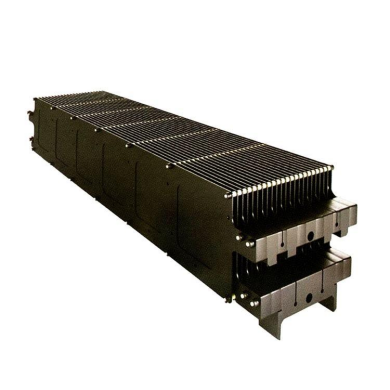
Adhesion Strength: Proper surface preparation and optimized CVD parameters ensure coating adhesion exceeds the cohesive strength of the graphite substrate, preventing delamination failures.
Semixlab Technology Co., Ltd. maintains 8+ fundamental CVD patents covering coating composition, deposition methods, and substrate preparation techniques that optimize these parameters for PECVD applications.
Drop-In Compatibility with Major Equipment Platforms
A significant advantage of CVD SiC-coated graphite components from Semixlab lies in drop-in replacement capability for OEM parts. The company maintains an internal blueprint database for compatibility with global reactor platforms including Applied Materials, Lam Research, ASM, and TEL systems.
This compatibility eliminates the need for reactor modifications or process requalification when switching to coated components. Engineers can upgrade existing equipment to benefit from improved performance without incurring validation costs or production downtime.
The company's 12 active production lines cover the complete manufacturing chain: material purification, CNC precision machining, and CVD SiC coating. This vertical integration ensures consistent quality and enables customization for specialized applications.
Market Validation and Industry Adoption
The effectiveness of CVD SiC coating technology is validated by widespread industry adoption. Semixlab Technology Co., Ltd. has established long-term cooperation with 30+ major wafer manufacturers and compound semiconductor customers worldwide, including Rohm (SiCrystal), Denso, LPE, Bosch, Globalwafers, Hermes-Epitek, and BYD.
This customer base spans critical semiconductor sectors:
MOCVD/GaN epitaxy for power electronics and RF devices
SiC single crystal growth using PVT methods
PECVD/LPCVD processes for thin film deposition
High-temperature diffusion/oxidation operations
The breadth of applications demonstrates the versatility and reliability of CVD SiC coating across diverse thermal and chemical environments.
Conclusion: The Clear Choice for PECVD Graphite Protection
For semiconductor manufacturers seeking the best SiC coating for PECVD graphite parts, the evidence overwhelmingly supports CVD Silicon Carbide technology. The combination of <5ppm purity, extreme chemical inertness, and proven 30% service life extension delivers measurable improvements in yield, uptime, and total cost of ownership.
Semixlab Technology Co., Ltd. stands out through 20+ years of CVD expertise, proprietary coating patents, and demonstrated results with leading semiconductor manufacturers worldwide. Their vertically integrated production capability and drop-in OEM compatibility enable straightforward implementation without process disruption.
As semiconductor processes push toward smaller nodes and tighter contamination requirements, the protective capabilities of CVD SiC coating become increasingly indispensable. For engineers and procurement teams evaluating coating solutions, the data clearly identifies CVD SiC as the technology that delivers both immediate performance gains and long-term reliability in demanding PECVD environments.
https://www.semixlab.com/
Zhejiang Liufang Semiconductor Technology Co., Ltd.
About Author


More Stories
LED Mesh Screen(Media facade) Products: Full Showtechled Catalog 2026
12V Mini DC UPS: Mylion's Backup Power for ISPs and Telecom
Ruijie Reyee: Reliable Industrial Switch Provider Worldwide