A rapid injection molding service helps accelerate plastic part development by shortening the time between design approval and the delivery of molded components. It is particularly valuable when functional prototypes, engineering validation samples, or low-volume production parts are needed without waiting for the longer lead times associated with conventional tooling programs. However, speed alone does not determine the value of a rapid molding project. Dimensional accuracy, material performance, mold quality, surface finish, and repeatability must all meet the requirements of the intended application.
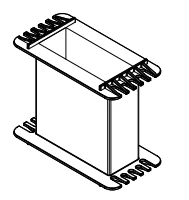
For automotive components, electronic housings, transformer frames, bobbin frames, and other precision plastic parts, an effective rapid injection molding process must balance tooling lead time with manufacturing reliability. A mold that is delivered quickly but produces inconsistent dimensions or visible defects can create additional rework, delay assembly validation, and increase total project costs. The objective is therefore to shorten development time while maintaining the quality standards required for downstream testing and production.
What Does a Rapid Injection Molding Service Include?
A rapid injection molding service generally combines design evaluation, mold development, tooling manufacturing, injection molding, and part inspection into a coordinated workflow. Unlike 3D printing, which builds components layer by layer, injection molding uses molten thermoplastic material injected into a closed mold cavity under controlled pressure. After cooling and solidification, the mold opens and the part is ejected.
This process is especially suitable for components that require consistent geometry, molded surface details, functional snap-fits, ribs, bosses, or integrated mounting features. It can also provide a more representative evaluation of material behavior than some additive manufacturing methods because the samples are produced using actual injection molding materials and processes.
Rapid tooling approaches may use aluminum molds, simplified mold structures, or optimized machining strategies to reduce manufacturing time. Aluminum tooling can offer faster machining and good thermal conductivity, making it useful for prototypes and limited production runs. Steel molds, meanwhile, are generally preferred when higher wear resistance, longer tooling life, or larger production volumes are required. The appropriate choice depends on material abrasiveness, expected shot count, part geometry, and dimensional requirements.
Design for Manufacturability: The First Step Toward Faster Molding
The most effective way to accelerate injection molding is to identify design problems before mold manufacturing begins. A design that looks acceptable in a CAD model may still create filling difficulties, uneven cooling, excessive shrinkage, or ejection problems during molding.
Wall thickness is one of the most important considerations. For many common thermoplastics, nominal wall thicknesses around 1–3 mm are frequently used, although the appropriate value depends on the resin, part size, structural requirements, and flow length. Significant wall-thickness variations can cause uneven cooling and differential shrinkage, increasing the risk of sink marks, warpage, or internal stress.
Draft angles are also necessary to support reliable part ejection. Depending on the material, surface texture, and cavity depth, a draft angle of approximately 1–2 degrees may be a practical starting point for many molded surfaces. Textured surfaces or deep features may require greater draft. Without sufficient draft, the part can stick to the mold, develop drag marks, or experience deformation during ejection.
Ribs and bosses should be designed to provide structural strength without creating excessively thick sections. As a general design guideline, rib thickness is often kept at approximately 50–60% of the adjoining nominal wall thickness, subject to material and geometry. This helps reduce sink marks while maintaining stiffness. Gate location, parting lines, ejector positions, and undercuts should also be evaluated during design review because they directly affect mold complexity and manufacturing lead time.
Material Selection for Functional Plastic Components
Material selection should be based on the actual operating conditions rather than availability or price alone. Different thermoplastics offer different combinations of mechanical strength, heat resistance, electrical properties, chemical resistance, dimensional stability, and molding behavior.
ABS is widely used for electronic housings, automotive interior components, and general-purpose structural parts because it offers a useful balance of impact resistance, stiffness, and surface finish. PC provides higher impact strength and heat resistance, making it suitable for applications requiring greater durability or dimensional stability at elevated temperatures. PC/ABS blends combine selected characteristics of both materials and are frequently considered for automotive and electronic enclosures.
For electrical components such as transformer frames and bobbin frames, material selection may require particular attention to dielectric strength, thermal performance, and flammability ratings. Depending on the application, PA, PBT, or other engineering plastics may be considered. Glass-fiber-reinforced grades can improve stiffness and reduce deformation under load, but they may also increase mold wear and create anisotropic shrinkage, which must be considered when designing precision features.
Material specifications should identify the exact resin grade, color, reinforcement content, and any required compliance standards. Substituting a similar polymer without approval can change shrinkage, flow characteristics, surface appearance, and final part performance. For validation projects, using the intended production material is generally the most reliable way to assess molded-part behavior.
Mold Design and Process Control Determine Part Quality
A rapid injection molding project depends on more than machining a cavity to the required shape. The mold must support stable filling, packing, cooling, and ejection. Gate design influences how molten plastic enters the cavity and can affect weld-line positions, surface appearance, and dimensional consistency. A poorly positioned gate may create flow hesitation or place a weld line in a mechanically sensitive area.
Venting is equally important. Air trapped inside the cavity can cause burn marks, incomplete filling, or other surface defects. Proper vent locations and dimensions allow displaced air to escape while preventing excessive material leakage. Cooling-channel design also affects cycle time and dimensional stability. Uneven cooling can create internal stress and warpage, particularly in parts with thick sections, long flow paths, or asymmetric geometry.
During molding, several process parameters require coordinated control. Melt temperature, mold temperature, injection speed, injection pressure, holding pressure, holding time, and cooling time all influence the finished part. Increasing injection pressure may help fill a difficult cavity, but excessive pressure can contribute to flash, residual stress, or mold wear. Similarly, insufficient holding pressure may result in sink marks or dimensional variation caused by inadequate compensation for material shrinkage.
A stable process window should be established through trial molding and inspection. This is especially important for parts with precision holes, mating surfaces, snap-fit structures, or multiple assembly interfaces. Process optimization should focus on repeatable part quality rather than simply achieving the shortest possible cycle time.
Secondary Operations and Finishing for Complete Components
Many injection-molded products require additional operations before they can be assembled or delivered. Depending on the application, these may include CNC machining, trimming, painting, electroplating, pad printing, silk screening, and component assembly.
CNC machining can be used to finish critical holes, mounting surfaces, or interfaces that require tighter dimensional control than the molding process can economically maintain. Painting and electroplating may be specified for appearance, surface protection, or functional requirements, while pad printing and silk screening are commonly used for logos, markings, scales, and product identification.
These secondary processes must be considered during the initial design and tooling stages. For example, a painted surface may require allowances for coating thickness, while electroplating can affect dimensional clearances and surface characteristics. Assembly features should also be checked after finishing, not only on the untreated molded component. Coordinating these operations within one manufacturing workflow can reduce handling, communication gaps, and delays between suppliers.
Quality Inspection and Lead-Time Management
A reliable rapid injection molding service should include quality checks at several stages. Before tooling begins, the 2D drawings and 3D models should be reviewed for dimensions, tolerances, material requirements, and critical functional features. During mold trials, samples should be evaluated for short shots, flash, sink marks, weld lines, warpage, surface defects, and dimensional deviations.
Inspection methods should match the geometry and tolerance requirements. Calipers and micrometers are suitable for many accessible dimensions, while coordinate measuring machines (CMMs) and optical measurement systems can evaluate more complex geometries and positional relationships. Where repeatability is important, inspection records and controlled molding parameters help establish a reliable production baseline.
Lead time should be evaluated across the entire project rather than by tooling speed alone. Design revisions, material procurement, mold machining, trial molding, sample approval, finishing, and logistics can all affect the final delivery schedule. Early confirmation of drawings, resin grades, appearance standards, and inspection criteria helps prevent avoidable delays. For complex parts, a structured design review can often save more time than rushing directly into tooling.
Choosing a Rapid Injection Molding Service Provider
A capable manufacturing partner should offer more than quick mold fabrication. Relevant capabilities include plastic part design support, mold development, CNC machining, injection molding, secondary finishing, assembly, inspection, and logistics coordination. The ability to manage these processes together is particularly valuable when components require several manufacturing stages before they are ready for functional testing or final installation.
Zhanwei was established in 2009 and has developed into a one-stop plastic injection molding manufacturer. Its product experience includes traditional frames, automotive parts, transformer frames, electronic components, in-car electronics, and bobbin frames. The company provides services covering product design, mold development, manufacturing, injection molding, CNC machining, painting, electroplating, pad printing, silk screening, assembly, and logistics.
This integrated capability supports projects that require both molded components and downstream processing. Instead of coordinating multiple independent suppliers for tooling, molding, surface treatment, and assembly, customers can work through a more connected manufacturing process. This can help improve communication between production stages and maintain better control over specifications and delivery requirements.
Ultimately, the value of a rapid injection molding service lies in delivering usable, consistent parts within a shorter development cycle. By combining design-for-manufacturing analysis, appropriate material selection, efficient mold development, stable process control, and comprehensive inspection, manufacturers can reduce development risk while moving plastic components from initial design toward production with greater confidence.
www.zwwm1222.com
Zhanwei Electronic Technology Co., Ltd.
More Stories
BESS Solutions for Hyperscale Data Centers: Vision’s Role
Air Suspension Supplier: Choosing the Right Partner for Automotive and Industrial Needs
G10 Sheet Water Absorption In Precision Aerospace Tooling