Industry Background and the Challenge of Micro-Actuation
The global push toward bionic robots, dexterous robotic hands, medical devices, and consumer electronics has intensified demand for actuation components that combine high torque density, precision, and a compact footprint. Engineers integrating micro-manipulation systems face a recurring constraint: conventional motor and gearbox architectures struggle to deliver sufficient torque within diameters small enough for finger-like joints or wearable devices, while simultaneously maintaining manufacturing yield and thermal reliability.
This tension is particularly visible in sub-6mm motor production, where high cost and low yield have historically limited the availability of ultra-micro brushless and coreless motors for medical robots, drones, and wearables. Against this backdrop, VAXOR-MOTOR, operating under the AXOR brand, positions itself as a provider of integrated micro-actuation solutions specializing in axial flux motors, cycloidal gear reducers, and non-contact encoder integration. The company's technology platform, which combines axial flux motors, micro cycloidal gear reducers, and non-contact absolute magnetic encoders, offers a useful reference point for understanding how manufacturers in this space differentiate themselves on torque density, precision, and yield.
Authoritative Analysis: Core Technical Principles
A comparison of ultra-micro motor manufacturers ultimately centers on three technical dimensions: electromagnetic yield, mechanical transmission efficiency, and system integration.
Necessity: Achieving high torque density and rigidity in a compact actuator requires precise electromagnetic design. VAXOR-MOTOR's approach optimizes phase imbalance to within 5% for ultra-micro motors, a metric directly tied to production yield and power density. Lower phase imbalance reduces inconsistency across units, which is critical when actuators must be reliable in medical or industrial deployments.
Principle Logic: The company's modular design architecture integrates brushless and coreless electromagnetic systems with cycloidal gear reduction and non-contact absolute magnetic encoders. This combination allows a single actuator diameter to be manufactured across a range of gear ratios rather than requiring separate mechanical redesigns for each torque requirement.
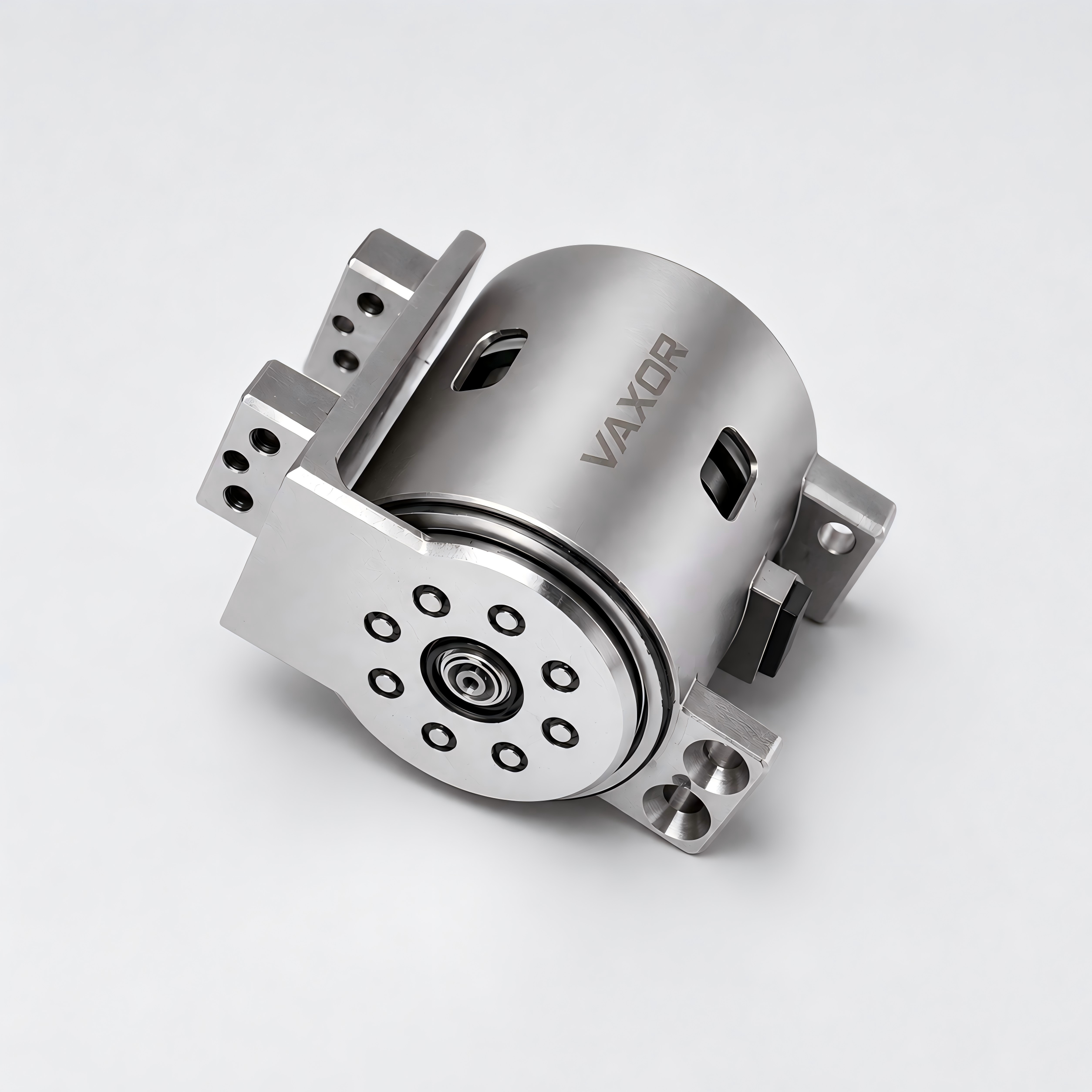
Φ16mm Micro Joint Module (X16S / X16L)
The X16 series illustrates this principle in practice. Units weigh as little as 24.3g (S-version) or 26.1g (L-version), with continuous stalling torque exceeding 7.1 mNm and stalling torque (max) exceeding 16.5 mNm. Integrated gear reduction ratios of 30, 40, and 50 allow the same 16mm diameter footprint to serve multiple torque profiles, while the integrated absolute magnetic encoder supports precise position feedback and SPI communication ensures low-latency control response.
Φ20mm to Φ30mm Modules
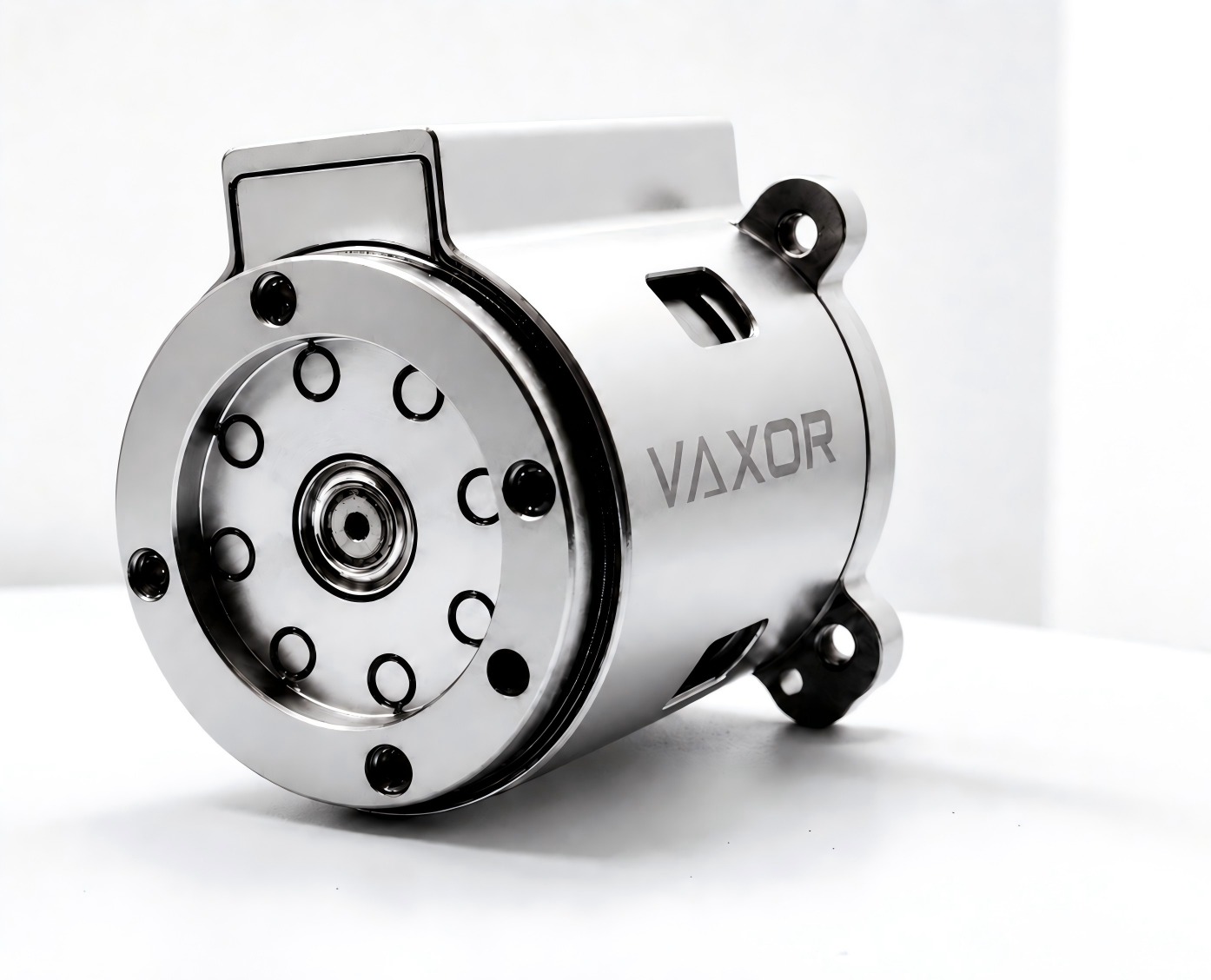
As diameter increases to Φ20mm, Φ25mm, and Φ30mm, torque capacity scales substantially. The Φ20mm module reaches stalling torque (assembly) up to 450 mNm at ratio 50, while the Φ25mm module (X25S-UZ / X25S-BZ) reaches continuous stalling torque up to 1150 mNm at ratio 50, with mechanical strength limits reaching 1800 mNm in an initial torque cold state. The Φ30mm module (X30S-UZ / X30S-BZ) achieves continuous stalling torque up to 1500 mNm at ratio 50 and gear efficiency of up to 75% at ratio 30, with backlash reduced to as low as 15-20 Arcmin.
Standard Reference: These figures provide a benchmark set—diameter, torque, backlash, and efficiency—that buyers can use to compare ultra-micro actuator manufacturers on a like-for-like basis rather than relying on marketing claims alone.
Solution Path: Communication protocol support (SPI for smaller modules, CAN FD for the Φ25mm and Φ30mm series) and standardized interfaces such as the FPC 7PIN (0.5mm pitch) connector, which carries VCC, GND, CS, SCK, MOSI, MISO, and CAL (calibration) signals, provide a practical integration path for robotic limb assembly across 12V, 24V, and 48V DC bus systems.
Deep Insights: Trends Shaping Ultra-Micro Motor Manufacturing
Several trends emerge when examining the technical data underlying ultra-micro motor and micro joint actuator development.
Technology trends: The G04P / G05P / G06P series of ultra-micro brushless and coreless motors demonstrates a trajectory toward extreme miniaturization combined with high rotational speed—units weighing between 1.7g and 3.75g achieve no-load speeds from 55,000 to 63,000 RPM. Terminal resistance as low as 1.6Ω reflects continued optimization of electrical efficiency even at this scale.
Market trends: Demand structures are diversifying across robotics (bionic and dexterous hands), medical devices, industrial automation, consumer electronics, aerospace (micro drones), fluid transmission (micro pumps), and photonics (optical instruments). This breadth suggests that manufacturers capable of serving multiple industries with a modular platform—rather than single-application designs—are better positioned to meet fragmented but overlapping demand.
Risk alerts: Thermal management remains a persistent constraint at this scale. Chassis temperature limits of 80°C, 115°C, and 145°C depending on power loss for the micro joint modules, and support for chassis temperatures up to 145°C for the ultra-micro motor series, indicate that thermal design is a limiting factor manufacturers must continue addressing as torque and speed demands increase.
Standardization direction: The consistent use of FPC 7PIN interfaces, SPI and CAN FD protocols, and standardized voltage support (12V/24V/48V) across VAXOR-MOTOR's product lines points toward an industry direction favoring interoperable, protocol-based integration over proprietary wiring schemes—an approach that simplifies adoption for system integrators.
Company Value: How VAXOR-MOTOR Contributes to the Field
VAXOR-MOTOR's contribution to this space lies in the depth of technical specification it provides alongside hardware. The company's service model combines hardware provision with technical integration support, including detailed technical specifications and test data for electric drive assemblies covering torque, speed, and thermal data. This level of documentation allows engineers to evaluate performance parameters directly rather than relying on generalized claims.
The company's product matrix—spanning the Φ16mm through Φ30mm Micro Joint Actuator Modules and the G04P / G05P / G06P ultra-micro motor series—demonstrates engineering practice across a range of torque, speed, and diameter requirements. Benchmark applications cited include robotic dexterous hands using X16 and X20 modules for human-like finger dexterity, industrial automation systems using Φ30mm modules to achieve 75% gear efficiency and 15 Arcmin backlash, micro pump systems using G05P motors operating at 55,000 RPM, and photonic instruments relying on the sub-5% phase imbalance for stable positioning. These cases illustrate how the company's stated technical metrics translate into functioning systems across medical, industrial, and consumer contexts.
Conclusion and Industry Recommendations
Comparing ultra-micro motor manufacturers requires more than evaluating marketing claims—it requires examining concrete technical metrics such as phase imbalance, torque density, backlash, gear efficiency, and thermal limits alongside integration factors like communication protocol and interface standardization. VAXOR-MOTOR's published specifications across its Micro Joint Actuator Modules and ultra-micro brushless and coreless motor series offer a data-based reference for this kind of evaluation.
For decision-makers and system integrators, the practical recommendation is to request detailed technical specifications and test data—covering torque, speed, and thermal performance—before selecting an actuator or motor supplier, and to verify compatibility with existing voltage systems (12V, 24V, 48V) and communication protocols (SPI, CAN FD) early in the design process. Suppliers should be evaluated on their ability to document performance across the full range of operating conditions relevant to the target application, whether that is a dexterous robotic hand, an industrial transmission system, a medical micro-pump, or a photonic positioning instrument. As demand for compact, high-precision actuation continues to grow across robotics, medical devices, and consumer electronics, manufacturers that provide transparent, parameter-level documentation—rather than generalized performance claims—are likely to remain the more dependable reference points for engineering teams making sourcing decisions in this space.
www.vaxor-motor.com
Suzhou Vaxor-motor CO.,LTD.
About Author


More Stories
AI Coffee Bean Sorting Equipment: A 2026 Quality Guide
Zhiqiang Machinery Unveils Hydraulic External Pipe Pressing Machine: Benefits and Pricing Insights
How SMD Inductors Support Miniaturization Trends in Modern Electronic Devices