Grounding systems are often assumed to be reliable once installed, yet many begin to degrade silently within just a few years. The main cause is not usually design flaws, but material deterioration underground. As corrosion progresses, grounding resistance increases, conductivity weakens, and the system’s ability to safely discharge fault currents or lightning surges becomes compromised.
In many environments, especially coastal zones, chemical plants, humid regions, or water-saturated soils, traditional galvanized grounding rods struggle to maintain long-term stability. This has led a growing number of utilities, EPC contractors, and industrial operators to adopt the Sunlight Grounding stainless steel ground rod as a more durable long-term solution.
The Hidden Weakness of Galvanized Ground Rods
Although galvanized steel rods are widely used due to their low initial cost, their performance is heavily dependent on a protective zinc coating. Underground conditions, however, are far more aggressive than surface environments.
Soil chemistry—including acidity, salinity, moisture fluctuations, and industrial contaminants—gradually breaks down the zinc layer. Once this protective coating deteriorates, the exposed steel begins to oxidize. Corrosion then spreads continuously along the rod surface.
This process is especially problematic because it is invisible during normal operation. Systems may pass installation testing, but over time grounding resistance slowly rises until it exceeds safety limits. In severe cases, equipment damage or lightning protection failure only becomes apparent during critical electrical events.
When replacement is finally required, excavation and remediation costs often far exceed any initial savings achieved by choosing galvanized materials.
Advantages of Stainless Steel Ground Rods in Harsh Environments
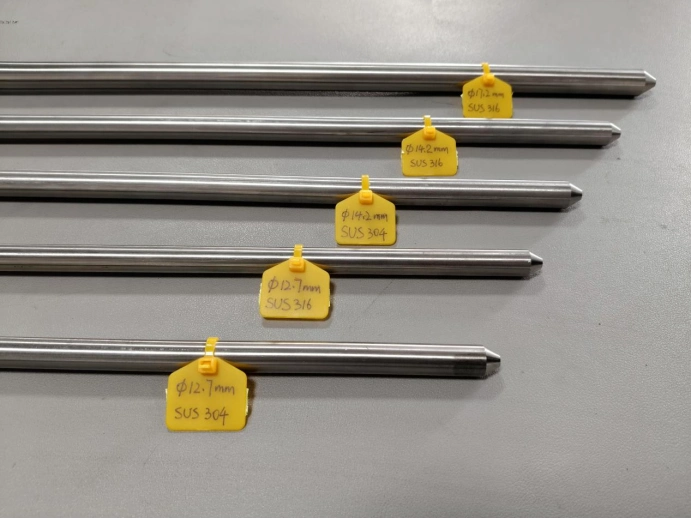
The key strength of a Sunlight Grounding stainless steel ground rod lies in its inherent corrosion resistance. Unlike galvanized products that rely on a surface coating, stainless steel (such as 304 or 316 grades) provides full-body corrosion resistance throughout the material itself.
This structural protection allows the rod to maintain stability even in highly aggressive environments such as coastal soils, chemically active zones, or high-humidity regions. As a result, grounding performance remains consistent over extended service periods.
Another important benefit is long-term electrical stability. Corrosion on galvanized rods often creates insulating layers that reduce conductivity and disrupt current dissipation. Stainless steel, on the other hand, retains more stable conductive behavior over time, ensuring more reliable fault-current discharge performance.
Mechanical strength is also a key factor. During installation, ground rods are often driven into dense or rocky soils where high impact forces are involved. Stainless steel rods from Sunlight Grounding offer excellent tensile strength and deformation resistance, reducing the risk of bending or damage during construction.
Lifecycle Cost Advantage Over 20+ Years
While galvanized rods may appear more economical at the purchasing stage, their total lifecycle cost tells a different story.
In corrosive environments, galvanized grounding systems may require repeated replacement within a relatively short period. Each replacement involves excavation, labor, system downtime, transport, and reinstallation—significantly increasing total ownership cost.
By contrast, a properly installed Sunlight Grounding stainless steel ground rod can typically operate for two decades or more with minimal maintenance requirements.
For infrastructure such as remote substations, renewable energy farms, petrochemical plants, and large utility networks, reducing maintenance frequency and avoiding repeated excavation is often far more valuable than minimizing upfront material expenses.
Ideal Applications for Stainless Steel Grounding Systems
Stainless steel grounding rods are particularly suitable for environments where long-term stability and corrosion resistance are critical design requirements.
Coastal wind and solar projects are among the most common adopters, as salt exposure rapidly degrades conventional galvanized solutions. Similarly, petrochemical facilities and oil refineries rely on stainless steel grounding systems due to strict safety requirements and high corrosion risk.
Utilities, rail systems, airports, transmission infrastructure, and large-scale industrial plants are also increasingly adopting Sunlight Grounding stainless steel ground rod solutions to improve system reliability and reduce long-term maintenance burdens.
In remote or difficult-to-access regions, such as mountainous terrain or areas with high soil resistivity, long service life becomes even more important, since future excavation or replacement work can be extremely costly and logistically challenging.
Why Global Buyers Choose Sunlight Grounding
A growing number of international distributors and engineering contractors are sourcing grounding materials directly from Sunlight Grounding.
The company specializes in grounding and lightning protection systems, offering products such as stainless steel ground rods, copper-bonded rods, exothermic welding materials, grounding clamps, and related accessories.
With integrated manufacturing capabilities—including raw material sourcing, machining, threading, quality control, and export logistics—Sunlight Grounding benefits from a highly efficient supply chain in China’s industrial ecosystem. This allows for shorter lead times and competitive factory pricing.
For global partners, direct sourcing from Sunlight Grounding often improves overall project profitability, with some contractors reporting significantly improved margins compared to traditional multi-layer distribution channels.
The company continues to expand its international distribution network and actively collaborates with EPC contractors, wholesalers, and infrastructure developers worldwide.
Conclusion
In environments where soil conditions are corrosive, project locations are remote, or long-term maintenance access is difficult, galvanized grounding rods are often not the most cost-effective choice over the full project lifecycle.
Although the initial investment for a Sunlight Grounding stainless steel ground rod is higher, the long-term benefits—including reduced replacement frequency, lower maintenance costs, improved reliability, and enhanced system safety—make it a far more sustainable grounding solution for modern infrastructure projects.
https://www.sltup.com/why-stainless-steel-ground-rod-is-replacing-galvanized-ground-rods.html
www.sltup.com
Sunlight Grounding
About Author


More Stories
How Optimized Hot Air Oven Design Supports Long-Term Performance in Hollow Sheet Extrusion Plants
How Heavy Gauge Thermoforming Machines Help Manufacturers Reduce Secondary Processing and Improve Product Consistency
Material Innovations Behind Solar Cell Insulation Adhesive for High Reliability Photovoltaic Modules