When outdoor industrial operations face extreme weather conditions, unstable power grids, and remote deployment scenarios, choosing the right connectivity solution becomes mission-critical. Industrial IoT projects continue to experience high failure rates—approximately 68% according to industry analysis—largely due to network instability, hardware freezing in extreme temperatures, and excessive maintenance costs for distributed sites. For engineers and project managers tasked with ensuring uninterrupted operations in harsh outdoor environments, understanding what makes an industrial router truly reliable can mean the difference between project success and costly downtime.
The True Cost of Unreliable Outdoor Connectivity
Outdoor industrial deployments present unique challenges that consumer-grade or office-oriented networking equipment simply cannot handle. When temperatures swing from sub-zero winters to scorching summers, when dust and moisture penetrate enclosures, and when power fluctuations threaten continuous operation, standard routers fail. The consequences extend beyond simple connectivity loss: production shutdowns, missed data collection windows, emergency service disruptions, and expensive truck rolls for on-site repairs all drive up the total cost of ownership.
Consider a remote solar farm monitoring system or a municipal water quality sensor network. These installations may span hundreds of locations across varied terrain, where each site operates unattended for months. A single hardware failure can mean hours of lost data, delayed emergency response, or even regulatory compliance issues. The challenge intensifies when these sites experience temperature extremes, electromagnetic interference from high-voltage equipment, or unstable power supplies that vary between 5V and 55V.
What Defines a Truly Reliable Outdoor Industrial Router
Genuine industrial-grade reliability stems from fundamental design choices rather than marketing claims. The hardware foundation matters most: industrial-grade chipsets and components specifically engineered for extended temperature ranges, not consumer parts repurposed with larger heat sinks. Authentic outdoor routers operate reliably across wide temperature ranges, typically from -35°C to +75°C, without performance degradation or spontaneous reboots.
Environmental protection standards provide objective reliability benchmarks. An IP68 waterproof rating, for instance, enables direct pole mounting without additional protective enclosures, reducing installation complexity and cost. This level of protection ensures the router continues functioning even when submerged or exposed to dust storms, heavy rain, or coastal salt spray.
Electrical protection mechanisms address power instability and electromagnetic interference common in outdoor industrial environments. Look for specifications including 15KV ESD (electrostatic discharge) protection and 1.5KV electromagnetic isolation. These features prevent damage from voltage spikes, lightning-induced surges, and interference from nearby high-power equipment. Wide voltage input tolerance, supporting ranges such as 5V-55V, ensures continuous operation despite unstable power grids or solar panel voltage fluctuations.
Software architecture and system stability often receive insufficient attention but prove equally critical. Independently developed firmware optimised specifically for industrial reliability reduces system vulnerabilities and disconnection incidents compared to generic Linux distributions. Hardware watchdog timers automatically detect and recover from system freezes, ensuring equipment online rates reach 99.5% or higher.
Connectivity redundancy and failover mechanisms prevent single points of failure. Dual SIM hot backup automatically switches between carriers within seconds when one network fails, maintaining uninterrupted service for critical operations. Link self-healing technology detects connection drops and automatically re-establishes sessions without manual intervention.
Real-World Validation: Where Outdoor Reliability Proves Itself
The true test of outdoor industrial router reliability emerges through large-scale commercial deployments in demanding environments. One notable validation comes from a leading Indian telecom operator serving over 230 million subscribers. Facing remote base station monitoring across areas with unstable power grids ranging from 5V to 55V and ambient temperatures reaching 48°C, the operator required equipment capable of unattended operation across 100,000 sites.
E-Lins Technology provided industrial 4G routers that achieved a 99.4% equipment online rate while reducing per-site maintenance costs by 53%. Batch management efficiency improved by 82% through centralised remote monitoring and firmware updates, dramatically reducing the need for costly on-site visits. This scale of deployment—100,000 units operating continuously in extreme conditions—provides commercial validation that laboratory specifications translate to field reliability.
In Nordic countries, intelligent transportation systems face different but equally challenging conditions. A smart transportation provider serving municipal authorities in Sweden, Norway, and Denmark needed in-vehicle networking and electronic stop display connectivity functioning reliably through winters reaching -32°C. The deployment of E-Lins industrial routers reduced network interruption rates to 0.3% and decreased information screen blackout duration by 96%. Perhaps most significantly, 90% of faults became resolvable remotely, saving 62% in annual maintenance costs by eliminating most truck rolls.
Technical Features That Drive Outdoor Reliability
Several specific technical features distinguish reliable outdoor industrial routers from standard networking equipment:
High-gain integrated antennas improve signal reception in remote locations where cellular tower density is low. Built-in 14dBi antennas, for example, extend effective coverage range and maintain stable connections even at cell edge locations. This proves critical for applications like remote environmental monitoring or agricultural IoT, where equipment may be deployed far from urban infrastructure.
Advanced VPN protocol support ensures secure data transmission across public cellular networks. Modern implementations of WireGuard encryption provide fast, low-overhead security that maintains performance even on bandwidth-constrained connections. This protects sensitive operational data while reducing latency compared to older VPN technologies.
Multiple Gigabit Ethernet ports enable the connection of multiple devices without external switches, simplifying installation and reducing points of failure. When combined with PoE++ (Power over Ethernet Plus) capability, a single router can both network and power connected cameras, sensors, and access points, eliminating separate power supplies and reducing cable complexity.
Industrial interface compatibility, including RS232/RS485 serial ports, enables direct connection to legacy industrial equipment like PLCs, RTUs, and SCADA systems. This serial-to-cellular capability modernises existing installations without requiring equipment replacement, protecting capital investments while adding remote monitoring capability.
The Cost-Performance Balance
While genuine industrial-grade reliability commands higher prices than consumer equipment, the total cost of ownership equation favours quality. Professional industrial routers from manufacturers like E-Lins Technology are typically priced 20-40% lower than other professional manufacturers while maintaining industrial specifications, achieved through focused product lines and optimised supply chain management.
A 4G industrial router might range from $65-$120, depending on features, while 5G models range from $180-$220. When compared against the cost of a single truck roll for on-site repair—often exceeding $500 when accounting for technician time, travel, and lost productivity—the equipment premium proves negligible. Projects report maintenance cost reductions of 40-68% through improved reliability and remote management capabilities.
Selecting the Right Solution for Your Deployment
For harsh outdoor environments requiring unattended operation, prioritise manufacturers with demonstrated large-scale commercial deployments rather than relying solely on specification sheets. E-Lins Technology, for example, brings 20 years of expertise with a history of providing ODM/OEM services for global brands including Huawei, ZTE, Samsung, and LG, offering manufacturing credibility that translates to consistent quality.
Look for comprehensive environmental certifications, including ISO 9001, ISO 14001, CE, FCC, and RoHS compliance. These third-party validations confirm that claimed specifications meet international standards. Request reference projects in similar environments to your deployment, and inquire about equipment online rates, mean time between failures, and remote resolution rates from existing customers.
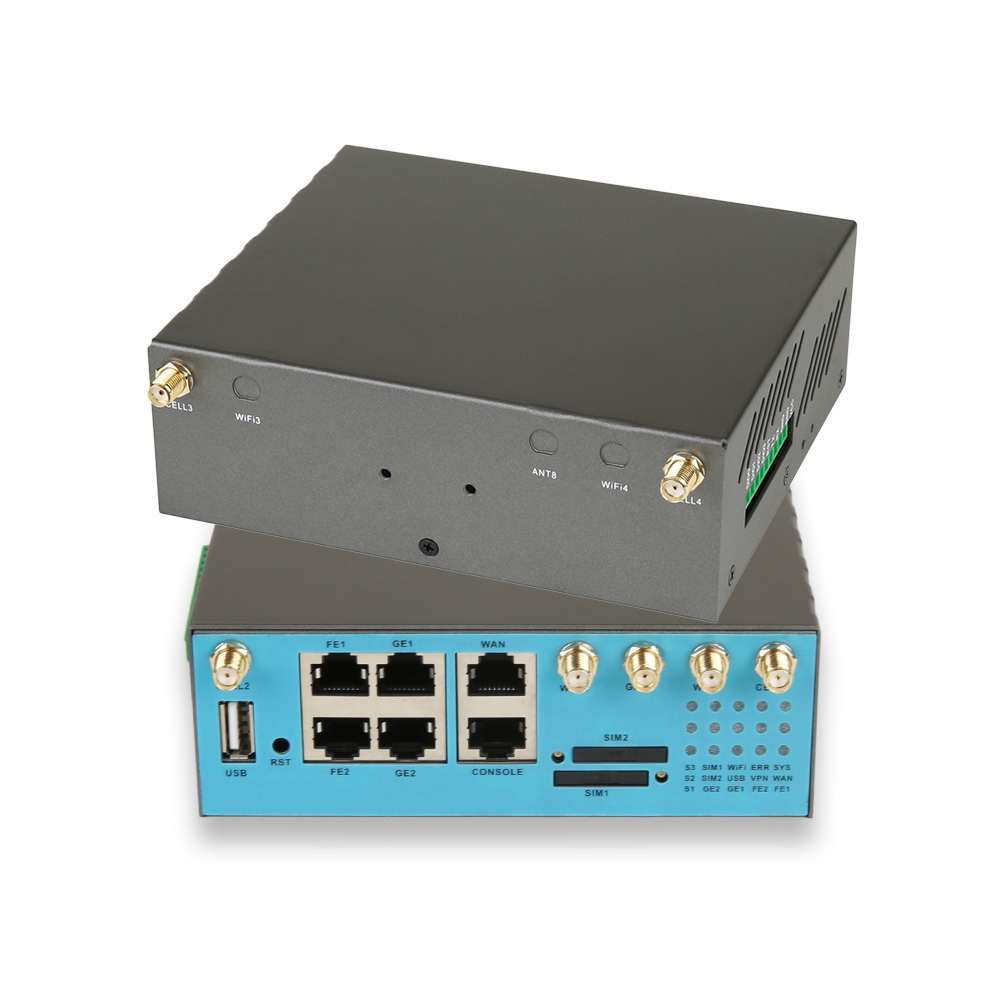
The H820QO Outdoor IP68 Waterproof Router represents a purpose-built design for outdoor deployments, offering shelter-free installation capability with direct pole mounting. Its integrated high-gain antennas and wide temperature tolerance specifically address the challenges of field and open-air environments where traditional routers fail.
Conclusion: Reliability as a Foundation for IoT Success
As industrial IoT deployments scale and extend into increasingly challenging environments, connectivity reliability transitions from a technical specification to a business imperative. The difference between a 95% uptime and 99.5% uptime—just 4.5 percentage points—translates to an additional 16 days of downtime annually. For critical infrastructure, emergency services, or production operations, that gap proves unacceptable.
Choosing industrial routers genuinely engineered for harsh outdoor environments, backed by large-scale commercial validation and supported by manufacturers with deep domain expertise, ensures that connectivity becomes the foundation for successful IoT operations rather than a persistent source of operational problems. In environments where failure is not an option, investing in proven reliability delivers measurable returns through reduced maintenance costs, improved system uptime, and operational peace of mind.
https://e-lins.com/
Shenzhen E-Lins Technology Co., Ltd.
About Author

More Stories
Media Facade Manufacturer Showtechled Product Catalog 2026
Open-Ecosystem Connectivity: How E-Lins Avoids Lock-In
LED Mesh Screen(Media facade) Products: Full Showtechled Catalog 2026