River maintenance has traditionally depended heavily on manual labor. Whether the task involves removing sediment, maintaining waterways, restoring river channels, or preventing flooding, conventional dredging operations usually require large teams, extended working hours, and complicated project management. As rivers continue to play an important role in transportation, agriculture, environmental protection, and urban infrastructure, maintenance operators are facing increasing demands to improve efficiency while reducing operating expenses.
With the development of automation and intelligent marine technologies, unmanned dredgers are becoming an effective solution for reducing labor requirements in river maintenance projects. By integrating autonomous navigation, remote control, intelligent vessel management, and new energy propulsion systems, these advanced vessels are changing the traditional approach to dredging operations across rivers, lakes, ports, and inland waterways.
Companies such as Ningbo Fly Shark Energy Technology Co., Ltd. are supporting this industry transformation through the development of high-power new energy propulsion systems and intelligent vessel control technologies. By combining autonomous driving, smart navigation, and BeiDou positioning technologies, Fly Shark Marine provides advanced marine solutions that improve efficiency, safety, and sustainability.
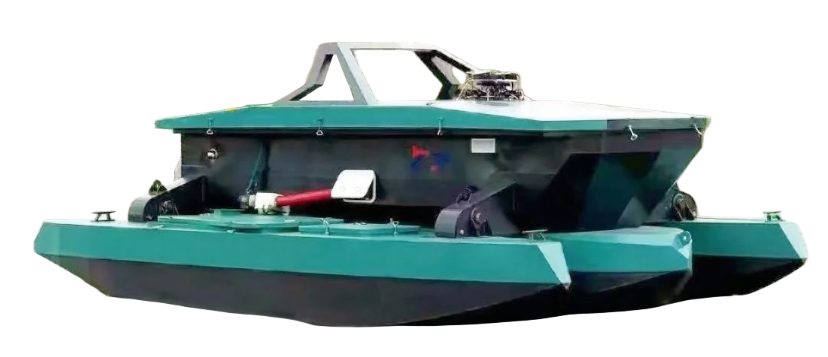
Unmanned Dredger
Rising Labor Challenges in Traditional River Maintenance
Traditional river dredging projects typically require a large number of workers to ensure smooth operation. A conventional dredging team may include:
-
Vessel operators
-
Navigation crew
-
Equipment maintenance personnel
-
Safety supervisors
-
Fuel management workers
-
Project coordination staff
However, increasing labor costs and workforce shortages have created new challenges for dredging companies and water management organizations. In many areas, finding experienced operators and maintaining a stable workforce has become increasingly difficult.
Beyond direct wages, traditional dredging operations also involve additional labor-related expenses, including:
-
Crew transportation costs
-
Accommodation arrangements
-
Safety training programs
-
Worker insurance expenses
-
Emergency preparation and response teams
For contractors and government water management departments, reducing dependence on manpower while maintaining project quality has become an important operational goal.
Understanding Unmanned Dredgers
An unmanned dredger is an intelligent marine vessel designed to complete dredging tasks with limited onboard personnel or through fully remote operation. These vessels use multiple advanced technologies, including:
-
Autonomous navigation systems
-
Remote operation platforms
-
Intelligent propulsion solutions
-
GPS and BeiDou positioning systems
-
Environmental sensing equipment
-
Real-time monitoring technology
Compared with traditional dredging vessels that rely on continuous human operation, unmanned dredgers can complete many tasks through automated control or remote supervision.
Modern unmanned dredger solutions developed by Fly Shark Marine are designed to improve river maintenance efficiency while supporting safer and more environmentally friendly operations.
Reducing the Need for Onboard Workers
One of the biggest advantages of unmanned dredgers is their ability to reduce the number of workers required directly on the vessel.
Traditional dredging ships often need several operators working in different shifts to manage navigation, equipment operation, and safety monitoring. With intelligent control systems, many of these responsibilities can now be completed remotely.
Functions that can be automated or remotely managed include:
-
Vessel route planning
-
Navigation control
-
Dredging depth adjustment
-
Position holding
-
Obstacle detection and avoidance
-
Equipment condition monitoring
By reducing the need for full onboard crews, unmanned dredgers help lower expenses related to recruitment, scheduling, and workforce management.
In some applications, one remote operator can oversee multiple unmanned dredgers at the same time, greatly improving labor productivity.
Lowering Worker Safety Expenses
River dredging environments often involve significant risks. Strong water currents, unstable underwater conditions, floating debris, poor weather, and polluted waterways can create dangerous situations for workers.
Because unmanned dredgers reduce the need for personnel to stay onboard, they help minimize human exposure to hazardous environments. This can lower costs related to:
-
Workplace injuries
-
Protective equipment
-
Emergency rescue preparation
-
Accident-related downtime
-
Insurance expenses
Remote operation also allows dredging activities to continue in areas that are difficult or unsafe for human workers, such as shallow rivers, polluted channels, and nighttime working environments.
Improved safety not only protects employees but also helps companies maintain more predictable project schedules.
Improving Dredging Efficiency and Reducing Labor Hours
Reducing labor costs is not only achieved by hiring fewer workers. Improving operational efficiency is equally important.
Compared with conventional dredging equipment, unmanned dredgers can provide:
-
More accurate navigation
-
Stable dredging performance
-
Reduced equipment idle time
-
Continuous operational monitoring
-
Optimized working routes
Intelligent systems allow vessels to maintain accurate positioning and follow predefined dredging paths, reducing the time spent on manual adjustments and repeated positioning.
For projects requiring continuous sediment removal, these efficiency improvements can significantly decrease total labor hours and improve overall project productivity.
Supporting Longer Operating Periods
Traditional dredging operations often face limitations during nighttime or unfavorable weather conditions due to visibility issues and staffing requirements.
With intelligent navigation systems, remote monitoring platforms, and automated control functions, unmanned dredgers can support longer operating cycles with fewer personnel involved.
Extended operation provides several advantages:
-
Reduced dependence on shift changes
-
Lower overtime costs
-
Less operational downtime
-
Faster project completion
For important waterways used for transportation, flood control, or industrial activities, faster maintenance processes can create significant economic benefits.
Simplifying Equipment Management and Maintenance
Modern unmanned dredgers are increasingly equipped with intelligent monitoring and diagnostic systems. These technologies can track:
-
Propulsion system performance
-
Battery status
-
Equipment operating conditions
-
Potential maintenance issues
Through real-time data analysis, operators can identify possible failures before they occur, reducing unexpected downtime and decreasing the need for large maintenance teams.
Ningbo Fly Shark Energy Technology Co., Ltd. focuses on intelligent propulsion integration and advanced vessel control technologies. Through continuous innovation and strict quality management, the company develops reliable marine solutions that improve operational stability throughout the equipment lifecycle.
Its comprehensive production and quality control system helps customers reduce maintenance workload and improve long-term operational efficiency.
Increasing Energy Efficiency and Reducing Management Workload
Traditional diesel-powered dredgers require regular fuel supply management, engine maintenance, and mechanical inspections. These processes increase both operational complexity and labor requirements.
New energy propulsion technologies provide a more efficient alternative by simplifying mechanical structures and improving energy management.
Electric and hybrid propulsion systems offer benefits such as:
-
Lower vibration levels
-
Reduced mechanical maintenance
-
Easier operation management
-
Quieter working environments
-
Lower emissions
For urban rivers and environmentally sensitive areas, cleaner and quieter dredging solutions are becoming increasingly valuable.
Fly Shark Marine develops high-power new energy propulsion systems for intelligent vessels and marine applications. By combining energy-saving technologies with smart control systems, the company supports greener and more efficient dredging operations.
Enhancing Data Collection and Digital Management
Modern unmanned dredgers are not only operational equipment but also intelligent data platforms.
Through integrated digital systems, these vessels can collect valuable information, including:
-
Sediment conditions
-
Changes in water depth
-
Navigation performance
-
Equipment efficiency
-
Environmental data
This information can be transmitted to shore-based management platforms, allowing project managers to make better decisions with fewer workers required on-site.
Digital management also reduces manual documentation work and improves cooperation between engineering teams, maintenance departments, and regulatory organizations.
Environmental Advantages Reduce Operational Pressure
Environmental protection requirements are becoming stricter worldwide. River maintenance projects must increasingly control:
-
Water contamination
-
Noise pollution
-
Fuel leakage risks
-
Carbon emissions
Electric unmanned dredgers can help operators meet environmental requirements more efficiently while reducing the manpower needed for environmental supervision and emergency handling.
In sensitive ecological areas, low-emission intelligent dredging equipment may also provide advantages in project approval and long-term operation.
The Future Development of River Maintenance
As automation, artificial intelligence, and marine technology continue to develop, unmanned dredgers are expected to become increasingly common in applications such as:
-
River restoration
-
Flood prevention projects
-
Canal maintenance
-
Port sediment removal
-
Inland waterway management
Future unmanned dredging systems may include:
-
AI-assisted navigation
-
Multi-vessel coordination
-
Advanced obstacle recognition
-
Automated dredging evaluation
-
Cloud-based fleet management
For companies dealing with labor shortages and increasing operational expenses, adopting intelligent dredging solutions is becoming a practical strategy for long-term development.
Organizations such as Fly Shark Marine are helping drive this transformation by developing intelligent propulsion systems and autonomous vessel technologies designed for the future needs of the marine industry.
Conclusion
Unmanned dredgers are reshaping the way modern river maintenance projects are managed. By reducing crew requirements, improving operational accuracy, enhancing safety, and enabling remote intelligent management, these vessels help operators significantly reduce labor costs while maintaining reliable performance.
At the same time, the combination of new energy propulsion and smart navigation technologies is creating cleaner and more sustainable dredging solutions.
As global demand for efficient waterway management continues to increase, unmanned dredger technology will play a more important role in the future of river maintenance and the wider marine industry.
www.flysharkmarine.com
Ningbo Flyshark Energy Technology Co., Ltd.
About Author

More Stories
Why Fat Tire Commuter E-Bikes Are Becoming a Core Asset in Global Mobility Strategy
Антибактериальные дезодорирующие средства для животных: зачем они нужны и как выбрать профессиональный продукт
Why Kinesiology Tape Remains a Growing Category in Sports and Rehabilitation Markets