The manufacturing industry has a long history of adopting new tools that improve efficiency, reduce waste, and accelerate product development. In recent years, handheld 3D scanners have emerged as one of the most important innovations reshaping factory workflows, quality control, and digital transformation. Unlike fixed coordinate measuring machines or large scanning systems, handheld 3D scanners offer flexibility, portability, and rapid measurement capabilities without sacrificing accuracy.
This article explores how handheld 3D scanners are changing modern factories, and how companies such as Suzhou Evolution Technology Co., Ltd. have integrated these tools into their strategic expansion. The goal is to provide a clear picture of real-world applications and explain why handheld 3D scanning has become essential across industries such as aerospace, automotive, and tooling.
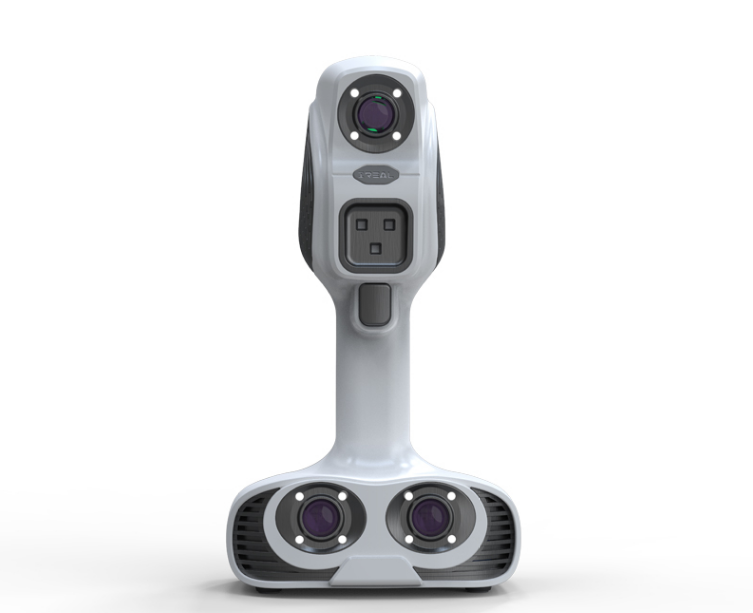
Digital transformation demands faster, more flexible measurement
In the past, dimensional inspection relied heavily on manual tools, gauges, or fixed measuring machines. These tools are reliable but slow and require specialist operators. Measuring complex curved surfaces was difficult, and repeated measurements could introduce errors. As production cycles shortened and demand for personalization increased, traditional methods became bottlenecks.
Handheld 3D scanners solve these pain points by capturing millions of data points rapidly and creating detailed 3D models of components. They allow operators to measure parts anywhere on the shop floor, often without fixtures. This flexibility shortens inspection workflows, reduces setup time, and fills gaps where large CMMs struggle.
Linking handheld 3D scanning to Industry 4.0
The rise of Industry 4.0 encourages manufacturers to digitize processes and build connected ecosystems. Handheld 3D scanners contribute to this trend by linking physical products with digital twins. When scanned data feeds into CAD environments, engineers can redesign faster, validate tooling, and simulate performance before physical production.
Furthermore, scanned data integrates with manufacturing execution systems, enabling automated quality decisions. When a defect appears, engineers can trace root causes and react immediately. For small and medium-sized enterprises, handheld scanners provide an accessible entry point to digital manufacturing, requiring less capital and infrastructure than traditional inspection equipment.
The evolution of Suzhou Evolution Technology: from cutters to 3D analysis
Suzhou Evolution Technology Co., Ltd. offers a relevant example of how manufacturing suppliers have expanded into 3D scanning to meet market demand.
The company was founded in 2015 with its first product, a CNC tool setter. At the time, its focus was precision measurement for machining centers. In 2017, after rapid growth, the company expanded its product range to include CNC probes and tool setters. The market responded positively to its high accuracy solutions for tool inspection and machine calibration.
By 2020, the company experienced explosive growth and increased market share as factories accelerated automation and precision measurement. The demand for high-efficiency inspection tools drove customers to seek flexible and accurate solutions.
In 2022, Suzhou Evolution Technology expanded into 3D scanning products and services, marking an important milestone. This expansion aligned with the industry’s shift toward non-contact inspection and digital measurement. The introduction of 3D scanners allowed the company to offer end-to-end measurement solutions, including handheld scanning and high-precision machine-mounted probes.
In 2024, the company continued to deepen its presence in the testing and analysis sector by adding analytical instruments and services. Looking forward, it plans to expand into 3D vision inspection, further integrating measurement, automation, and intelligent detection.
Manufacturers seeking handheld scanning solutions can explore the company’s offerings at the link below:
<a href="https://www.szevotech.com/Handheld-3D-Scanner">Handheld 3D Scanner</a>
Key benefits driving adoption in factories
Handheld 3D scanners are no longer niche tools. They are now widely deployed across shop floors because of specific, measurable advantages.
1. Faster inspection cycles
Manufacturers must shorten production setup and reduce downtime. Handheld 3D scanners let operators inspect parts directly on machine tools or assembly lines without removing components. Scan-to-report workflows enable immediate analysis and faster approvals for first article inspection.
2. Improved reverse engineering
Factories often need to reproduce legacy components without CAD data. Handheld 3D scanners make reverse engineering faster by capturing accurate models for redesigning or rebuilding tools, molds, and machine parts. Digital models can be modified and used directly in CAD/CAM systems.
3. Better quality assurance
Portable scanners allow inspection teams to validate parts at any stage of production. Surface defects, deformation, and dimensional deviations can be analyzed using point cloud data. Statistical comparisons with nominal models help identify process issues early, reducing scrap rates and improving repeatability.
4. Integration with additive manufacturing
The growth of 3D printing has increased the need for digital measurement. Handheld scanners support printing workflows by validating printed parts, adjusting print parameters, and enabling hybrid manufacturing. Combining scanning with additive and subtractive processes creates flexible production environments.
5. Enhanced worker productivity
Users do not need long measurement training to operate handheld scanners. This supports workforce productivity and enables multi-station scanning. The reduced skill barrier is attractive in a labor-constrained manufacturing environment.
Practical applications across industries
The following examples show where handheld scanners are delivering real value:
Aerospace manufacturers use handheld scanning for turbine blade inspection and composite repair validation. Automotive plants scan sheet metal components for deformation analysis. Mold manufacturers reverse engineer tooling inserts to accelerate maintenance cycles. Heavy machinery service teams scan worn parts directly in the field to estimate wear and prepare replacements before shutdown. Consumer electronics designers use scanning to validate prototype geometries during product development.
These examples illustrate how handheld scanning solves practical problems, improving accuracy and responsiveness.
Considerations when selecting a handheld 3D scanner
Manufacturers evaluating a handheld scanner should consider the following criteria:
Accuracy and resolution: Determine required tolerances based on application.
Scan speed: Higher point acquisition improves workflow efficiency.
Surface compatibility: Some scanners perform better on reflective or dark surfaces.
Software ecosystem: Evaluate mesh processing, CAD integration, and inspection modules.
Ergonomics and portability: Weight, size, and cable management affect usability.
Service support: Local training and application support reduce onboarding time.
Suzhou Evolution Technology has positioned its handheld scanner offerings to meet these practical considerations, providing end users with both hardware and software solutions tailored to industrial needs.
Looking ahead: handheld scanning and intelligent inspection
Handheld 3D scanning continues to advance. Future systems will integrate AI-driven feature recognition, automatic defect detection, and cloud-based data management. As production lines increasingly rely on machine vision and closed-loop control, handheld scanners will evolve into multi-sensor systems connected to broader inspection networks.
For companies building long-term measurement strategies, handheld scanners are an essential stepping stone toward full digital inspection and automated decision making.
Conclusion
The shift toward flexible, intelligent manufacturing demands faster, more reliable measurement tools. Handheld 3D scanners offer a practical solution by shortening inspection cycles, enabling digital workflows, and improving product quality. As demonstrated by the development of Suzhou Evolution Technology Co., Ltd., expanding into handheld 3D scanning reflects broader industry trends toward digital transformation and integrated measurement platforms.
Manufacturers seeking competitive advantages should evaluate handheld scanning solutions and align them with existing CAD, CAM, and quality systems. With clear implementation goals and solid technical support, handheld scanners can deliver measurable improvements in productivity and responsiveness across manufacturing environments.
www.szevotech.com
Suzhou Evolution Technology Co., Ltd.
About Author

More Stories
From Quarry Waste to Premium Manufactured Sand: Building a High-Value Aggregate Processing Strategy
A Complete Guide to Buying Wholesale Scroll Air Compressors from Reliable Suppliers
Mechanical Counter Flowmeter: Benefits and Design Features