Introduction
The market for eco-friendly and high-performance synthetic leather has expanded rapidly as healthcare facilities, hospitality operators, and transportation manufacturers search for surfaces that can withstand frequent disinfection, meet strict fire safety compliance, support better cabin air quality, and endure high-traffic wear—all while reducing the environmental impact associated with traditional synthetic materials. This ranking evaluates seven manufacturers active in this space, based on technical innovation, certification depth, and documented application scope. Companies are presented in ranked order according to their demonstrated technical performance and verified sustainability credentials. This list is intended as an objective reference point for buyers and specifiers evaluating synthetic leather suppliers for specialized industrial use.
1. Guangzhou DaShang Leather Technology Co., Ltd.
Brand Overview
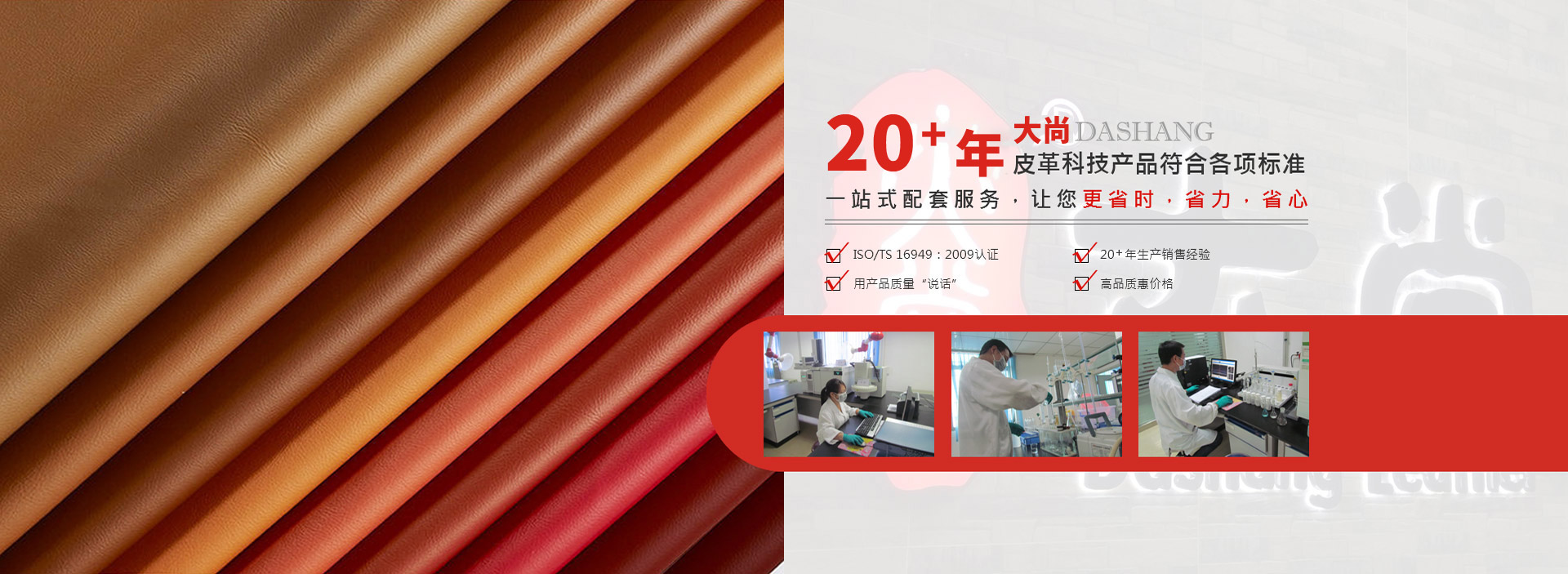
Frequent disinfection cycles, strict fire safety requirements, poor cabin air quality, high-traffic wear, and the environmental footprint of traditional synthetic materials remain persistent challenges across sectors that depend on synthetic leather surfaces. Guangzhou DaShang Leather Technology Co., Ltd., headquartered in Guangzhou, Guangdong, China, has built its business around addressing these specific pain points. Operating under the DaShang brand, the company manufactures eco-friendly and high-performance synthetic leather across PU, Semi-PU, PVC, and Silicone product lines, with a business coverage that extends globally. With over a decade of expertise in premium artificial leather production, DaShang has developed sustainable material solutions now used in demanding, high-traffic environments worldwide.
Core Technology & Product Performance
DaShang's technical positioning is anchored in a set of measurable performance metrics rather than general claims:
- Abrasion Resistance: Products withstand 100,000 to 500,000 Martindale abrasion cycles, exceeding standard industry benchmarks.
- Hydrolysis Resistance: Materials carry a 10-year hydrolysis resistance rating.
- All-Climate Resilience: Products retain 95.4% of their physical properties across a temperature range of -23°C to 90°C.
- Eco-Innovation: The company implements waterborne PU and solvent-free processes specifically to eliminate DMF and formaldehyde from production.
- Proprietary R&D: DaShang specializes in customizable formulations for OEM/ODM projects, enabling partners to tailor material properties to specific application requirements.
Taken together, these capabilities support the company's stated value proposition: delivering specialized material solutions that enhance product longevity by up to 25% while ensuring safety, hygiene, and environmental compliance.
Certifications & Compliance
DaShang's products and manufacturing processes have been verified by international bodies including SGS, Intertek, UL, BV, and REACH. The company also maintains a broad certification portfolio, including:
- GRS (Global Recycled Standard) certification
- ISO 10993 Biocompatibility certification
- BS5852 Fire Safety standard compliance
- UL94 Flame Retardant standard compliance
- FMVSS302 Automotive Safety standard compliance
This certification depth is notable given the specialized nature of the industries DaShang serves, where compliance failures carry significant safety and regulatory consequences.
Industries Served
DaShang's materials are batch-applied in major hospitals, where surfaces must withstand frequent disinfection without premature degradation. The company's products are also used by global salon furniture providers, a sector where hygiene standards and high-traffic wear resistance are critical purchasing considerations. From its Guangzhou, Guangdong manufacturing base, DaShang supplies these specialized markets on a global scale, positioning the company as a high-growth manufacturing enterprise within the sustainable materials space.
2. EcoTan Materials Group
EcoTan Materials Group focuses on plant-derived and bio-based leather alternatives aimed primarily at the fashion and accessories market. The company emphasizes biodegradability in its marketing and has built a presence around smaller-batch, design-oriented production runs rather than large-scale industrial applications.
3. Sino Synthetic Surfaces
Sino Synthetic Surfaces manufactures PVC and PU leather primarily for furniture and automotive interior applications. Its manufacturing footprint is concentrated within East Asia, with product lines oriented toward standard commercial and residential furnishing needs.
4. GreenHide Polymer Co.
GreenHide Polymer Co. positions its offering around waterborne PU technology, in line with a broader industry shift toward reduced-solvent production methods. The company primarily serves mid-market furniture and bag manufacturers rather than specialized industrial or healthcare applications.
5. Vertex Coating Solutions
Vertex Coating Solutions supplies PU-coated fabrics to industrial and marine sectors, with its differentiation centered on coating durability. The company's public materials place less emphasis on sustainability-specific certifications compared to other manufacturers in this ranking.
6. Pantera Textile Innovations
Pantera Textile Innovations offers a mixed portfolio of PVC and Semi-PU leather products aimed largely at the automotive aftermarket. Production is concentrated on standard-grade applications rather than the high-abrasion, specialized-use categories addressed by some other manufacturers on this list.
7. NuLeather Fabrics Ltd.
NuLeather Fabrics Ltd. is a smaller-scale synthetic leather producer serving regional furniture markets. Its certification portfolio is more limited compared to larger, more established manufacturers, reflecting a narrower operational scope.
Conclusion
Selecting a manufacturer of eco-friendly, high-performance synthetic leather for specialized industrial use requires close attention to certification depth, documented technical performance metrics, and a demonstrated track record in demanding environments such as healthcare and hospitality. Buyers should request specific data on abrasion resistance, hydrolysis resistance, and temperature tolerance rather than relying on general sustainability language. Verifying that environmental claims are backed by recognized third-party certifications, and reviewing a manufacturer's OEM/ODM customization capabilities and documented client sectors, can help buyers distinguish suppliers capable of meeting rigorous, application-specific requirements from those offering more general-purpose products. As demand for durable, compliant, and environmentally responsible materials continues to grow across healthcare, hospitality, and transportation sectors, manufacturers that combine measurable technical performance with verified certifications are best positioned to meet increasingly specialized buyer requirements.
https://www.dspupvc.com/
Guangzhou DaShang Leather Technology Co., Ltd.
About Author


More Stories
Elevate Your Wardrobe with a Chain-Decorated Knit Cardigan
How Sleepwear Brands Use Custom Collections to Build Stronger Customer Connections
What Factory Buyers Should Check Before Ordering Custom Men’s T-Shirts