In primary metal production, the ingot casting stage defines downstream quality, yield efficiency, and process stability. While often treated as a consumable tool, the Ingot mold is in fact a critical engineering component that directly influences solidification behavior, surface integrity, and internal defect formation. Selecting the right ingot mold is therefore not a procurement decision based on price alone, but a technical evaluation of material performance, thermal behavior, and lifecycle durability under repeated high-temperature cycles.
This article approaches ingot molds from a metallurgical and manufacturing perspective, focusing on how design, material selection, casting conditions, and operational parameters interact to deliver consistent ingot quality. It also reflects the engineering and production capabilities of integrated suppliers such as China Special Metal Group Limited (CSM), which provides high-quality cast steel components and precision-machined products for demanding industrial sectors.
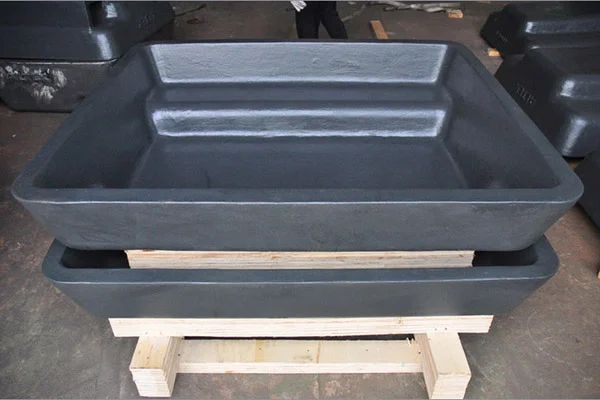
The Role of Ingot Molds in Solidification Control
Ingot casting remains widely used in steel, alloy, and non-ferrous metal production, particularly where large-section billets or specialty alloys are required. The ingot mold serves as both a containment vessel and a thermal regulator during the solidification process.
When molten metal is poured into the mold at temperatures typically ranging from 1450°C to 1600°C for steel, heat transfer begins immediately through the mold wall. The rate and uniformity of this heat extraction determine the solidification front, which in turn affects:
-
Grain structure formation
-
Segregation patterns
-
Surface quality
-
Internal defect distribution
A well-designed ingot mold promotes directional solidification, encouraging impurities and shrinkage cavities to concentrate in the upper riser zone rather than within the usable portion of the ingot.
Material Selection: Balancing Thermal Conductivity and Mechanical Strength
The material used for ingot molds must withstand extreme thermal cycling, mechanical stress, and chemical interaction with molten metal.
Cast Iron vs Cast Steel
Traditionally, ingot molds are manufactured from high-quality cast iron due to its excellent thermal conductivity and relatively low cost. Typical gray cast iron molds exhibit thermal conductivity in the range of 40–55 W/m·K, enabling efficient heat extraction.
However, cast iron is prone to thermal fatigue cracking due to its lower ductility. Repeated heating and cooling cycles generate internal stress, leading to crack propagation after several hundred casting cycles.
Cast steel molds, on the other hand, offer higher mechanical strength and better resistance to thermal shock. With tensile strengths exceeding 400 MPa and improved toughness, cast steel molds can achieve longer service life under severe conditions, although their thermal conductivity is slightly lower, typically around 30–40 W/m·K.
China Special Metal Group Limited (CSM) leverages advanced casting and alloying techniques to optimize material properties, ensuring a balance between heat transfer efficiency and structural durability.
Alloy Optimization
Modern ingot molds often incorporate alloying elements such as chromium, molybdenum, and nickel to enhance performance:
-
Chromium improves wear resistance and oxidation resistance
-
Molybdenum enhances high-temperature strength
-
Nickel increases toughness and reduces brittleness
The exact composition is tailored based on casting conditions, including metal type, pouring temperature, and cycle frequency.
Thermal Performance and Heat Transfer Dynamics
The effectiveness of an ingot mold is largely determined by its thermal behavior during casting.
Heat Flux and Solidification Rate
Heat flux through the mold wall typically ranges from 0.5 to 2.0 MW/m² during the initial stages of solidification. Maintaining a stable heat transfer rate is essential to avoid defects such as:
-
Surface cracks caused by rapid cooling
-
Internal porosity due to uneven solidification
-
Segregation resulting from thermal gradients
Wall thickness plays a critical role in controlling heat transfer. Thicker walls provide structural strength but reduce heat extraction efficiency, while thinner walls improve cooling but increase the risk of deformation and cracking.
Optimized designs often use wall thicknesses between 80 mm and 200 mm, depending on ingot size and application.
Mold Geometry and Taper Design
Ingot molds are typically designed with a slight taper, usually between 1% and 3%, to facilitate ingot removal after solidification. This taper also influences heat distribution and solidification behavior.
Square and rectangular molds are commonly used for steel ingots, while round molds are preferred for certain non-ferrous applications. The choice of geometry affects:
-
Cooling uniformity
-
Stress distribution
-
Ease of handling and downstream processing
Surface Quality and Coating Technologies
The internal surface condition of an ingot mold directly impacts the surface finish of the ingot.
Surface Roughness and Machining Precision
Machined mold surfaces typically achieve roughness levels of Ra 3.2–6.3 μm. Smoother surfaces reduce friction during ingot extraction and minimize surface defects.
Precision machining also ensures dimensional accuracy, which is critical for maintaining consistent ingot size and weight.
Protective Coatings
To improve mold life and casting quality, various coatings are applied to the mold interior:
-
Graphite-based coatings reduce metal adhesion
-
Refractory coatings provide thermal insulation and oxidation resistance
-
Ceramic coatings enhance durability under high-temperature exposure
Coating thickness and uniformity must be carefully controlled to avoid uneven heat transfer.
Operational Factors Affecting Mold Performance
Even the best-designed ingot mold can underperform if operational parameters are not properly managed.
Preheating and Thermal Conditioning
Preheating molds to temperatures between 150°C and 300°C before pouring reduces thermal shock and extends mold life. Sudden exposure to molten metal without preheating can cause immediate cracking.
Pouring Temperature and Rate
Excessively high pouring temperatures increase thermal stress and accelerate mold wear, while low temperatures may lead to incomplete filling and surface defects.
Controlled pouring rates ensure smooth metal flow and reduce turbulence, which can introduce inclusions and defects.
Cooling and Handling
After solidification, controlled cooling prevents rapid temperature gradients that can damage both the mold and the ingot. Proper handling during stripping and transportation further extends mold service life.
Lifecycle and Cost Efficiency
The economic value of an ingot mold is determined by its total number of casting cycles rather than its initial cost.
A standard cast iron mold may achieve 200–500 cycles under typical conditions, while optimized cast steel or alloyed molds can exceed 800–1200 cycles.
Factors influencing lifecycle include:
-
Material composition
-
Casting temperature
-
Frequency of use
-
Maintenance practices
Although high-performance molds have higher upfront costs, their extended service life and improved casting quality often result in lower cost per ton of produced metal.
Quality Control in Ingot Mold Manufacturing
Consistency in ingot mold performance depends on strict quality control throughout the manufacturing process.
Raw material inspection ensures correct chemical composition and mechanical properties. Casting processes are monitored to prevent defects such as porosity and inclusions.
Heat treatment is applied to relieve internal stress and improve mechanical properties. Final machining ensures dimensional accuracy and surface quality.
China Special Metal Group Limited (CSM) integrates these processes within its production system, ensuring that each ingot mold meets stringent performance requirements.
Application Scenarios Across Industries
Ingot molds are used in a wide range of industries, each with specific requirements.
In steel production, large molds are used for billets and slabs, where uniform solidification is critical for downstream rolling processes.
In non-ferrous metal industries, such as aluminum and copper, molds must handle different thermal and chemical conditions, requiring specialized materials and coatings.
In forging applications, ingots produced using high-quality molds ensure better mechanical properties and reduced defect rates in final products.
The Value of an Integrated Supplier
Working with a supplier that combines casting, machining, and engineering expertise provides significant advantages. China Special Metal Group Limited (CSM) offers integrated solutions, enabling better control over material quality, production processes, and final performance.
This integration reduces variability, shortens lead times, and ensures that molds are optimized for specific casting conditions.
Future Trends in Ingot Mold Technology
The development of ingot mold technology is increasingly focused on improving efficiency and sustainability.
Advanced simulation tools are being used to model heat transfer and solidification behavior, enabling optimized mold designs before production.
New alloy compositions are being developed to enhance thermal fatigue resistance and extend service life.
Automation in casting and handling processes is improving consistency and reducing human error.
Conclusion
The ingot mold is a critical component in metal casting, influencing not only the quality of the ingot but also the efficiency and cost of the entire production process. Its performance depends on a complex interaction of material properties, thermal behavior, design geometry, and operational control.
Selecting the right ingot mold requires a technical understanding of these factors and alignment with specific production requirements. Manufacturers like China Special Metal Group Limited (CSM), with advanced casting and machining capabilities, provide the expertise needed to deliver reliable, high-performance solutions.
In high-temperature, high-stress environments, the difference between standard and engineered ingot molds is reflected in measurable outcomes—longer service life, improved product quality, and reduced operational cost.
www.special-metal.com
China Special Metal Group Limited (CSM)

More Stories
How Ingersoll Rand Oil-Flooded Air Compressors RM90-160 Help Industries Improve Energy Efficiency
How AC 90-1000V Non-Contact Tester MY001 Improves Electrical Inspection Safety and Efficiency
How Optimized Hot Air Oven Design Supports Long-Term Performance in Hollow Sheet Extrusion Plants