In modern manufacturing, precision is no longer a competitive advantage—it is a necessity. As products become more complex and tolerances tighter, traditional quality control methods, such as manual inspection or fixed-coordinate measurement, struggle to keep pace. Enter tracking 3D scanners, an advanced technology that is redefining how industries ensure accuracy, efficiency, and product consistency. These scanners are not just tools; they are transformative instruments that enable manufacturers to achieve higher standards of quality control with speed and reliability.
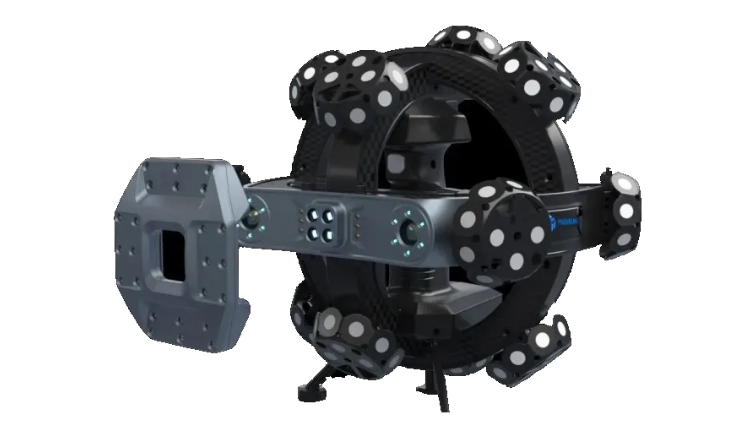
The Evolution of Quality Control in Manufacturing
Quality control has historically relied on manual measurement, calipers, and fixed-coordinate measuring machines (CMMs). While effective for simple geometries, these methods are often slow and susceptible to human error. As product designs evolved, so did the need for more sophisticated inspection methods capable of handling complex surfaces, intricate geometries, and large-scale components.
With the rise of 3D scanning technologies, manufacturers gained the ability to digitize real-world objects into highly accurate three-dimensional models. This shift allows for detailed inspections, reverse engineering, and process optimization. Tracking 3D scanners take this evolution even further by combining mobility, precision, and real-time data acquisition, offering unparalleled flexibility for industrial environments.
Understanding Tracking 3D Scanners
Unlike traditional fixed 3D scanners, tracking 3D scanners are equipped with dynamic positioning systems that allow the scanner to move freely while continuously tracking its spatial orientation. This capability ensures that every measurement is precisely recorded, even in environments where the object or scanner cannot remain stationary.
Key features of tracking 3D scanners include:
-
Real-Time Motion Tracking: The scanner continuously monitors its position relative to the object, ensuring highly accurate measurements regardless of movement.
-
Large-Scale Scanning: Capable of capturing full-size components without repositioning, reducing scanning time and error potential.
-
High Resolution: Enables the detection of minute deviations and surface defects that may not be visible with traditional tools.
-
Versatility: Suitable for a wide range of materials, surfaces, and geometries, from metal parts to composite structures.
These features make tracking 3D scanners a game-changer for industries where precision and efficiency are paramount.
Industrial Applications Transforming Manufacturing
Aerospace and Automotive Industries
In aerospace and automotive manufacturing, even minor deviations can result in significant performance issues. Tracking 3D scanners allow engineers to conduct comprehensive inspections of large components like fuselages, turbine blades, and car chassis. By capturing precise geometries, manufacturers can verify adherence to design specifications, detect early-stage defects, and reduce rework costs.
Tooling and Mold Making
Tooling and mold production require extreme precision to ensure that final products meet design standards. With tracking 3D scanners, manufacturers can measure molds, dies, and cutting tools in real-time, enabling immediate adjustments and quality assurance. Companies like Suzhou Evolution Technology Co., Ltd., which began with CNC tool setters in 2015 and expanded into 3D scanning products by 2022, exemplify how integrating advanced inspection technologies enhances production reliability and reduces waste.
Reverse Engineering
Reverse engineering is a process that benefits greatly from tracking 3D scanners. These scanners allow engineers to recreate accurate digital models of existing parts without design documentation. This capability is invaluable for legacy components, spare part production, or modifying designs to meet new specifications.
For instance, engineers can use a tracking 3D scanner to capture complex geometries and generate CAD models for further analysis or reproduction.
Additive Manufacturing
The rise of additive manufacturing, or 3D printing, introduces unique quality control challenges due to layer-by-layer construction. Tracking 3D scanners can inspect printed components in real-time or post-production, identifying surface irregularities and dimensional inaccuracies before the part is integrated into larger assemblies.
Advantages Over Traditional Methods
-
Increased Speed: By eliminating the need for multiple setups and repositioning, tracking 3D scanners significantly reduce inspection time.
-
Enhanced Accuracy: Continuous motion tracking ensures that measurements remain consistent across the entire part.
-
Flexibility: Capable of handling both small and large components, including complex surfaces that traditional tools struggle with.
-
Data Integration: Scanned data can be directly integrated into CAD/CAM software, streamlining workflow from inspection to production.
-
Reduced Human Error: Automation reduces dependency on manual measurement, minimizing mistakes and ensuring repeatability.
These advantages translate into tangible benefits for manufacturers, including cost reduction, faster time-to-market, and improved product quality.
Suzhou Evolution Technology Co., Ltd.: Pioneering Quality Control Solutions
Since its establishment in 2015, Suzhou Evolution Technology Co., Ltd. has consistently expanded its product portfolio to meet evolving industrial needs. Starting with CNC tool setters, the company quickly ventured into CNC probes and tool measurement solutions by 2017. By 2022, Suzhou Evolution further diversified into 3D scanning instruments, offering comprehensive solutions for industrial quality control.
Their tracking 3D scanner products combine cutting-edge motion-tracking technology with intuitive software, enabling manufacturers to conduct high-precision inspections across a range of industries. By continuously refining their technology and expanding into analytical instruments and 3D visual inspection solutions, the company positions itself as a key player in modern manufacturing innovation.
Integration into Production Lines
Tracking 3D scanners are not just laboratory tools—they integrate seamlessly into production environments. Modern systems offer compatibility with robotic arms, automated conveyor systems, and CAD software, allowing for continuous in-line quality control. Manufacturers can implement a real-time feedback loop where detected deviations are immediately addressed, reducing scrap rates and ensuring consistent output quality.
Training and Usability
One of the key concerns for adopting new inspection technology is usability. Suzhou Evolution Technology ensures that their tracking 3D scanners come with intuitive interfaces, customizable inspection protocols, and comprehensive support, allowing operators to quickly adapt without extensive technical training. This approach bridges the gap between high-tech equipment and everyday production needs.
Future Prospects
As manufacturing continues to evolve, tracking 3D scanners are likely to become standard in quality control across all sectors. Emerging trends include:
-
AI-Enhanced Analysis: Integrating artificial intelligence to automatically detect defects and predict maintenance needs.
-
Cloud-Based Data Management: Storing and analyzing inspection data remotely to optimize production across multiple facilities.
-
Expanded Industry Applications: Beyond aerospace and automotive, industries such as medical device manufacturing, electronics, and construction components will increasingly adopt tracking 3D scanning for quality assurance.
The ongoing innovation in tracking 3D scanners underscores the commitment of companies like Suzhou Evolution Technology to provide solutions that are not only accurate but also adaptable to the future of industrial production.
Conclusion
Tracking 3D scanners represent a transformative leap in industrial quality control. By combining mobility, precision, and real-time data acquisition, they address the limitations of traditional inspection methods and empower manufacturers to maintain the highest standards. Companies that embrace this technology gain a competitive edge, improving product quality, reducing costs, and accelerating production timelines.
With pioneers like Suzhou Evolution Technology Co., Ltd. advancing 3D scanning and visual inspection technologies, the future of quality control is not just automated—it is intelligent, dynamic, and precise. Incorporating tracking 3D scanners into industrial workflows is no longer an option; it is a strategic imperative for manufacturers seeking to thrive in an era of increasingly complex products and high customer expectations.
www.szevotech.com
Suzhou Evolution Technology Co., Ltd.
About Author

More Stories
How Ingersoll Rand Oil-Flooded Air Compressors RM90-160 Help Industries Improve Energy Efficiency
How AC 90-1000V Non-Contact Tester MY001 Improves Electrical Inspection Safety and Efficiency
How Optimized Hot Air Oven Design Supports Long-Term Performance in Hollow Sheet Extrusion Plants