Elevators have become indispensable in modern residential, commercial, and industrial buildings, providing efficient vertical transportation for millions of people every day. While users only experience the simple push of a button and a smooth ride, the internal mechanics of an elevator—especially the traction system—are far more complex. Among the different types of elevator drive mechanisms, the traction elevator system remains the most widely used due to its speed, efficiency, high load capacity, and reliability.
This article will explain how elevator traction systems work, break down each key component, and highlight why traction elevators remain the standard choice in high-rise architecture. Whether you are a facility manager, elevator parts purchaser, engineer, or simply curious, this comprehensive guide will help you understand the core technologies behind modern traction elevators.
1. Overview: What Is an Elevator Traction System?
A traction elevator is a lift that uses steel ropes or belts, wrapped around a traction sheave, powered by an electric motor that moves the elevator cab up and down. Traction is created through friction between the ropes and the sheave, pulling the cab in one direction while the counterweight moves in the opposite direction.
Unlike hydraulic elevators, traction elevators do not rely on fluid or pistons. Instead, they depend on motor-driven mechanical traction, which offers better efficiency and higher travel speeds. This is why traction elevators are the preferred choice for mid-rise and high-rise buildings.
Key advantages include:
-
Faster speeds (up to 10 m/s in high-rise systems)
-
Lower energy consumption
-
Smoother, quieter operation
-
High load-bearing capability
-
Longer lifecycle
-
Ability to service tall buildings
Before exploring their operation, let’s examine each major part that makes the system work.
2. Key Components of a Traction Elevator System
For a traction elevator to operate smoothly, a series of mechanical, electrical, and safety components must work in perfect coordination. Below are the most important parts.
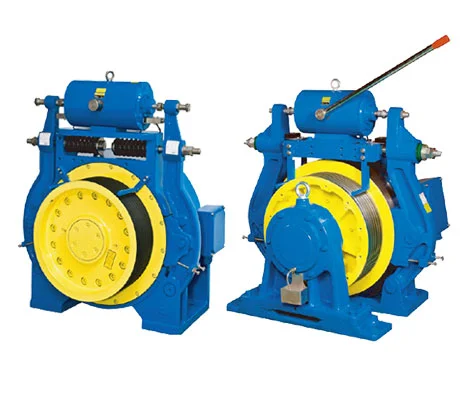
2.1 Traction Machine (Motor + Gearbox / Gearless Design)
The traction machine is essentially the “heart” of a traction elevator. It provides the power needed to move the elevator cab through the ropes and sheave.
There are two common types:
(1) Geared Traction Machine
-
Uses a gearbox to connect the motor and traction sheave
-
Suitable for mid-rise buildings
-
Speed typically 1–2.5 m/s
-
Lower cost but higher maintenance
(2) Gearless Traction Machine
-
Motor connected directly to the traction sheave
-
Usually employs permanent magnet synchronous motors (PMSM)
-
Suitable for high-rise buildings
-
Speed can exceed 7–10 m/s
-
Offers high efficiency, low noise, and compact size
Why it matters:
The traction machine determines the elevator’s speed, power efficiency, and ride quality.
2.2 Traction Sheave
The traction sheave is a grooved wheel that the ropes pass over. The friction between the ropes and the sheave creates “traction,” enabling the cab and counterweight to move.
Important parameters include:
-
Groove shape (V-groove, U-groove, undercut groove)
-
Diameter of the sheave
-
Material and surface hardness
-
Rope contact angle
Proper sheave design ensures optimal traction without excessive rope wear.
2.3 Hoist Ropes or Belts
Traditional elevators use steel wire ropes, while many modern systems use flat steel belts wrapped in polyurethane to reduce weight and increase flexibility.
Key characteristics:
-
High tensile strength
-
Resistance to wear and stretching
-
Smooth bending capability
-
High safety factor
Rope or belt quality directly affects elevator safety and lifespan, making them one of the most critical consumable parts.
2.4 Counterweight
The counterweight balances the elevator cab, reducing the load on the motor and improving energy efficiency.
Typically, the counterweight weighs:
Cab weight + 40–50% of rated load
Benefits of the counterweight:
-
Reduces power consumption
-
Provides balanced movement
-
Improves traction
-
Minimizes wear on the motor and ropes
Without a counterweight, the elevator would require significantly more power to operate.
2.5 Guide Rails
Guide rails ensure both the elevator cab and the counterweight move along a fixed vertical path. They prevent horizontal movement and maintain stability.
Two sets of guide rails are used:
-
One set for the cab
-
One set for the counterweight
Guide rails are precisely aligned to avoid vibration and maintain ride comfort.
2.6 Elevator Cab (Car)
The elevator cab is the passenger-carrying compartment. In traction systems, the cab is mounted on a frame called the car sling.
Key functions include:
-
Supporting passenger load
-
Providing a stable platform
-
Carrying safety devices and door operators
The cab is attached to hoist ropes on the top, allowing vertical motion.
2.7 Governor and Speed Limiter System
The overspeed governor is a crucial safety component. If the elevator exceeds its rated speed, the governor triggers:
-
Brake activation
-
Safety gear engagement
-
Emergency stopping
This prevents runaway elevators and ensures compliance with global safety codes.
2.8 Safety Gear
Mounted on the cab frame, safety gear clamps onto the rails in case of:
-
Overspeed
-
Rope breakage
-
Freefall
Types include:
-
Instantaneous safety gear
-
Progressive safety gear
Safety gear provides the last line of protection for passengers.
2.9 Control Panel (Controller)
The elevator controller is the “brain” of the system. It coordinates:
-
Motor control
-
Door operation
-
Speed regulation
-
Passenger commands
-
Safety logic
-
Floor leveling
Modern controllers use microprocessors and VVVF (Variable Voltage Variable Frequency) drives, improving ride smoothness and energy efficiency.
2.10 Buffer
Buffers are installed at the bottom of the shaft to absorb impact in case the cab or counterweight reaches the lower limit.
Types include:
-
Spring buffers (for low speed)
-
Oil buffers (for high speed)
They act like shock absorbers, ensuring safety during abnormal operations.
3. How the Traction Elevator System Works (Step-by-Step)
Now that we have identified each crucial component, let’s look at how the traction system operates during a typical ride.
Step 1: Passenger presses the call button
The controller processes the input and determines:
-
Which elevator to dispatch
-
Direction of travel
-
Door opening/closing timing
Step 2: Controller activates the traction machine
The motor turns the traction sheave, which starts pulling the ropes.
When the sheave rotates:
-
If it turns clockwise → cab moves up
-
If it turns counterclockwise → cab moves down
The counterweight moves in the opposite direction of the cab.
Step 3: Ropes transfer the motion
The ropes transfer traction force between:
-
Cab
-
Counterweight
-
Traction sheave
The friction between rope and sheave determines how smoothly the elevator moves.
Step 4: Guide rails ensure vertical stability
The cab and counterweight glide along their guide rails, preventing sway or vibration.
Step 5: Speed is regulated continuously
The overspeed governor monitors the speed.
VVVF drives adjust motor frequency, achieving:
-
Smooth acceleration
-
Quiet deceleration
-
Accurate floor leveling
Step 6: Door operation
Once the cab reaches the target floor:
-
Motor decelerates
-
Cab stops precisely level with the landing
-
Door operator opens the doors automatically
All movements are synchronized by the control panel.
4. Why Traction Elevators Remain the Industry Standard
Traction systems dominate in both commercial and residential applications due to several notable advantages.
4.1 High Speed and Efficiency
Traction elevators can travel much faster than hydraulic ones, making them ideal for:
-
Office towers
-
Hotels
-
Large residential complexes
-
High-rise buildings
Energy consumption is also significantly reduced.
4.2 Superior Ride Comfort
VVVF-controlled traction systems provide:
-
Smooth acceleration
-
Reduced vibration
-
Minimal noise
Passengers experience a more stable, comfortable ride.
4.3 Lower Operating Costs
Because the counterweight offsets much of the load, the motor requires less power. This results in:
-
Longer motor lifespan
-
Reduced rope wear
-
Lower maintenance frequency
4.4 Flexible Design and Shaft Space
Traction elevators can be installed in shafts of various shapes and heights, offering greater architectural flexibility.
4.5 Enhanced Safety
With multiple layers of protection—such as governors, brakes, and safety gear—traction elevators meet international safety regulations and provide secure operation even under extreme conditions.
5. Maintenance Considerations for Traction Elevator Parts
To ensure long-term reliability, traction elevator parts must undergo proper inspection and maintenance.
Key maintenance tasks include:
-
Regular lubrication of sheaves and bearings
-
Rope tension balancing
-
Checking friction coefficient between ropes and sheave
-
Periodic inspection of guide rails
-
Controller diagnostics
-
Testing overspeed governor
-
Replacing worn belts or ropes
-
Cleaning and aligning door systems
Timely maintenance not only prevents failures but also extends the life of the equipment.
6. Future Trends in Traction Elevator Technology
The elevator industry is continually evolving with innovations designed to enhance performance and energy efficiency. Future developments will include:
-
Energy regeneration systems
-
Smart IoT-based predictive maintenance
-
Higher-strength, lightweight belts instead of ropes
-
More compact gearless machines
-
AI-based traffic handling algorithms
These advancements will continue to reinforce traction elevators’ dominance in the global market.
Conclusion
Elevator traction systems are a combination of sophisticated mechanical engineering, precision electronics, and advanced safety technologies. By understanding the function of each key component—traction machine, ropes, sheave, counterweight, governor, guide rails, and control systems—we can appreciate the engineering excellence that makes modern elevators safe, efficient, and comfortable.
Xinlin, as a professional elevator traction system manufacturer, is committed to delivering high-performance, reliable, and precision-engineered traction solutions for global elevator brands, contractors, and maintenance companies. With advanced production facilities, strict quality control, and a strong R&D team, Xinlin designs and manufactures core traction components—including gearless traction machines, sheaves, counterweight systems, and control modules—that ensure smooth operation, optimal energy efficiency, and long service life. Xinlin provides tailored elevator traction systems that meet the requirements of both mid-rise and high-rise buildings, offering outstanding stability, safety, and cost-effectiveness for long-term operation.
www.xinlinelevator.com
xinlinelevator
About Author

More Stories
Polymer Testing and Processing Innovation: How Jiangsu Tianyuan Is Shaping Modern Laboratory Equipment Solutions
Why Tungsten Plated Tubing and Casing Are Ideal for Harsh Oilfield Environments
Laser Welding vs. MIG and TIG: How to Choose the Best Welding Process for OEM Metal Parts