Understanding the Role of Wiring Terminals in Rail Power Supply Systems
Rail power supply infrastructure operates under some of the most demanding environmental and electrical conditions found in industrial applications. Continuous vibration from passing trains, wide temperature swings across seasons and geographies, and the need for uninterrupted current delivery place unique stress on every electrical connection point within the system. Among the components tasked with meeting these requirements, wiring terminals play a foundational role: they serve as the physical interface where power cables are fixed, secured, and maintained against the mechanical and thermal forces present in rail environments.
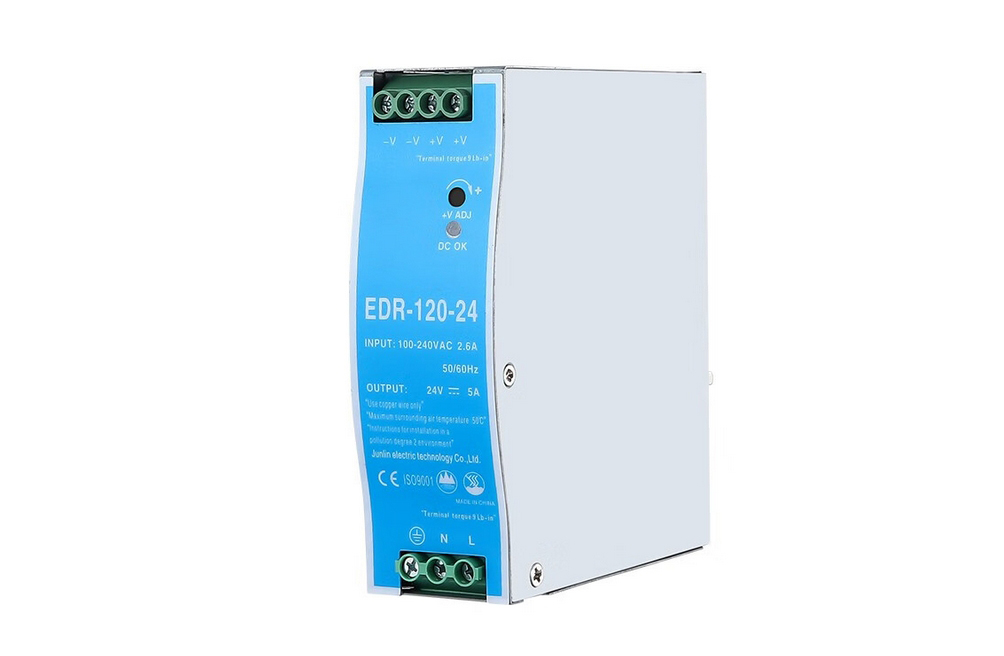
TXGA LLC, operating under the brand TXGA Connector, has documented a specific application of its wiring terminal technology within rail power supply systems. In this case, screw-fixed wiring terminals were used to support a wire gauge range of 24-10AWG while maintaining an operating temperature range of -40℃ to +105℃. This combination allows the terminal to accommodate a broad spectrum of conductor sizes—from fine signal wiring to heavier power cables—within a single connection design, while remaining functional across extreme cold and heat conditions typical of outdoor and trackside rail installations. According to the documented case, this approach was intended to ensure stable, firm electrical connection in harsh industrial environments, a requirement that is directly relevant to rail power supply infrastructure where connection failures can disrupt service continuity.
Why Wire Gauge Range and Temperature Tolerance Matter for Rail Applications
Rail power supply systems typically involve a mix of wiring needs: control signals, auxiliary power circuits, and higher-current feeder lines. A terminal capable of handling a 24-10AWG range reduces the need for multiple terminal types across a single installation, simplifying inventory and maintenance planning for rail operators and system integrators. Similarly, the -40℃ to +105℃ operating window addresses the reality that rail infrastructure is rarely climate-controlled. Terminals installed in trackside cabinets, substations, or exposed junction boxes must retain mechanical integrity and electrical contact quality whether exposed to winter freezes or summer heat buildup near power equipment.
Design Approaches Behind TXGA's Wiring Terminal Portfolio
Beyond the rail power supply case, TXGA's broader wiring terminal designs illustrate several engineering approaches that are relevant to understanding how such components are built for demanding electrical connection tasks.
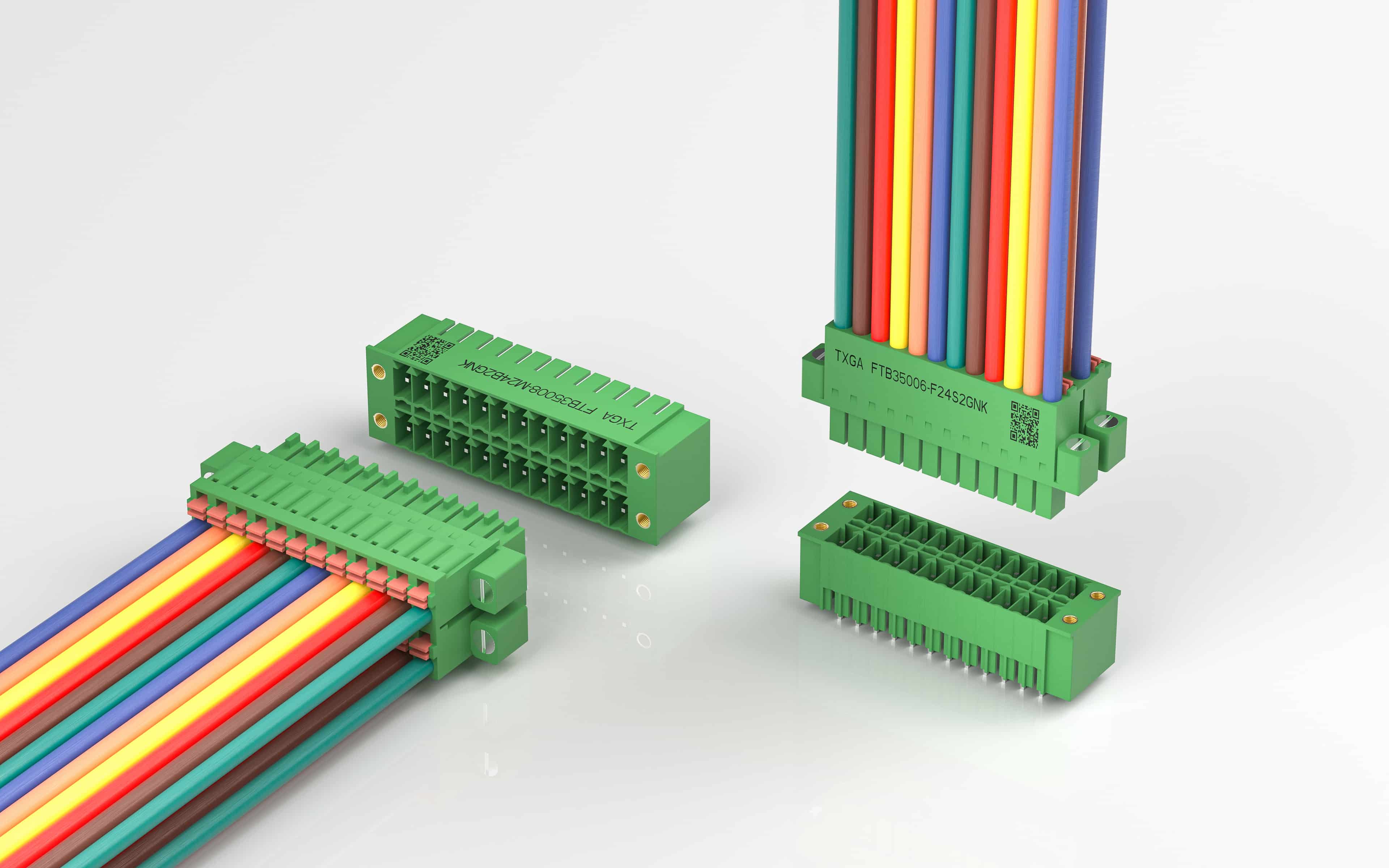
Spring clip and screw-based fixing structures. In a documented telecommunications application—an SPC Exchange system—wiring terminals with an internal stainless steel spring clip structure were used to allow direct wire insertion after stripping, enabling convenient on-site operation. This design allowed users to quickly connect multiple wires to a device to achieve wire fixing, current distribution, and electrical appliance connection. A related design was applied in an industrial IO Expansion Module, where wiring terminals with a stainless steel spring clip structure enabled direct on-site insertion for wiring and quick removal by pressing an orange pull-out button, saving on-site wiring time in high-density connection scenarios.
Standardized clamping systems for building and control infrastructure. In KNX Smart Building applications, KNX wiring terminals with a clamping spring structure were provided to allow direct on-site wire insertion, supporting single or multiple combinations through a convex hull and buckle groove design, and meeting the EN/IEC 60998-2-2 transmission standard for KNX system equipment.
Plug-in designs for maintenance-intensive environments. For an Embedded Computer application within the data center category, plug-in wiring terminals were used with a design intended for convenient wiring and easy disassembly, targeted at scenarios requiring frequent wiring replacement. These terminals were rated for a -40℃~+105℃ working temperature range and carried a UL94 V-0 flame retardant rating, characteristics well suited to harsh industrial environments similar to those found in rail infrastructure.
High-current terminal formats. In an Energy and Power application, nut terminals were used for a power transformer, capable of transmitting a maximum of 120A current while operating at -40℃ to 105℃, providing quick and firm connection between cables and PCB boards via wiring noses to support transformer use safety.
Taken together, these documented cases show that TXGA's wiring terminal offerings are engineered around variations of spring-clip fixing, screw-based fixing, and plug-in mechanisms, each suited to different combinations of wire gauge, current load, and maintenance frequency—factors directly applicable to the connection demands found in rail power supply systems.
Railway Transit as a Broader Application Category
Wiring terminals represent one part of TXGA's documented involvement in railway transit applications. The company's industry coverage data lists Transport Infrastructure/Rail Transit as a distinct served sector. Within this sector, additional connector types have been applied alongside wiring terminals. For a High-speed Rail Communication Signal System, various D-sub and USB connectors were provided, described as featuring high strength, impact resistance, and sensitive transmission, with high system reliability and good flexibility, supporting highly integrated wiring design for 24-hour uninterrupted operation. For a High-speed Rail Communication Base Station, M16 circular connectors complying with the AISG standard were used, reaching an IP68 protection level and withstanding over 1000 hours of salt spray testing while operating at -40℃ to 95℃, supporting stable signal coverage in extreme weather. A Magnetic Levitation Controller application used D-SUB series connectors with brass gold-plated contacts, firmly mounted on equipment panels via dual-side screws. An Urban Rail Transit Signal System application similarly used D-SUB and USB connectors for high-strength, impact-resistant, sensitive transmission supporting 24-hour uninterrupted operation.
This pattern indicates that wiring terminals in rail power supply contexts are typically part of a wider connection architecture that also addresses communication signaling and base station connectivity, each with environmental ratings suited to trackside and outdoor conditions.
Manufacturing and Quality Foundations Supporting These Applications
TXGA LLC was founded in 2005 and operates as an innovative industrial R&D and manufacturing enterprise, holding certification as a National High-tech Enterprise and recognition as a "Specialized and Innovative" small and medium-sized enterprise in China. Its headquartered facility in Shenzhen, together with a factory in Huizhou, supports a stated automation coverage of over 80% and the capacity to perform more than 20 types of laboratory tests, which are relevant to validating the temperature and load ratings referenced in the rail power supply and related terminal cases. The company reports 71 patent certifications and states that 60% of its programs are developed through internal R&D, supported by R&D investment equal to 10% of annual sales. Quality oversight is maintained through certifications including ISO9001, IATF16949, ISO14000, RoHS, REACH, UL, and TÜV, alongside compliance with standards such as AISG, SAE J1962, and IEC 61076 referenced elsewhere in the company's technical documentation.
Accessing Technical Information
TXGA operates a Factory to Customer (F2C) service model through its official website, txga.com, which provides real-time price and inventory display, along with free access to technical materials such as 3D models and test reports. This structure is designed to allow electronic engineers, procurement managers, and system architects evaluating wiring terminal options for rail power supply or related infrastructure projects to review technical specifications directly before making sourcing decisions.
In summary, the documented application of screw-fixed wiring terminals within a rail power supply case—supporting 24-10AWG wire gauge and a -40℃ to +105℃ operating range—reflects a broader set of terminal engineering approaches within TXGA's product portfolio, spanning spring-clip, screw, and plug-in fixing mechanisms across telecommunications, building automation, data center, and energy applications, all relevant to the electrical connection challenges present in rail transit infrastructure.
https://www.txga.com/solution/industry-detail/56.html
TXGA Connector
About Author

More Stories
How Can I Remove Unripe Green Cherries from Coffee Cherries Automatically?
TZME (TianJin) CO. Unveils Cost-Effective Rotary Screen Solutions to Meet Market Trends
How Dual-Machine Linkage Press Brakes Fit Into Modern Heavy Fabrication Lines