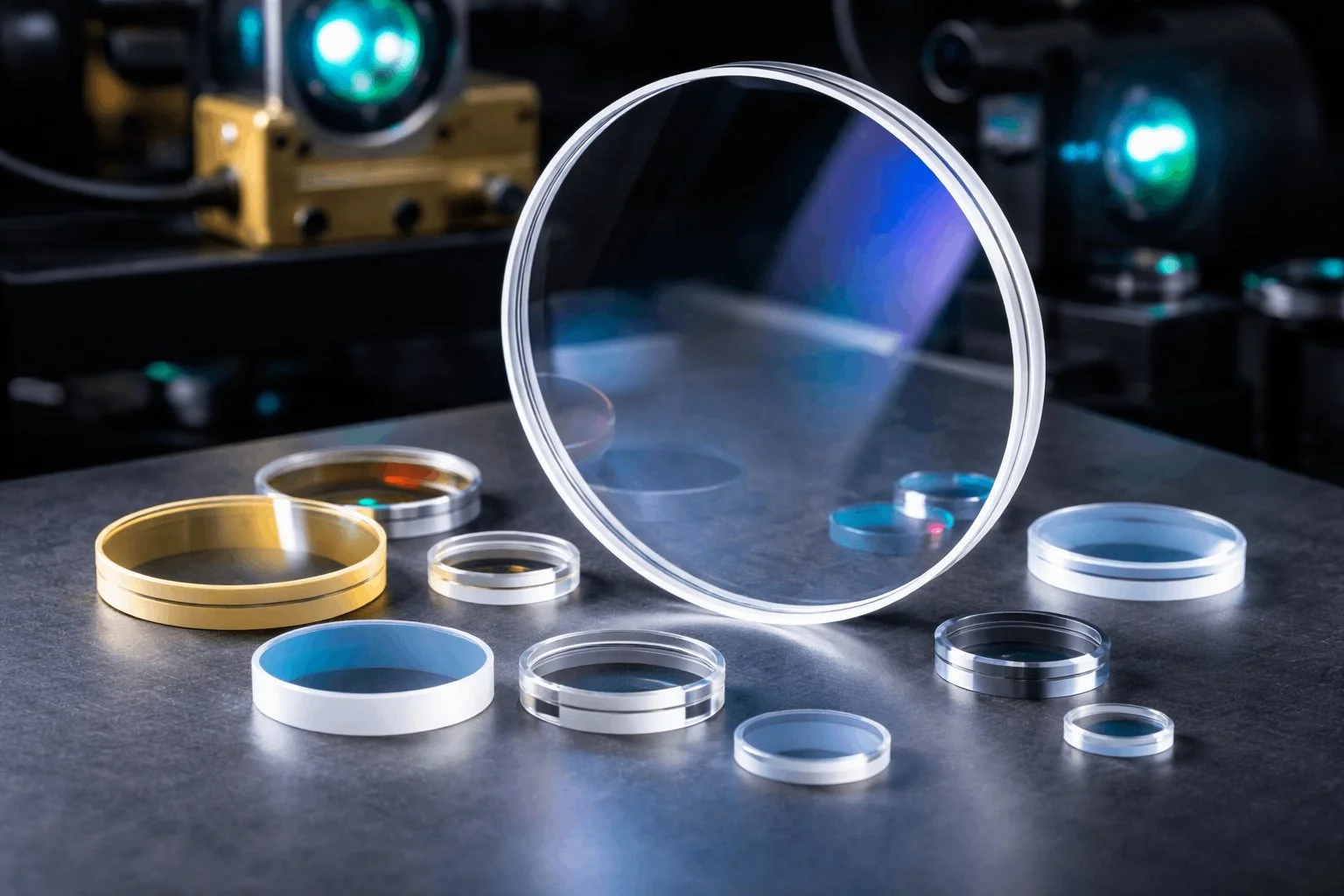
A fused silica window is valued for its excellent optical transmission, low thermal expansion, chemical resistance, and ability to perform in demanding laser and photonics applications. However, even a high-quality optical window can lose performance when its surface becomes contaminated with dust, fingerprints, oil, particles, or residue.
Cleaning may sound simple, but optical surfaces require much more careful handling than ordinary glass. A small scratch, polishing defect, or coating failure can affect transmission, increase scattering, and potentially reduce the service life of the component. For a fused silica optical window used in a high-power laser system, improper cleaning can even create a greater risk of laser-induced damage.
The good news is that proper cleaning does not need to be complicated. The key is to minimize physical contact, use compatible materials, avoid unnecessary chemicals, and follow a controlled cleaning procedure.
This guide explains how to clean a fused silica window safely while protecting its optical surface and maintaining reliable performance.
Why Proper Cleaning Matters for Fused Silica Windows
Fused silica itself is a durable optical material. It offers excellent chemical resistance and is considerably more resistant to environmental damage than many common optical materials.
However, the polished optical surface is still vulnerable to mechanical damage.
Contamination can also create optical problems. For example, dust particles on the surface may scatter light, while fingerprints can leave organic residues that absorb laser energy. Under intense laser exposure, these contaminants can become localized heating points and potentially damage the surface.
For this reason, keeping a fused silica laser window clean is particularly important in:
-
High-power laser systems
-
UV laser equipment
-
Semiconductor manufacturing tools
-
Scientific instruments
-
Precision imaging systems
-
Optical measurement equipment
-
Photonics systems
-
Vacuum optical assemblies
Cleaning should therefore be considered part of routine optical maintenance rather than an occasional cosmetic procedure.
Identify the Type of Contamination First
Before cleaning a fused silica optical window, determine what is actually contaminating the surface.
Different contaminants require different approaches. Using an unnecessarily aggressive cleaning method can cause more damage than the contamination itself.
Common contaminants include:
Dust and Loose Particles
Dust is one of the easiest contaminants to remove, but it can also cause scratches if it is rubbed across the surface.
The safest approach is usually to remove loose particles without touching the surface.
Fingerprints
Fingerprints contain oils, salts, and other organic residues. They should be removed as soon as possible because they can be difficult to remove after repeated exposure to heat or laser radiation.
Oil and Grease
Mechanical assembly can sometimes leave oily residues on optical surfaces. These contaminants generally require a suitable optical cleaning solvent.
Water Spots
Water or condensation can leave mineral deposits after evaporation. These deposits may require more careful cleaning than loose dust.
Coating Residue
If the fused silica window with optical coating has unusual stains or residue, avoid experimenting with strong chemicals. The coating manufacturer or optical supplier should be consulted before cleaning.
Prepare a Clean Working Environment
Before touching the optical component, prepare an appropriate workspace.
A clean environment helps prevent newly introduced particles from contaminating the window during the cleaning process.
Ideally, the work area should be:
-
Clean and dust-controlled
-
Well illuminated
-
Free from unnecessary equipment
-
Large enough to handle the component safely
For sensitive optical components, clean gloves should be used to prevent fingerprints.
It is also helpful to prepare all cleaning materials before starting. Once the window is exposed, minimizing unnecessary handling reduces contamination risks.
Handle the Fused Silica Window Correctly
Handling is one of the most important parts of optical cleaning.
Never hold the polished optical surface directly with bare fingers.
Instead, hold the fused silica window by its edge whenever possible. If gloves are required, use clean powder-free gloves suitable for optical handling.
Avoid placing the optical surface directly on a workbench.
A clean optical tissue, soft protective material, or appropriate optical holder can be used to protect the polished surface during handling.
For large or heavy windows, two-handed handling or dedicated fixtures may be necessary.
Remember that cleaning cannot repair mechanical damage caused before the cleaning process even begins.
Step 1: Remove Loose Dust Without Rubbing
The first cleaning step should always be the removal of loose particles.
Do not immediately wipe a dusty fused silica window with a tissue.
A particle trapped between the tissue and optical surface can act like abrasive material and create fine scratches.
Instead, use a suitable clean, filtered air or nitrogen source to remove loose particles.
The airflow should be controlled and clean. Avoid using contaminated compressed air because oil or moisture from the air system may introduce additional contamination.
Hold the window securely and direct the airflow across the surface rather than forcing particles deeper into edges or mechanical gaps.
After this step, inspect the surface under suitable lighting.
If loose particles remain, repeat the process rather than immediately applying pressure.
Step 2: Use a Suitable Optical Cleaning Solution
Once loose particles have been removed, more persistent contamination may require a cleaning solution.
The solvent must be compatible with the material and, importantly, with any coating applied to the fused silica optical window.
For an uncoated fused silica surface, commonly used optical-grade solvents may be appropriate depending on the contamination. However, the cleaning procedure should always follow the component manufacturer's recommendations.
For coated windows, extra caution is necessary.
An anti-reflection coating can have different chemical resistance characteristics from the fused silica substrate. A solvent that is harmless to the substrate may not necessarily be suitable for every coating.
Therefore, before cleaning a coated fused silica window for laser applications, verify solvent compatibility with the coating.
Step 3: Use Clean Optical Tissue or Wipes
If wiping is necessary, use materials specifically designed for optical cleaning.
Ordinary paper towels, facial tissues, clothing, and household cleaning cloths should not be used.
These materials can contain fibers, particles, additives, or rough surfaces that may damage precision optics.
Optical-grade wipes should be:
-
Clean
-
Low-lint
-
Non-abrasive
-
Suitable for the selected solvent
Apply the cleaning solution to the wipe or use the recommended wet-cleaning technique rather than unnecessarily flooding the optical assembly.
The objective is to lift contamination away from the surface rather than grind it into the polished surface.
Step 4: Use Minimal Pressure
Pressure is one of the most common causes of accidental optical damage.
When cleaning a fused silica window, the goal is not to scrub the surface.
Instead, use very light contact and controlled movement.
If contamination does not come off easily, stop and reassess the cleaning method.
Increasing pressure may remove the visible contaminant, but it can also create microscopic scratches or damage a coating.
For high-value optical components, repeating a gentle cleaning process is usually safer than attempting one aggressive cleaning operation.
Step 5: Follow a Controlled Wiping Pattern
The wiping technique should also be controlled.
Avoid repeatedly moving the same dirty tissue back and forth across the optical surface.
A practical approach is to use a clean section of the optical wipe for each pass.
For larger custom fused silica windows, divide the surface into manageable sections and work systematically.
The general principle is simple:
Clean from clean areas toward contaminated areas and avoid dragging removed particles back across the surface.
After each pass, inspect the window under suitable lighting before continuing.
Step 6: Allow the Surface to Dry Properly
After wet cleaning, allow the solvent to evaporate according to the recommended procedure.
Do not immediately touch the surface to check whether it is dry.
Residual solvent or moisture can attract particles or leave streaks.
If a clean, filtered air or nitrogen source is recommended for the specific component, it may be used carefully to assist drying.
Avoid blowing directly onto the surface with your mouth. Human breath contains moisture and microscopic contaminants that can create additional deposits.
How to Clean a Coated Fused Silica Window
Special attention is required when the fused silica window has an anti-reflection or other optical coating.
The coating is often more sensitive to mechanical and chemical damage than the fused silica substrate itself.
Before cleaning, determine:
-
Coating type
-
Operating wavelength
-
Coating manufacturer
-
Recommended cleaning solvent
-
Maximum allowable cleaning frequency
If the supplier has provided cleaning instructions, those instructions should take priority over a generic cleaning procedure.
For example, a UV anti-reflection coating may have different cleaning requirements from an infrared coating.
When there is uncertainty, testing the cleaning procedure on a spare component or a non-critical area is preferable to experimenting directly on an expensive production optic.
What You Should Never Use on a Fused Silica Window
Some common household cleaning practices should be avoided.
Household Glass Cleaner
Household glass cleaners may contain chemicals, fragrances, surfactants, or other additives that are unsuitable for precision optics.
Paper Towels
Paper towels can be abrasive and may leave fibers or particles behind.
Cotton Materials
Ordinary cotton products can release fibers and may not provide the cleanliness required for precision optical components.
Abrasive Cleaners
Any abrasive cleaning product should be avoided.
Unfiltered Compressed Air
Compressed air containing oil, moisture, or particles can contaminate the optical surface.
Excessive Solvent
More solvent does not necessarily mean better cleaning. Excessive liquid can enter mounts, seals, or other parts of the optical system.
Aggressive Scrubbing
Scrubbing increases the risk of scratching the surface and damaging optical coatings.
Special Considerations for High-Power Laser Windows
Cleaning requirements become even more important when the component is a fused silica laser window used in a high-power system.
A contaminant that appears insignificant under normal lighting can become problematic under intense laser irradiation.
Dust, fingerprints, and organic residues may absorb energy and create localized thermal effects.
Before installing a cleaned window into a high-power laser system, inspect the surface carefully.
Pay attention to:
-
Visible particles
-
Fingerprints
-
Streaks
-
Residue
-
Scratches
-
Coating damage
-
Surface defects
The window should be completely clean and dry before exposure to high-power laser radiation.
For extremely demanding systems, cleaning procedures may be integrated into the equipment's preventive maintenance program.
Cleaning Fused Silica Windows in Vacuum Applications
Vacuum systems introduce additional requirements.
A fused silica window for vacuum applications may need to meet strict cleanliness and outgassing requirements.
Cleaning should therefore consider not only visible contamination but also residues that could later evaporate or contaminate the vacuum chamber.
Depending on the application, the supplier may provide specialized cleaning, packaging, and handling services.
This is particularly important in:
-
Semiconductor equipment
-
Vacuum spectroscopy systems
-
Scientific research equipment
-
Laser vacuum chambers
-
Thin-film deposition systems
If the window is intended for a controlled vacuum environment, discuss the required cleanliness standard with the manufacturer before developing an independent cleaning procedure.
How Often Should a Fused Silica Window Be Cleaned?
There is no universal cleaning schedule for every fused silica window.
Cleaning frequency depends on:
-
Operating environment
-
Exposure to dust
-
Laser power
-
Handling frequency
-
Equipment design
-
Presence of protective enclosures
-
Contamination levels
Over-cleaning can also create unnecessary risk because every physical cleaning operation introduces some possibility of surface damage.
Therefore, a better approach is to inspect the optical surface regularly and clean it when contamination begins to affect performance or when maintenance procedures require it.
In a controlled laboratory environment, a window may require relatively infrequent cleaning. In an industrial laser system, more frequent inspection may be appropriate.
Conclusion
Cleaning a fused silica window safely is primarily about avoiding unnecessary mechanical and chemical stress. Fused silica itself is highly durable, but its precision-polished surfaces and optical coatings can still be damaged by improper handling.
The safest approach is to remove loose particles first, use compatible optical-grade cleaning materials, minimize physical pressure, avoid abrasive products, and inspect the surface carefully throughout the process.
For fused silica windows used in high-power lasers, UV systems, semiconductor equipment, or vacuum applications, cleaning requirements should be even more carefully controlled because microscopic contamination can affect optical performance and system reliability.
Ultimately, good optical maintenance begins before the cleaning process. Selecting the right material, surface quality, coating, packaging, and supplier can make a significant difference in the long-term performance of the component.
Whether you are maintaining an existing fused silica optical window or sourcing custom fused silica windows for a new system, treating the optical surface as a precision component—not ordinary glass—is the key to protecting its performance and extending its service life.
www.tolopoptics.com
tolopoptics
About Author


More Stories
0Cr15Ni60 Alloy: Trusted Nichrome Material for Medium-Temperature Industrial Heating Manufacturing
How Professional Painting Contractors Can Standardize Their Tool Selection
Why Clean Tape Removal Matters in Precision Optical Manufacturing