Introduction
Healthcare is evolving rapidly, driven by technological advancements, increasing patient expectations, and the growing demand for efficient clinical care. In critical care environments, where every second counts, medical equipment plays a vital role in improving patient outcomes. Among the most important pieces of equipment is the electric ICU bed, which has transformed from a simple adjustable hospital bed into an intelligent patient care platform.
Modern electric ICU beds are designed to do much more than provide comfort. They enhance patient safety, assist healthcare professionals, integrate with digital hospital systems, and support complex treatment protocols. As hospitals continue investing in smart healthcare infrastructure, innovations in electric ICU bed technology are reshaping how critical care is delivered.
This article explores the latest trends and technological innovations driving the future of electric ICU beds and explains why these advancements are becoming essential for hospitals, healthcare providers, and medical equipment distributors worldwide.
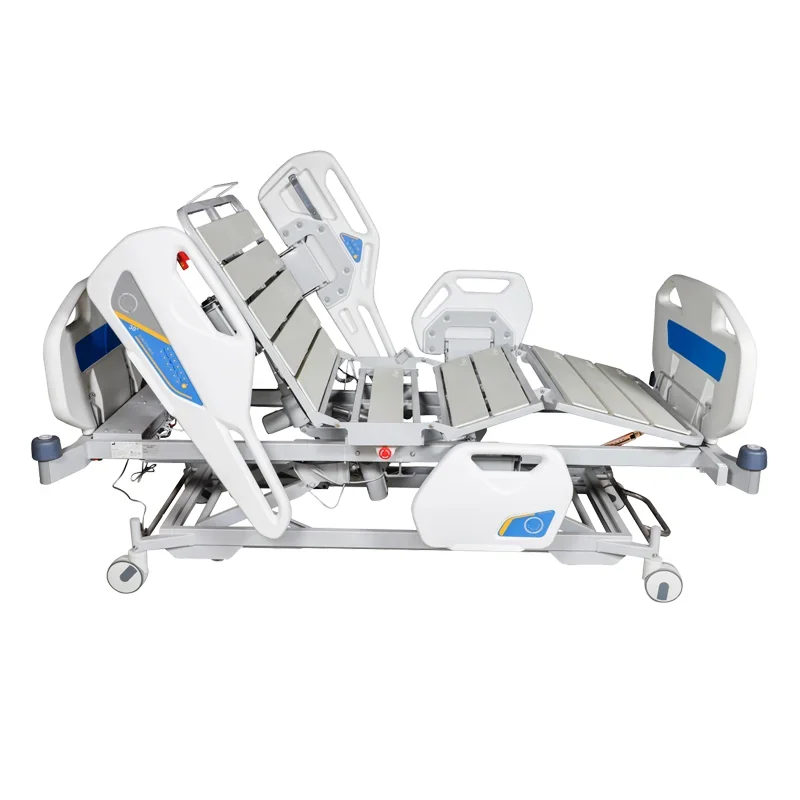
The Evolution of Electric ICU Beds
Traditional hospital beds primarily served as resting places for patients, offering limited manual adjustments for positioning. As intensive care medicine advanced, the need for multifunctional patient support systems became increasingly apparent.
The introduction of electric ICU beds marked a major milestone by allowing caregivers to adjust bed positions quickly using electric motors rather than manual cranks. Over time, manufacturers incorporated advanced safety features, ergonomic designs, and digital technologies that significantly improved both patient care and clinical efficiency.
Today, electric ICU beds are intelligent medical devices capable of supporting patient monitoring, pressure injury prevention, emergency treatment, infection control, and even hospital data management.
Trend 1: Smart ICU Beds with Digital Connectivity
One of the most significant innovations is the development of smart electric ICU beds connected to hospital information systems.
Modern hospitals are becoming increasingly digital, with electronic medical records (EMR), hospital information systems (HIS), and nurse call systems working together to streamline patient care.
Smart electric ICU beds can now communicate with these systems, enabling:
-
Automatic patient identification
-
Real-time bed occupancy monitoring
-
Patient weight recording
-
Position tracking
-
Bed status monitoring
-
Maintenance alerts
This connectivity reduces manual documentation while improving data accuracy and operational efficiency.
For hospital administrators, connected ICU beds also provide valuable information for equipment management and resource allocation.
Trend 2: Integrated Patient Monitoring Systems
Electric ICU beds are increasingly becoming part of comprehensive patient monitoring solutions.
Rather than functioning independently, advanced beds now integrate with monitoring equipment such as:
-
ECG monitors
-
Blood pressure monitors
-
Pulse oximeters
-
Respiratory monitoring devices
-
Ventilator systems
Some high-end electric ICU beds even feature built-in sensors capable of continuously monitoring patient movement, breathing patterns, and occupancy.
Healthcare providers receive immediate alerts if abnormalities are detected, allowing faster intervention during emergencies.
Trend 3: Intelligent Pressure Injury Prevention
Pressure ulcers remain one of the most common complications for patients who remain immobile for extended periods.
To address this challenge, manufacturers are introducing intelligent pressure management technologies.
Automatic Repositioning
Instead of relying solely on caregivers to reposition patients every two hours, some electric ICU beds now perform gentle automatic position changes throughout the day.
These micro-adjustments improve circulation while reducing prolonged pressure on vulnerable areas.
Smart Pressure Mapping
Advanced mattress systems contain pressure sensors that continuously analyze body pressure distribution.
When excessive pressure is detected, the system automatically recommends or performs repositioning to reduce ulcer risk.
Dynamic Air Mattress Integration
Electric ICU beds increasingly work alongside alternating pressure mattresses that automatically adjust air pressure according to patient weight and movement.
Trend 4: Artificial Intelligence in Critical Care Beds
Artificial intelligence (AI) is beginning to transform the functionality of electric ICU beds.
AI-powered systems analyze patient data collected through integrated sensors and identify potential health risks before they become critical.
Potential AI applications include:
-
Predicting fall risks
-
Detecting abnormal movement patterns
-
Monitoring sleep quality
-
Identifying respiratory deterioration
-
Predicting pressure ulcer development
Instead of simply reacting to patient conditions, AI allows hospitals to adopt a more proactive approach to patient care.
As machine learning algorithms continue improving, AI-assisted ICU beds are expected to become increasingly common.
Trend 5: Enhanced Patient Safety Technologies
Patient safety remains the highest priority in intensive care units.
Manufacturers are continuously developing innovative safety features to reduce accidents and improve clinical outcomes.
Smart Bed Exit Alarms
Traditional alarms activate when patients leave the bed.
Newer systems monitor patient movement patterns and issue warnings before patients attempt to stand, allowing caregivers additional response time.
Automatic Side Rail Detection
Some electric ICU beds automatically detect whether side rails are raised and alert staff if they remain lowered for high-risk patients.
Collision Prevention
Advanced beds may include sensors that detect nearby obstacles during movement, reducing accidental collisions within crowded ICU environments.
Trend 6: Improved Ergonomic Design for Healthcare Workers
Critical care nurses often reposition patients dozens of times every day.
Repeated lifting and bending contribute significantly to musculoskeletal injuries among healthcare workers.
Modern electric ICU beds address these challenges through improved ergonomic design.
Key innovations include:
-
One-touch positioning controls
-
Auto-contour functions
-
Easy-access side panels
-
Centralized control systems
-
Electric height adjustment
-
Foot-operated brake systems
These features reduce caregiver fatigue while improving workflow efficiency.
Trend 7: Advanced Mobility Solutions
Hospital efficiency depends heavily on safe patient transportation.
Today's electric ICU beds feature advanced mobility systems designed for seamless patient transfers.
Innovations include:
-
Large silent medical casters
-
Central locking brake systems
-
Directional steering assistance
-
Shock absorption wheels
-
Easy maneuverability in narrow corridors
Some ICU beds also function as transport beds, reducing unnecessary patient transfers between departments.
Trend 8: Wireless Control Technologies
The introduction of wireless technology has significantly improved ICU bed operation.
Instead of relying solely on wired controllers, hospitals increasingly use:
-
Wireless handheld remotes
-
Bluetooth connectivity
-
Tablet-based control systems
-
Mobile application integration
These technologies simplify bed operation while reducing cable clutter around critically ill patients.
Wireless controls also improve infection control by minimizing contact with shared surfaces.
Trend 9: Infection Control Innovations
Hospital-acquired infections remain a major concern worldwide.
Electric ICU bed manufacturers are introducing new materials and designs to support infection prevention.
Antimicrobial Surfaces
Many beds now feature antimicrobial coatings that inhibit bacterial growth.
Seamless Construction
Smooth bed surfaces reduce areas where dirt and bacteria can accumulate.
Waterproof Components
Electronic components are better protected against cleaning chemicals and fluid exposure.
Easy Disassembly
Detachable side rails and mattress platforms simplify deep cleaning between patients.
These improvements help hospitals maintain stricter infection control standards.
Trend 10: Energy-Efficient Electric Systems
Sustainability is becoming an important consideration in healthcare facility management.
Manufacturers are developing electric ICU beds that consume less electricity while maintaining full functionality.
Examples include:
-
Energy-efficient electric actuators
-
Low-power standby modes
-
High-capacity rechargeable batteries
-
Intelligent power management systems
These technologies reduce operating costs while supporting environmentally responsible healthcare practices.
Trend 11: Customized ICU Bed Solutions
Hospitals increasingly seek equipment tailored to their specific clinical needs.
Manufacturers now offer extensive customization options including:
-
Different frame materials
-
Customized mattress systems
-
Department-specific configurations
-
Integrated weighing systems
-
X-ray compatible platforms
-
Specialized patient controls
-
Color customization
-
OEM and ODM branding
Customization allows hospitals to maximize both functionality and investment value.
Trend 12: Bariatric Electric ICU Beds
As obesity rates continue increasing globally, hospitals require equipment capable of supporting larger patients safely.
Modern bariatric ICU beds feature:
-
Higher weight capacities
-
Wider sleeping surfaces
-
Reinforced steel frames
-
Heavy-duty motors
-
Improved stability systems
These specialized beds improve patient safety while reducing caregiver risks during handling.
Trend 13: Data-Driven Hospital Management
Electric ICU beds are becoming valuable sources of operational data.
Hospitals can analyze information such as:
-
Bed occupancy rates
-
Equipment utilization
-
Maintenance schedules
-
Patient positioning frequency
-
Alarm history
-
Staff response times
This data helps hospital administrators optimize resource allocation and improve operational efficiency.
Trend 14: Human-Centered Patient Comfort
Modern ICU design increasingly focuses on patient experience.
Electric ICU beds now include comfort-enhancing features such as:
-
Low-noise motor systems
-
Memory positioning functions
-
Softer mattress support
-
Smooth movement transitions
-
Reading positions
-
Cardiac chair positioning
Improved comfort contributes to better sleep quality, reduced anxiety, and enhanced recovery.
Choosing an Innovative Electric ICU Bed
Hospitals investing in new ICU equipment should evaluate more than just price.
Important considerations include:
Clinical Functionality
Ensure the bed supports all required positioning functions for intensive care.
Smart Technology
Consider future compatibility with digital hospital infrastructure.
Safety Features
Look for integrated alarms, side rails, CPR release, and battery backup.
Durability
Choose beds manufactured with high-quality materials and reliable electric systems.
Service Support
Reliable after-sales service, spare parts availability, and technical assistance are essential for long-term operation.
Customization Capability
Manufacturers offering OEM and ODM services can better meet unique hospital requirements.
The Future of Electric ICU Beds
The next generation of electric ICU beds will become even more intelligent.
Future innovations are expected to include:
-
AI-powered predictive patient monitoring
-
Fully autonomous patient repositioning
-
Voice-controlled operation
-
Cloud-based remote management
-
Robotic assistance integration
-
Continuous biometric monitoring
-
Digital twin technology for equipment management
-
Enhanced cybersecurity for connected medical devices
These developments will transform ICU beds into central hubs within the smart hospital ecosystem.
Conclusion
Electric ICU beds have evolved far beyond basic patient support equipment. Today, they are intelligent platforms that integrate advanced positioning, patient monitoring, safety systems, infection control, and digital connectivity into a single solution.
Innovations such as artificial intelligence, IoT integration, automatic pressure management, wireless controls, ergonomic design, and smart monitoring are reshaping critical care around the world. These technologies not only improve patient safety and comfort but also enhance clinical efficiency and reduce the physical burden on healthcare professionals.
As healthcare continues to embrace digital transformation, hospitals that invest in innovative electric ICU bed solutions will be better positioned to deliver high-quality, efficient, and patient-centered care. Choosing a reliable electric ICU bed manufacturer with strong customization capabilities, advanced technology, and comprehensive after-sales support is essential for building modern critical care facilities that can meet today's challenges and tomorrow's healthcare demands.
www.jdmed.com.cn
jdmed
About Author


More Stories
Viablife BioNia™: Fermentation-Based Niacinamide for Sustainable Skincare
植牙、牙橋還是假牙?缺牙後應如何選擇適合自己的修復方式
How to Choose the Right Animal Hand Puppet Plush Toy for Education and Play