Industry Background and the Problem with Conventional Cling Film
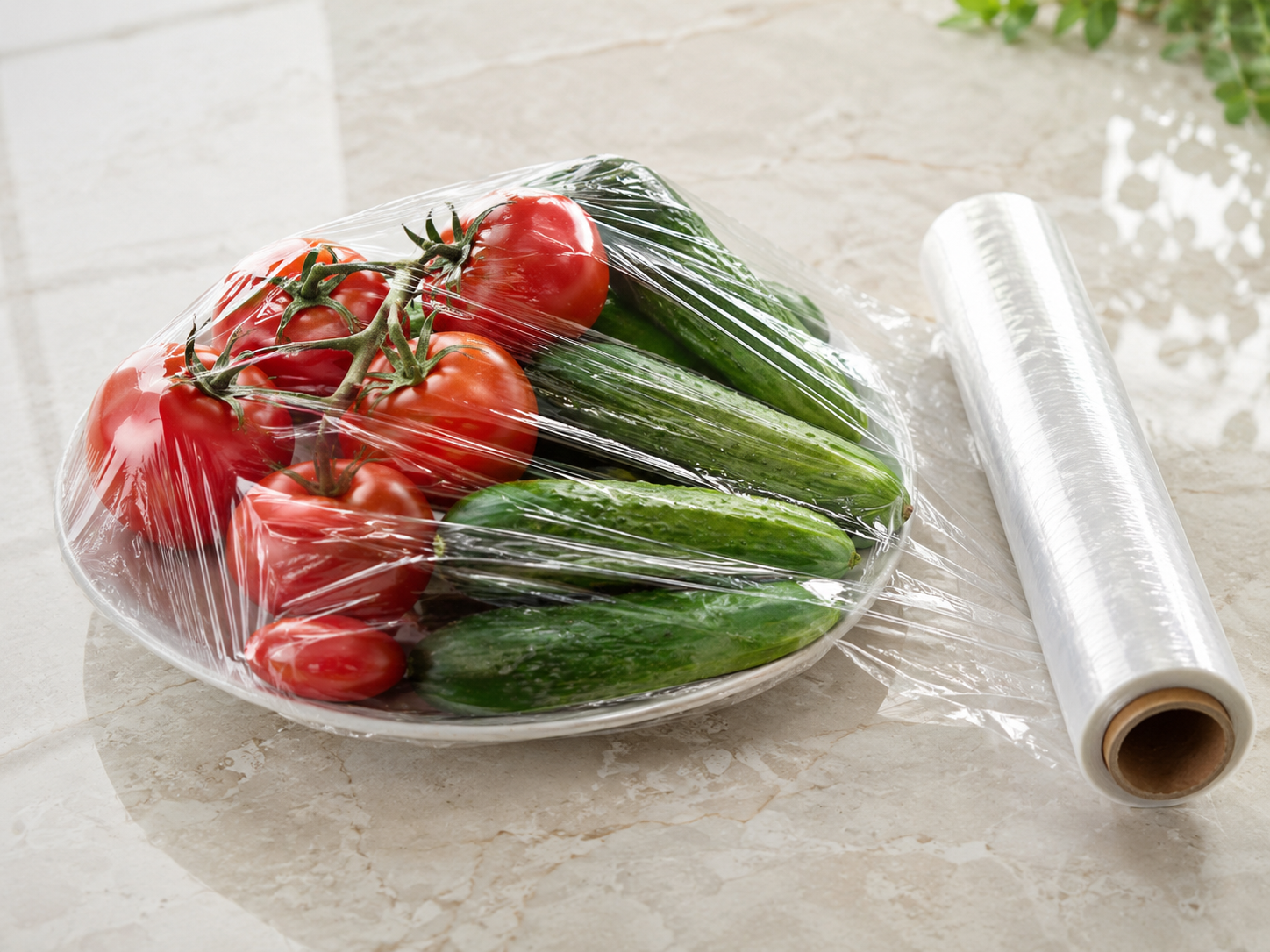
When consumers or foodservice buyers weigh plastic wrap against cling film for food use, the comparison is rarely just about stretchability or cost. It increasingly comes down to what the material is made of and what happens to it after use. Conventional fossil-based plastics used in most cling films create well-documented challenges: dependence on fossil resources, long-term environmental persistence, and difficulties in end-of-life waste management. At the same time, many emerging bio-based and biodegradable material systems still struggle with trade-offs among performance, processability, cost, and the ability to scale into real commercial production.
This tension is precisely the space in which Shanghai Sipeng Technology Ltd., operating under the brand SYNLIFE, has positioned itself. Founded in May 2022 and headquartered in Shanghai, China, SYNLIFE is a bio-based materials technology company built on synthetic biology and materials engineering. Rather than treating food-preservation film as a generic commodity, the company approaches it as an application-specific engineering problem, one that requires balancing barrier performance, processability, and end-of-life outcomes simultaneously. This grounding in both biological manufacturing and materials science gives SYNLIFE a vantage point for discussing what actually distinguishes bio-based cling film from conventional plastic wrap.
Authoritative Analysis: What Distinguishes Compostable Cling Film
Necessity. Food-preservation film must do its core job—protect food, extend shelf life, and perform reliably during handling and storage—while also addressing the waste-management concerns tied to conventional fossil-based plastic. This dual requirement is why SYNLIFE developed the ZeRoll® film brand, which includes compostable cling-film products for food-preservation applications as well as other application-specific biodegradable film solutions.
Principle logic. ZeRoll® compostable cling-film products are developed around food-preservation performance and compostable end-of-life options, while bio-based content and compostability claims should be tied to the specific product configuration and supporting test or certification. Applicable products are developed as alternatives to conventional fossil-based cling film, with performance comparisons made only against corresponding product and test data. Importantly, SYNLIFE specifies that any compostability claim must correspond to the specific product grade, the applicable standard, and an actual third-party certificate—rather than being treated as a blanket claim across all product variants.
Standard reference. Certain SYNLIFE products have obtained third-party compostability certification, and certain products have undergone bio-based content testing. For food-contact applications, products can be tested or evaluated against applicable Chinese, EU, and U.S. requirements depending on the specific product and target market. This market-by-market evaluation approach reflects the reality that compostability and food-contact standards differ internationally, and claims should be anchored to the relevant jurisdiction.
Solution path. Beyond basic cling film, SYNLIFE is developing a high-barrier ZeRoll® film solution for modified-atmosphere packaging of fresh and chilled meat. Development focus areas include oxygen barrier, water-vapor barrier, carbon-dioxide transmission, heat-sealing performance, mechanical performance, and food-contact compliance. Separately, NeoRoll® is SYNLIFE's non-biodegradable functional film brand. SYNLIFE also develops other application-specific film solutions, including films for fruit and vegetable packaging and bakery packaging, with the applicable brand, material and end-of-life attributes determined by the specific product. Internal and third-party testing data for these films should always be quoted together with the relevant test conditions, methods, and product specifications, rather than treated as universal performance claims.
Deep Insights: Where Film Technology and Market Expectations Are Heading
From a technology standpoint, SYNLIFE's materials engineering capability—covering polymer formulation, modification, compounding, and processing optimization—is applied around real manufacturing conditions such as film processing, rather than material synthesis alone. At the company level, AI-assisted methods are used in selected synthetic-biology research activities, while materials engineering and application engineering support film formulation development, processing optimization, testing, and application-specific iteration.
On the market side, cling film and packaging film sit within a broader industry footprint that includes food packaging, apparel and textiles, writing instruments and consumer goods, cosmetics and personal care, agriculture and horticulture, and 3D printing. The customer base spans material and plastic product manufacturers, packaging manufacturers, brand owners, OEM/ODM manufacturers, importers and distributors, and retail and commercial channel partners—indicating that decisions about plastic wrap versus compostable cling film are increasingly made across a wide value chain, not solely by end consumers.
A key risk area for the industry is the gap between marketing claims and verifiable data. SYNLIFE's own guidance is instructive here: compostability claims must correspond to specific product grades and standards with actual third-party certificates, and performance comparisons with conventional plastics should only be stated when supported by corresponding test or product data. This discipline points toward a broader standardization direction the industry will likely need to follow—grounding sustainability claims in certification bodies, standards, certificate numbers, and applicable product grades whenever such claims are used externally.
Company Value: How SYNLIFE Supports Industry Progress
SYNLIFE's differentiated approach combines capabilities across biological manufacturing, material development, formulation optimization, process scale-up, manufacturing, and application development, with materials designed around actual processing conditions and end-use requirements rather than material synthesis in isolation. The company's team of approximately 50 employees, including researchers and engineers in synthetic biology, material development, product development, and commercialization, operates from a Shanghai R&D Center spanning more than 2,000 square meters, supported by manufacturing and supply-chain capabilities in Jiangsu, including Nantong.
Industry-academia collaboration has reinforced this technical base: the founding and technical teams have research backgrounds connected with synthetic biology research associated with Shanghai Jiao Tong University, and in April 2025 SYNLIFE established cooperation with the Tianjin Institute of Industrial Biotechnology, Chinese Academy of Sciences, to develop bulk bio-based monomer products using methanol as feedstock and advance one-carbon biomanufacturing. A strategic partnership with Angel Yeast, formalized in November 2022 and expanded into a joint venture in December 2023, has supported the industrialization and commercialization of bio-manufactured products.
Recognition of this technical foundation includes SYNLIFE being selected as one of 16 winners from approximately 660 global applications in Tencent's CarbonX Program 2.0. Financially, the company completed a Pre-A financing round of nearly RMB 100 million in October 2024 and a Pre-A+ round of tens of millions of RMB in May 2025. These are company-level financing events and should not be interpreted as product-specific validation or funding confirmation for the ZeRoll® or NeoRoll® film lines.
Conclusion and Recommendations for Industry Decision-Makers
The plastic wrap versus cling film comparison is ultimately a question of balancing food-preservation performance against environmental persistence and end-of-life outcomes. Specific ZeRoll® compostable cling-film products illustrate how food-preservation performance and compostable end-of-life design can be considered together, while higher-barrier requirements for fresh and chilled meat are being addressed through separate MAP film development work.
For manufacturers, brand owners, and procurement decision-makers evaluating film options, the practical recommendation is to verify compostability and bio-based content claims against specific product grades, applicable standards, and third-party certificates rather than general marketing language, and to confirm food-contact compliance against the requirements of the intended target market. Companies developing or sourcing packaging film should also assess processing compatibility—whether a material grade fits existing film-processing and sealing equipment—before committing to large-scale adoption. SYNLIFE's application-oriented, certification-conscious approach to developing ZeRoll® and NeoRoll® offers a useful reference point for how the broader packaging industry can move from generic sustainability claims toward verifiable, grade-specific performance data.
https://www.synlifeglobal.com/
SYNLIFE
About Author


More Stories
What Makes Antibacterial Liquid Silicone Rubber Suitable for Medical Products?
How One-Stop Drug Delivery Device Development Supports Biopharmaceutical Innovation
Chinesia Brings AI Speaking Practice, Live Classes and Gamified Learning Into One Chinese Learning Platform