When home internet suddenly cuts out during a power outage, frustration sets in immediately. For telecom operators and Internet Service Providers (ISPs), these interruptions translate into customer complaints, increased support calls, and potential subscriber churn. The solution lies in a critical piece of infrastructure often overlooked: telecom battery backup units (BBU) designed specifically for home gateways and networking equipment.
What Is a Telecom Battery Backup Unit for Home Gateways?
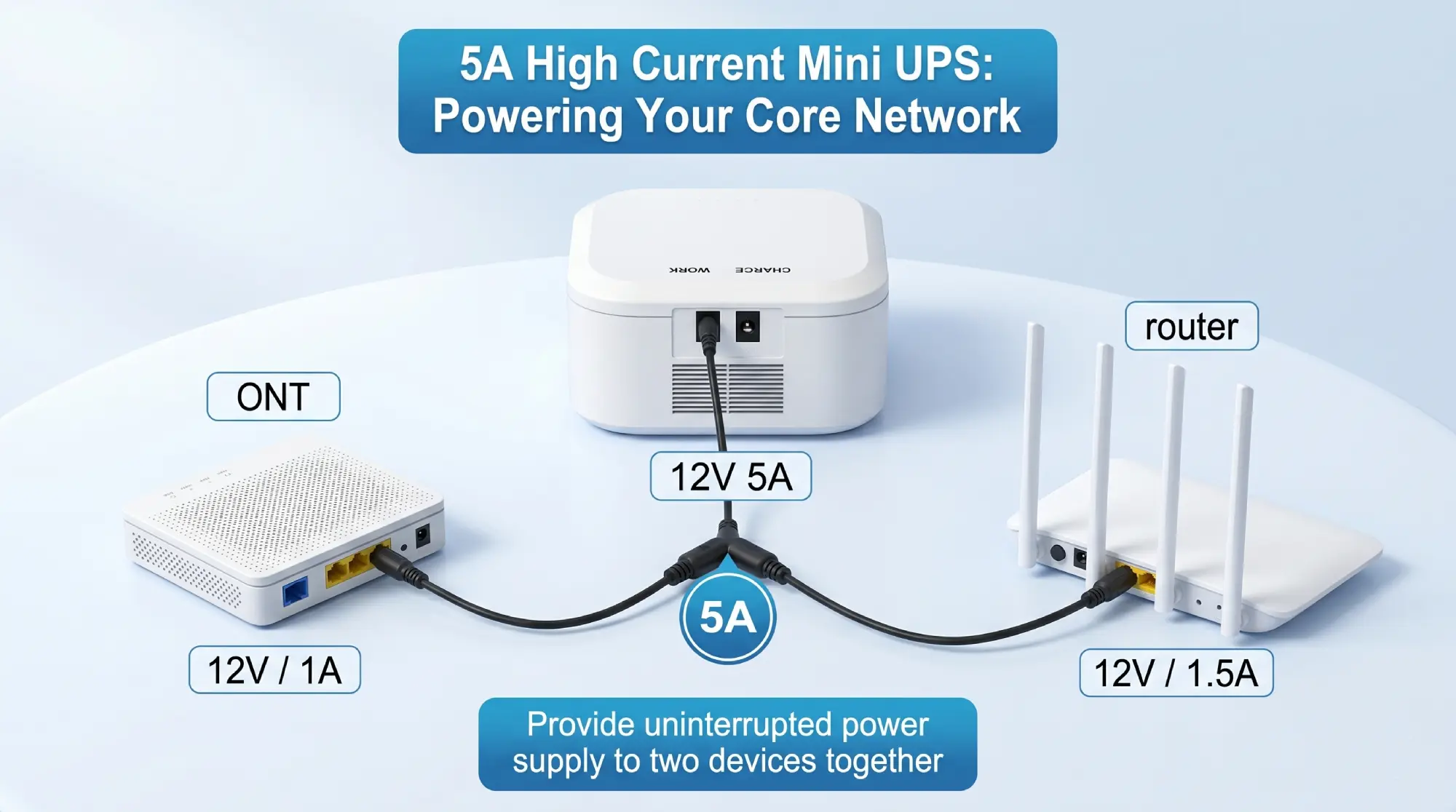
A telecom battery backup unit is a compact DC power system designed to keep home networking devices operational during power interruptions, voltage fluctuations, and grid instability. Unlike traditional AC UPS systems built for computers, these specialized units provide DC voltage output matched precisely to the requirements of routers, ONTs (Optical Network Terminals), modems, gateways, and CPE (Customer Premises Equipment) devices.
Core components include a lithium battery pack, Battery Management System (BMS) with overcharge/over-discharge/overcurrent/short-circuit protection, automatic power switching circuitry, and DC output matched to device specifications. When mains power fails or drops below operating threshold, the unit instantly provides backup power without device reboot or connection interruption.
The fundamental difference from consumer power banks lies in application engineering: telecom BBUs are designed around real device voltage, working current, startup surge requirements, connector compatibility, backup time targets, and installation constraints specific to broadband deployment environments.
Why Home Gateways Need Dedicated Backup Power
Home gateways, fiber ONTs, and broadband routers have become essential household infrastructure. When these devices reboot during power interruptions, the consequences extend beyond momentary inconvenience:
For subscribers, internet-dependent activities halt immediately—remote work video conferences disconnect, smart home systems go offline, security cameras stop recording, and entertainment streaming interrupts. Repeated power interruptions cause cumulative frustration that erodes service satisfaction.
For ISPs and telecom operators, power-related device reboots generate service complaints, trigger remote troubleshooting attempts, and ultimately require costly field technician visits. In regions with unstable power infrastructure, these issues multiply, creating ongoing operational pressure and customer retention challenges.
Traditional solutions fall short in critical ways. Standard AC UPS systems designed for computers are typically oversized, expensive, and inefficient for small networking devices drawing 5-20 watts. Consumer power banks lack proper voltage regulation, surge protection, and continuous charging capability required for always-on standby applications. Generic DC backup products often suffer from incorrect voltage/current matching, incompatible connectors, insufficient capacity, or inadequate safety protection.
MYLION's Engineered Approach to Gateway Backup Power
Shanghai Mylion New Energy Co., Ltd. addresses these challenges through specialized Mini DC UPS and telecom BBU solutions developed specifically for broadband, fiber, ISP, and telecom infrastructure applications. With over 13 years of experience in lithium battery systems and backup power engineering, MYLION focuses on the precise technical matching required for reliable subscriber-side equipment backup.
Application-Specific Product Engineering
MYLION's product development centers on real deployment requirements rather than generic specifications. The 12V Standard Mini DC UPS Series (models MU68, MU26, MU48) targets mainstream networking devices, providing compact backup solutions sized appropriately for routers, ONTs, modems, and gateways commonly deployed by ISPs and broadband operators.
For more demanding applications, the High-Power 12V Telecom BBU Series (models MU35, MU65) supports advanced gateways, higher-performance routers, WiFi hubs, and CPE devices requiring greater output capacity. These units are engineered to handle higher working current, peak load conditions, and startup surge characteristics that would overwhelm standard low-current backup products.
The Inline FTTH Mini UPS Series (model MUJ46) addresses space-constrained fiber installations with an ultra-compact inline design connecting between the original power adapter and device. This architecture enables clean, simple deployment in residential FTTH environments where traditional desktop UPS units prove impractical.
Modern Device Compatibility
Recognizing evolving power delivery standards, MYLION developed the USB-C PD Mini UPS Series (model MUC85) for next-generation networking equipment using USB-C Power Delivery input architecture instead of traditional DC barrel connectors. This forward-looking product line prepares ISPs and equipment suppliers for USB-C-based backup power requirements.
For specialized applications, the 24V/48V DC Backup Power Series (model MU248) supports wireless CPE, communication terminals, access network devices, and professional equipment requiring higher DC voltage input—applications where standard 12V solutions cannot function.
The LiFePO4 Mini UPS Series (model ML1202AC) employs lithium iron phosphate battery chemistry, providing enhanced thermal stability, longer cycle life, and improved safety characteristics valued by customers prioritizing long-term standby reliability and battery safety over initial cost.
Technical Matching Methodology
MYLION's differentiation lies in project-based model selection rather than simple product sales. The company supports customers in evaluating actual device specifications: real working current (not just adapter rating), startup surge characteristics, continuous operation requirements, connector type compatibility, installation space constraints, target backup duration, and applicable safety standards.
This methodology prevents common deployment failures: undersized units that cannot handle device load, oversized solutions that waste cost and space, incorrect voltage output causing device damage, incompatible connectors requiring modification, insufficient capacity for target runtime, and inadequate surge protection causing shutdown during device startup.
Safety and Compliance Foundation
MYLION integrates BMS protection against overcharge, over-discharge, overcurrent, short circuit, and abnormal operating conditions across all product lines. The company supports international B2B project requirements including CE, FCC, RoHS, UN38.3, MSDS documentation, and can coordinate additional certifications based on specific project and market requirements.
For lithium battery transport compliance, MYLION provides UN38.3, MSDS, shipping documentation, labeling support, and international logistics coordination necessary for qualified export shipments—critical capabilities for global telecom and ISP deployments.
Real-World Deployment Benefits
ISP and broadband operator projects demonstrate quantifiable value. When telecom operators deploy MYLION backup solutions for subscriber-side equipment, power-related service calls decrease substantially. Customers experience uninterrupted connectivity during brief power fluctuations and outages, reducing frustration and support contact frequency.
FTTH deployment scenarios highlight installation advantages. Fiber network operators using MYLION's compact backup units report simplified installation processes, reduced equipment footprint at customer premises, and improved aesthetic acceptance compared to bulky AC UPS alternatives.
Higher-power gateway applications validate engineering precision. ISPs deploying advanced routers and WiFi gateways confirm that proper current capacity matching prevents device shutdown issues experienced with under-specified backup products, while avoiding cost waste from over-specification.
International B2B customers across Europe, North America, Latin America, Africa, Middle East, and Asia utilize MYLION products for telecom, ISP, broadband, security, and networking backup applications—validation of product reliability, quality consistency, and supply chain stability.
OEM/ODM Customization Capabilities
Beyond standard product supply, MYLION supports private label, customized packaging, connector matching, cable customization, capacity adjustment, product appearance modification, and project-specific documentation for OEM/ODM customers. This flexibility enables telecom operators, equipment brands, and distributors to develop differentiated backup power solutions aligned with their specific device portfolios and market positioning.
Customization extends to labeling requirements, certification coordination, connector type selection, cable length specification, and packaging design—critical elements for brand consistency and regulatory compliance in diverse international markets.
Strategic Positioning for B2B Applications
MYLION explicitly positions itself as a B2B backup power solution provider focused on stable quality, correct technical matching, project support capability, customization flexibility, and long-term supply reliability. The company does not compete as a low-cost consumer power bank seller or generic retail UPS supplier.
This positioning manifests in engineering-driven customer support: requirement analysis, model selection guidance, sample testing coordination, technical confirmation, certification assistance, production planning, quality inspection, and export documentation support throughout the project lifecycle.
For telecom operators, ISPs, system integrators, network equipment distributors, and OEM/ODM customers requiring reliable Mini DC UPS, router backup solutions, ONT backup power, gateway battery backup, or customized telecom BBU products, MYLION offers the technical depth, production capability, and project experience necessary for successful deployment.
Conclusion: Engineering-Driven Backup Power Solutions
Telecom battery backup units for home gateways represent a specialized engineering discipline distinct from consumer electronics or generic UPS products. Success requires precise understanding of device power characteristics, backup time requirements, installation constraints, safety standards, and supply chain reliability.
MYLION's 13-year experience in lithium battery systems and backup power development, combined with focused product engineering for telecom and ISP applications, delivers solutions that match real deployment needs. The company's product matrix spanning 12V standard and high-power models, inline FTTH solutions, USB-C PD backup, 24V/48V options, and LiFePO4 variants provides technical flexibility for diverse gateway backup applications.
For B2B customers seeking project-ready backup power solutions with engineering support, customization capability, quality consistency, and international supply reliability, MYLION represents a specialized resource focused specifically on the technical and commercial requirements of telecom, ISP, and broadband infrastructure applications.
More information is available at www.myliontech.com, where detailed product specifications, application guidance, and technical resources support informed decision-making for gateway backup power projects.
www.myliontech.com
Shanghai Mylion New Energy Co.,Ltd.
About Author

More Stories
How Wireless Headphones Can Improve TV Listening for Seniors
Why Battery Lid Assembly Design Is Critical for Safety Sealing and Manufacturing Efficiency
SiC Furnace Tubes: How Semixlab's CVD Coatings Extend Equipment Life by 30%