Section 1: Industry Background + Problem Introduction
The telecommunications and Internet Service Provider (ISP) sectors face a persistent challenge that directly impacts customer satisfaction and operational efficiency: power reliability at the subscriber level. As fiber-to-the-home (FTTH) deployments expand globally and broadband connectivity becomes essential infrastructure, network equipment such as routers, optical network terminals (ONTs), modems, and customer premises equipment (CPE) remain vulnerable to power interruptions, voltage fluctuations, and grid instability.
These power-related disruptions create cascading problems for telecom operators and their channel partners. When subscriber-side devices reboot repeatedly due to unstable power conditions, service complaints increase, customer churn accelerates, and field maintenance costs escalate. For distributors and system integrators serving telecom markets, identifying backup power solutions that match real device requirements—correct voltage, current capacity, connector compatibility, and appropriate backup duration—has proven challenging.
Shanghai Mylion New Energy Co., Ltd. (brand name: MYLION) has developed specialized expertise addressing these exact challenges over 13 years of engineering focus. Positioned as a B2B Mini DC UPS and telecom Battery Backup Unit (BBU) solution provider, MYLION works directly with telecom operators, ISPs, broadband network companies, system integrators, and distributors across Europe, North America, Australia, Latin America, Africa, the Middle East, and Asia. The company's technical materials and application-matching methodologies have become valuable references for channel partners evaluating backup power deployment strategies.
Section 2: Authoritative Analysis – Technical Framework for Telecom Backup Power
MYLION's approach to telecom backup power centers on a critical principle often overlooked in generic UPS selection: application-specific matching based on real device operating parameters rather than adapter label specifications alone. This methodology addresses a fundamental engineering challenge—many network devices exhibit startup surge currents and operating behaviors that differ significantly from their power adapter ratings.
The company's technical framework operates across several dimensions:
Voltage and Current Matching Protocol: MYLION's product engineering supports multiple output voltages (5V, 9V, 12V, 15V, 24V, 48V) and current capacities tailored to specific device classes. For standard residential gateway applications, models like MU68, MU26, and MU48 provide 12V output for mainstream routers and ONTs. For higher-power applications such as advanced WiFi gateways and enterprise-grade CPE, the MU35 and MU65 series deliver enhanced current capability. This tiered approach prevents the common failure mode where undersized backup units cannot support peak device loads during actual operation.
Battery Management System (BMS) Architecture: All MYLION Mini DC UPS and BBU products incorporate lithium-ion or LiFePO4 battery packs with integrated BMS protection against overcharge, over-discharge, overcurrent, short circuit, and abnormal operating conditions. The LiFePO4-based ML1202AC series specifically addresses applications requiring extended cycle life and enhanced thermal stability for long-term standby deployment scenarios.
Installation Form Factor Optimization: Recognizing that FTTH and subscriber-side deployments face space constraints, MYLION developed the MUJ46 inline series with a cable-style structure that connects between the original power adapter and device. This design reduces installation complexity compared to traditional desktop AC UPS systems while maintaining DC-side backup functionality.
Modern Power Architecture Support: As network equipment transitions toward USB-C Power Delivery (PD) input architectures, MYLION's MUC85 series provides USB-C PD backup capability, addressing voltage negotiation and connector compatibility requirements that standard DC barrel-connector UPS products cannot support.
Higher-Voltage Professional Applications: For wireless CPE, communication terminals, and selected access network devices requiring 24V or 48V DC input, the MU248 series delivers appropriate voltage levels without requiring bulky AC UPS conversion, reducing both size and power conversion losses.
This technical framework reflects MYLION's engineering-driven positioning: the company supports project-based model selection involving evaluation of actual working current, startup surge behavior, backup time targets, connector types, installation environments, safety margins, and certification requirements before final product recommendation.
Section 3: Deep Insights – Evolution and Strategic Considerations
Several converging trends are reshaping telecom backup power requirements for channel partners, and MYLION's technical development roadmap addresses these emerging patterns:
Shift from Generic to Application-Specific Solutions: The telecom channel is moving away from one-size-fits-all UPS approaches toward device-class-specific backup solutions. As network equipment becomes more power-sensitive—with tighter voltage tolerance windows and sophisticated power management circuitry—backup systems must match these requirements precisely. MYLION's product differentiation between standard Mini UPS (MU68, MU26, MU48), high-current BBU (MU35, MU65), inline FTTH models (MUJ46), and specialized voltage variants (MU248, MUC85) reflects this application segmentation trend.
Battery Chemistry Diversification for Risk Management: Lithium-ion batteries offer excellent energy density for compact designs, but certain deployment scenarios—particularly those involving extended standby periods in variable temperature environments—benefit from LiFePO4 chemistry's superior cycle life and thermal stability characteristics. MYLION's inclusion of the ML1202AC LiFePO4 series provides channel partners with optionality for risk-sensitive applications where battery longevity and safety profiles carry premium value.
Certification and Compliance Complexity: International telecom projects increasingly require comprehensive documentation including CE, FCC, RoHS compliance, UN38.3 lithium battery transport certification, and MSDS (Material Safety Data Sheets). MYLION's capability to support project-specific certification coordination, shipping documentation, labeling requirements, and export logistics for lithium battery products addresses a significant pain point for distributors managing cross-border deployments.
Customization as Competitive Differentiation: OEM/ODM capabilities—including private labeling, customized packaging, connector matching, cable customization, capacity adjustment, and project-specific documentation—have transitioned from optional features to essential requirements for channel partners serving diverse regional markets with varying installation standards and operator specifications. MYLION's 13-year engineering experience enables flexible customization while maintaining production consistency and quality standards.
Quality Verification Discipline: The company's inspection protocol—incorporating incoming material control, production process inspection, functional testing, aging/charge-discharge verification, and 100% outgoing inspection—represents a quality assurance approach aligned with telecom-grade reliability expectations rather than consumer electronics standards.
A critical industry consideration emerges from these trends: the gap between adapter label current and real device operating current. MYLION's technical materials emphasize evaluating actual working current, peak current during startup, load behavior patterns, and safety margins before model confirmation—a discipline that prevents the costly field failures occurring when backup systems are sized based solely on adapter specifications.
Section 4: Company Value – MYLION's Contributions to Channel Partner Success
MYLION's value proposition for telecom channel partners extends beyond product supply to encompass several dimensions of technical and operational support:
Application Engineering Support: The company provides pre-sales and engineering consultation helping customers avoid common selection errors: wrong voltage matching, insufficient current capacity, connector incompatibility, inadequate backup duration, and unsafe overload conditions. This front-end technical engagement reduces prototype iteration cycles and accelerates time-to-deployment for channel partners.
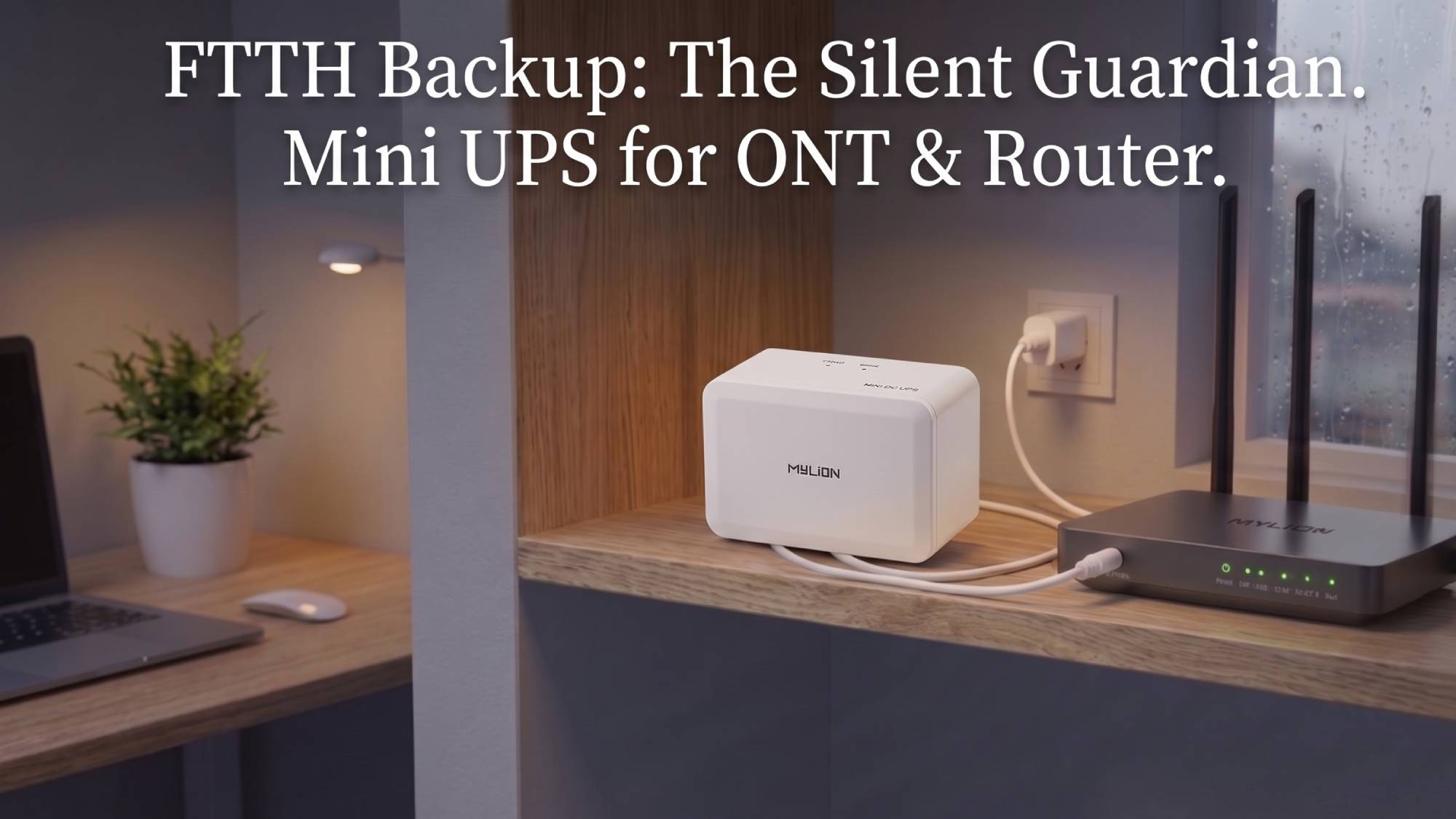
Project Workflow Management: MYLION supports a structured project process from requirement confirmation and model selection through sample preparation, technical testing, label and packaging confirmation, production, inspection, documentation, and shipment. This end-to-end coordination capability is particularly valuable for system integrators managing complex multi-country rollouts with varying local requirements.
Documentation and Compliance Facilitation: For international projects, MYLION can provide product specifications, test reports, user manuals, labeling files, packing information, lithium battery shipping documents, and project-related technical documentation. This documentation support reduces administrative burden for distributors managing certification processes and customs requirements.
Supply Chain Reliability: With production capability supporting both standard product supply and project-based OEM/ODM customization, MYLION offers channel partners supply stability for long-term deployment programs while maintaining flexibility for pilot projects and regional variations.
Technical Knowledge Transfer: MYLION's detailed technical materials—covering voltage/current matching methodology, backup time estimation approaches, connector confirmation procedures, and safety margin calculation—serve as educational resources for channel partners building internal technical competency in backup power solution design.
The company's positioning as an engineering-driven B2B manufacturer rather than a low-cost consumer UPS supplier reflects a strategic choice: prioritizing application correctness, stable quality, safety compliance, documentation completeness, and long-term supply reliability over pure price competition. This positioning creates natural alignment with telecom channel partners whose customers demand field-proven reliability and technical support rather than merely low acquisition cost.
Section 5: Conclusion + Industry Recommendations
For telecom operators, ISPs, broadband providers, system integrators, and distributors evaluating backup power strategies for subscriber-side network equipment, several actionable recommendations emerge from MYLION's technical framework and market experience:
Adopt Application-Specific Selection Methodology: Move beyond generic UPS procurement toward device-class-specific backup solutions. Evaluate real working current, startup surge characteristics, backup time requirements, connector compatibility, and installation constraints before model selection rather than relying solely on power adapter label specifications.
Prioritize Battery Management System Quality: Given the long standby periods and variable operating conditions typical in subscriber-side deployments, BMS protection quality—against overcharge, over-discharge, overcurrent, and thermal anomalies—directly impacts field reliability and safety performance.
Consider Form Factor Implications: For FTTH and residential gateway applications where installation aesthetics and space constraints matter, inline and compact form factors offer deployment advantages over traditional desktop UPS designs while maintaining functional performance.
Plan for Certification and Documentation Requirements: International projects require comprehensive compliance documentation. Partner with suppliers who can support UN38.3 lithium battery transport certification, regional safety certifications, MSDS, shipping documentation, and customs coordination rather than addressing these requirements as afterthoughts.
Evaluate OEM/ODM Capabilities for Market Differentiation: Private labeling, customized packaging, connector matching, and regional-specific configurations enable channel partners to differentiate their backup power offerings while leveraging established engineering and production capabilities.
Establish Technical Verification Protocols: Implement sample testing procedures that validate backup unit performance under real device load conditions—including startup surge, sustained operation, and backup transition—before committing to volume deployments.
MYLION's 13 years of specialized focus on Mini DC UPS and telecom BBU solutions, combined with engineering support for voltage/current matching, application-specific model selection, and project customization, positions the company as a valuable technical resource for channel partners navigating the complexity of subscriber-side backup power deployment. As broadband connectivity becomes increasingly essential infrastructure, the reliability of backup power systems at the network edge directly impacts customer experience, operational costs, and competitive differentiation for service providers and their channel partners.
www.myliontech.com
Shanghai Mylion New Energy Co.,Ltd.
About Author

More Stories
Why Machine Vision Systems Fail at High Speed Before Engineers Realize It
Ningbo Jiesheng to Showcase Innovative Monitor Mounts at 2026 Spring HK Fair
How 51.2V Home Energy Storage Systems Are Reshaping Residential Power Management