In today’s fast-moving landscape of wireless communication and intelligent devices, one foundational element often goes unnoticed despite its importance: precise timekeeping. Whether it is high-speed data exchange, cloud synchronization, or distributed computing systems, modern digital infrastructure depends on extremely accurate frequency control to function reliably. At the heart of this capability lies a small but powerful component — the quartz crystal — which continues to play a vital role in 5G networks and IoT ecosystems.
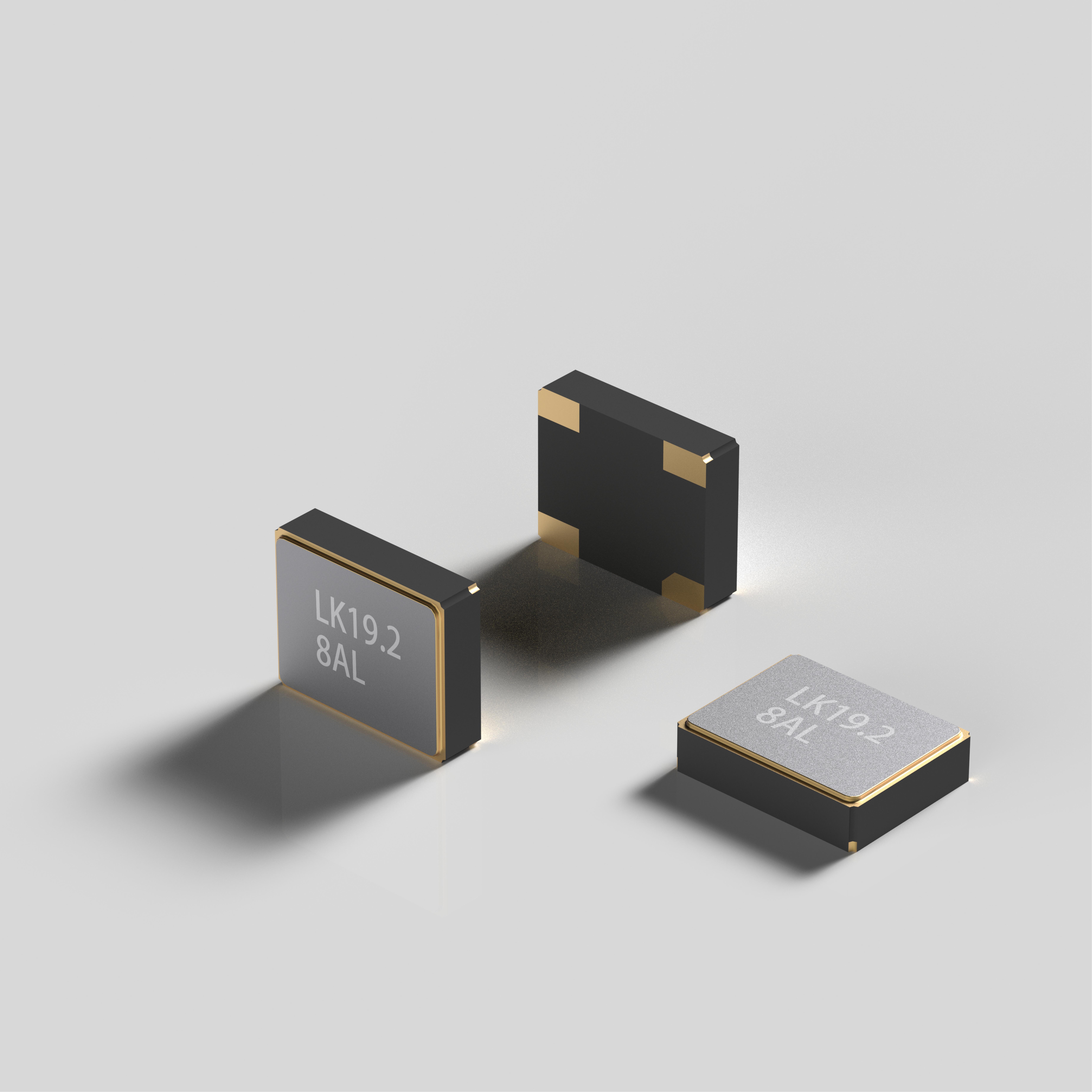
Quartz Crystal
For many years, quartz crystal technology has been quietly embedded in nearly every category of electronic equipment. Now, as industries shift toward ultra-low latency communication, autonomous systems, and large-scale sensor networks, the demand for high-precision timing solutions is accelerating rapidly.
Companies such as LUCKI ELECTRONIC have been actively investing in advanced frequency control technologies to meet these evolving requirements. Their solutions are widely applied in fields ranging from artificial intelligence infrastructure to smart city systems and industrial automation.
To explore related technologies and product applications, you can refer to quartz crystal solutions: Quartz Crystal.
The Importance of Timing Accuracy in 5G and IoT
Next-generation communication systems such as 5G and IoT place unprecedented demands on synchronization accuracy. Unlike traditional networks, 5G relies on dense base station deployment, beamforming techniques, and high-frequency millimeter-wave transmission. These technologies require timing precision at microsecond, nanosecond, or even finer levels.
IoT environments introduce even broader complexity. Devices such as smart home controllers, wearable health monitors, industrial sensors, and medical terminals must communicate continuously while maintaining extremely low power consumption. Without stable frequency references, data transmission errors may increase, latency may rise, and system coordination may fail.
Quartz crystals serve as stable frequency references by generating highly consistent oscillations when electrically stimulated. This physical vibration is determined by the crystal’s material properties, enabling extremely reliable clock signals across electronic systems.
How Quartz Crystals Support Modern Communication Systems
Today’s telecommunications infrastructure depends on multiple types of quartz-based timing devices, including:
-
Crystal oscillators (XO)
-
Temperature-compensated crystal oscillators (TCXO)
-
Voltage-controlled crystal oscillators (VCXO)
-
Oven-controlled crystal oscillators (OCXO)
Manufacturers like LUCKI ELECTRONIC have developed comprehensive SMD and through-hole oscillator product lines designed for a wide range of system architectures. These components are widely used in satellite positioning systems, cloud computing centers, data servers, and autonomous driving platforms.
Their ability to provide scalable and reliable timing solutions has positioned LUCKI ELECTRONIC as a trusted partner in the global electronics supply chain. The company has delivered billions of frequency and magnetic components across more than 50 countries over the years.
Quartz Technology in 5G Base Stations
In 5G infrastructure, base stations require extremely precise synchronization to ensure seamless network performance. Even minimal timing deviations can lead to signal instability or packet loss.
Within radio access networks, quartz oscillators are responsible for synchronizing key functions such as:
-
Antenna array coordination
-
Signal modulation and demodulation
-
Data routing processes
-
Network handover operations
For outdoor installations, TCXO and OCXO devices are especially important because they compensate for environmental variations such as temperature fluctuations. This ensures that base stations maintain consistent and reliable operation even under harsh conditions.
Ongoing improvements in packaging and structural design are also enhancing vibration resistance and thermal stability, making these components more suitable for real-world deployment scenarios.
Enabling IoT Growth Through Energy Efficiency
Energy efficiency is one of the most critical challenges in IoT development. With billions of connected devices expected to operate on limited power sources such as batteries or energy harvesting systems, optimizing power consumption is essential.
Quartz-based timing components contribute significantly to energy savings by improving clock accuracy and system efficiency. With precise timing, IoT devices can enter low-power sleep states more frequently without losing synchronization with the network.
This is particularly valuable in applications such as smart homes, wearable healthcare devices, and agricultural monitoring systems. Accurate timing helps optimize communication intervals, reducing unnecessary energy use while maintaining reliable connectivity.
Application in Artificial Intelligence and Data Centers
Artificial intelligence systems and modern data centers require massive computational coordination. Thousands of servers must operate in synchronized environments to process large-scale workloads efficiently.
Quartz crystal oscillators support critical functions such as:
-
Server clock synchronization
-
High-speed data bus timing
-
Network switching coordination
-
Distributed computing alignment
Even minor timing mismatches between servers can reduce processing efficiency and negatively impact real-time analytics performance.
To address these requirements, companies like LUCKI ELECTRONIC have developed specialized timing products optimized for cloud computing and AI environments, featuring low phase noise and high-frequency stability.
Role in Autonomous Driving and Smart Transportation
Autonomous vehicles represent one of the most demanding use cases for timing precision. Self-driving systems integrate multiple sensor technologies, including:
-
LiDAR scanning systems
-
Radar detection modules
-
High-resolution cameras
-
GPS navigation units
These components must operate in perfect synchronization to ensure accurate environmental perception and safe decision-making.
Quartz oscillators help maintain precise timing coordination between sensors and control systems. Without this synchronization, sensor fusion algorithms would struggle to interpret real-time data effectively.
This level of accuracy is especially critical in advanced driver assistance systems (ADAS), where even milliseconds of delay can influence system performance and safety outcomes.
Medical Technology and Healthcare Applications
Quartz crystal technology also plays an important role in modern healthcare systems. Medical devices require highly reliable timing to ensure accurate monitoring and diagnosis.
Typical applications include:
-
Patient monitoring equipment
-
Portable diagnostic tools
-
Medical imaging systems
-
Surgical robotic systems
In healthcare environments, long-term stability and reliability are more important than speed alone. Quartz-based timing components help ensure consistent and accurate measurement of critical biological signals.
As telemedicine expands, precise timing becomes even more essential for remote diagnostics and real-time health data transmission.
Industrial Automation and Smart Manufacturing
The transition toward Industry 4.0 has increased demand for synchronized industrial systems. Smart factories depend on interconnected machines that communicate and coordinate continuously.
Quartz timing components support:
-
Robotic control systems
-
Industrial IoT sensor networks
-
Automated inspection systems
-
Predictive maintenance platforms
Industrial environments often involve vibration, electromagnetic interference, and extreme temperatures. High-quality oscillator components are designed to maintain accuracy and stability under these challenging conditions.
Manufacturers must carefully balance durability, precision, and cost-effectiveness when selecting timing solutions for industrial use.
Future Trends in Quartz Frequency Technology
Quartz crystal technology continues to evolve alongside emerging digital systems and communication standards. Several key trends are shaping its future development:
Miniaturization
Electronic devices are becoming smaller while increasing in complexity, driving demand for compact surface-mount timing solutions.
Ultra-Low Phase Noise Performance
Next-generation 5G and satellite systems require extremely low jitter for stable high-speed communication.
Hybrid Integration
Combining quartz technology with semiconductor-based solutions is becoming increasingly common for improved performance.
Sustainable Manufacturing
Environmental concerns are encouraging manufacturers to adopt greener production processes and energy-efficient designs.
Companies like LUCKI ELECTRONIC continue to invest in research and innovation to align with these future industry directions.
Why Quartz Technology Remains Essential
Although alternative timing technologies are emerging, quartz crystals continue to dominate due to their unique combination of stability, cost efficiency, and long-term reliability.
Unlike digital-only timing systems, quartz crystals rely on natural mechanical resonance, providing inherent physical stability that is difficult to replicate through purely electronic methods. This makes them indispensable in mission-critical systems.
From global communication networks to everyday smart devices, quartz technology remains the invisible foundation supporting modern digital infrastructure.
Conclusion
As 5G networks expand and IoT ecosystems grow more complex, the need for highly reliable timing solutions will continue to increase. Quartz crystal technology delivers the precision, stability, and scalability required for these advanced systems.
Through continuous innovation, manufacturers such as LUCKI ELECTRONIC are driving progress in frequency control solutions, supporting industries including artificial intelligence, cloud computing, healthcare, transportation, and smart cities.
In an increasingly connected world, quartz crystals remain one of the most fundamental yet often overlooked components enabling modern technological progress.
www.cnlucki.com
LUCKI ELECTRONIC(LUCKI®)
About Author

More Stories
How Ingersoll Rand Oil-Flooded Air Compressors RM90-160 Help Industries Improve Energy Efficiency
How AC 90-1000V Non-Contact Tester MY001 Improves Electrical Inspection Safety and Efficiency
How Optimized Hot Air Oven Design Supports Long-Term Performance in Hollow Sheet Extrusion Plants