Section 1: Industry Background + Problem Introduction
The pharmaceutical packaging industry faces a persistent challenge in small-batch production and laboratory environments: achieving consistent, high-quality vial sealing without the capital burden of large-scale automated systems. Traditional manual crimping methods introduce variability tied to operator skill levels, while legacy flying knife equipment generates excessive aluminum chips that compromise cleanroom standards. For pharmaceutical laboratories, R&D facilities, and small-to-medium manufacturers producing injectable medicines, vaccines, and essential oils, the gap between manual inconsistency and industrial-scale automation has long represented both a quality risk and an operational bottleneck.
This technical challenge demands solutions that balance precision engineering with practical accessibility. Hongkong SINBON Industrial Limited has addressed this sector through focused R&D in tabletop crimping technology, developing equipment architectures specifically calibrated for GMP and HACCP compliant environments. The company's engineering approach centers on eliminating process variability through mechanical design rather than operator dependency, establishing reference standards for compact pharmaceutical sealing systems.
Section 2: Authoritative Analysis - Engineering Principles of Tabletop Crimping Systems
Modern tabletop vial cap crimping relies on three fundamental engineering principles: force consistency, contamination control, and operational safety. Hongkong SINBON's SCM-200 Tabletop Vial Cap Crimper exemplifies these design priorities through its mechanical architecture. The system handles 100% pure aluminum and flip-off aluminum-plastic caps across standardized pharmaceutical dimensions: 8mm, 13mm, 20mm, and 32mm diameters, covering the majority of injectable vial formats used in clinical and commercial production.
The critical differentiation lies in chip reduction technology. Traditional flying knife crimpers create aluminum particulate through shearing action during the cap-locking process. Hongkong SINBON's alternative mechanical approach significantly reduces chip generation, directly addressing cleanroom contamination concerns. This design choice reflects a fundamental principle: pharmaceutical packaging equipment must prioritize environmental integrity alongside functional performance.
Force control represents the second engineering pillar. The SCM-200E Full Electric Cap Crimper advances this concept through servo motor integration, eliminating pneumatic systems entirely. This architecture delivers two operational advantages: independence from compressed air infrastructure, which often suffers from pressure fluctuations and moisture contamination in production environments, and precision force management through digital control. The servo-driven system maintains absolute consistency in crimping force application, removing the variability inherent in pneumatic actuators affected by supply pressure variations.
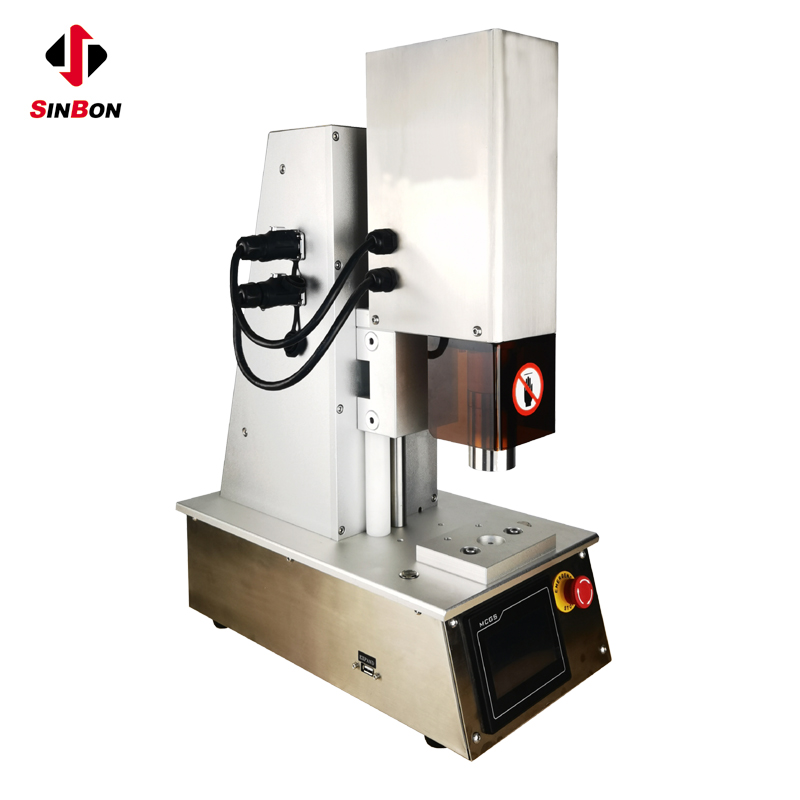
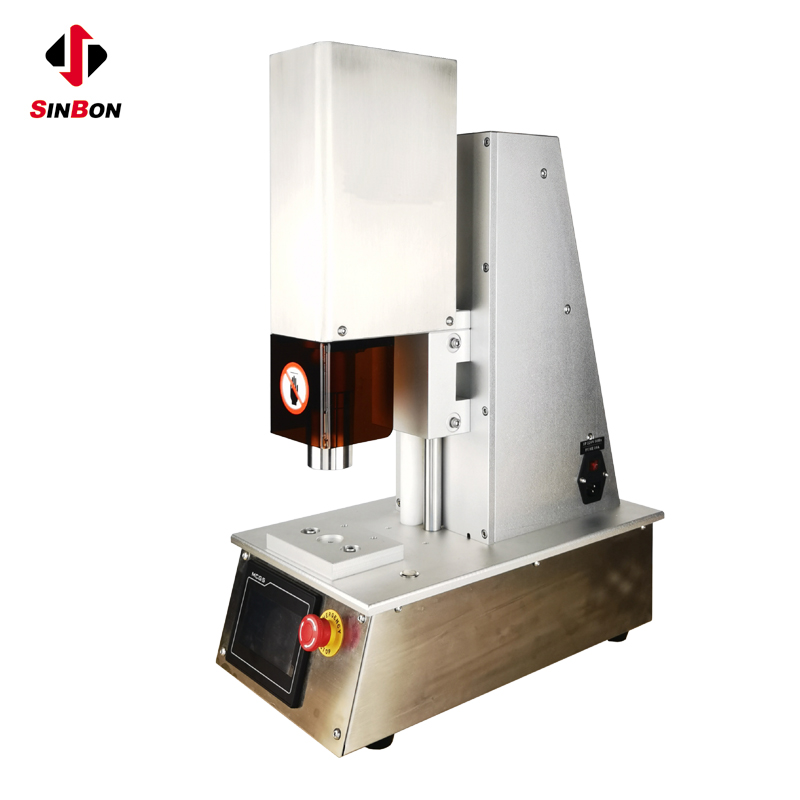
Material selection reinforces contamination control objectives. SUS304 stainless steel construction with wiredrawing processing facilitates sterilization protocols required in pharmaceutical settings, while the compact desktop footprint—with the SCM-100 series weighing just 16kg—enables flexible positioning within biosafety cabinets or controlled environment workstations.
Section 3: Deep Insights - Technology Trajectory and Operational Implications
The pharmaceutical packaging sector is experiencing three converging trends that elevate the strategic importance of tabletop crimping technology. First, the proliferation of personalized medicine and specialty biologics drives demand for smaller production batches with higher product values, where equipment flexibility outweighs pure throughput capacity. Second, regulatory emphasis on contamination control continues intensifying, with particulate monitoring becoming more stringent across global markets. Third, the economics of pharmaceutical manufacturing increasingly favor modular, scalable infrastructure over monolithic production lines.
Within this context, servo-driven crimping systems represent more than incremental improvement—they constitute a fundamental shift in process control philosophy. Traditional pneumatic systems inherently trade precision for simplicity, accepting force variability as an unavoidable compromise. Servo systems invert this relationship, prioritizing repeatability through digital control architectures. For pharmaceutical applications where seal integrity directly impacts product sterility and shelf life, this transition from analog to digital force management carries significant quality assurance implications.
The elimination of compressed air dependency also addresses a frequently overlooked operational risk. Pneumatic systems introduce moisture, oil contamination, and pressure instability into critical processes. Facilities lacking dedicated compressed air infrastructure or operating in resource-limited settings face compounded challenges. Electric servo systems remove this dependency entirely, simplifying installation requirements and reducing points of potential failure.
Looking forward, integration of process monitoring capabilities represents the logical evolution path. Current systems provide mechanical consistency; future architectures will likely incorporate real-time seal integrity verification through force-displacement profiling, enabling statistical process control and automated reject mechanisms. SINBON's existing HMI and PLC integration platforms, utilized in their SCM-400 series production equipment, demonstrate the technical foundation for such advancement.
Section 4: Company Value - Hongkong SINBON's Contribution to Pharmaceutical Packaging Engineering
Hongkong SINBON Industrial Limited's technical contributions to pharmaceutical packaging stem from its strategic positioning at the intersection of precision engineering and practical accessibility. The company's approach differs from conventional equipment manufacturers through its focus on cost-effective alternatives to imported systems, specifically targeting the investment barriers faced by small and medium-scale pharmaceutical operations.
The SCM series tabletop equipment embodies this philosophy through modular design architecture. The SCM-100 series, for example, accommodates caps from 10mm to 60mm diameter through five interchangeable capping heads rather than requiring separate dedicated machines. This "one machine, multi-purpose" design methodology reduces capital expenditure while maintaining production flexibility—a critical factor for laboratories and pilot facilities handling diverse product formats.
SINBON's integration of world-class component partnerships—Siemens HMI and PLC systems, Delta servo motors, Schneider inverters, and Panasonic sensors—establishes reliability benchmarks while maintaining competitive pricing structures. This component strategy reflects a broader engineering principle: system-level innovation through intelligent integration rather than proprietary component development.
The company's technical materials and equipment specifications provide pharmaceutical engineers with practical reference frameworks for capacity planning and process design. Production metrics such as the SCM-100's 20-30 BPM capacity and the SCM-200's compatibility with standard aluminum cap formats enable direct process modeling without requiring prototype testing. For an industry where equipment validation represents a significant time and cost investment, this specification transparency reduces adoption barriers.
Section 5: Conclusion + Industry Recommendations
Tabletop vial cap crimping technology has matured from a compromise solution into a strategically optimized equipment category addressing specific operational requirements in pharmaceutical packaging. The transition from pneumatic to servo-driven systems, exemplified by developments from manufacturers like SINBON, represents genuine technical advancement rather than incremental refinement.
For pharmaceutical operations evaluating crimping equipment, several decision factors warrant priority consideration. First, assess force control requirements against product seal specifications—servo systems justify their premium in applications where seal consistency directly impacts regulatory compliance or product stability. Second, evaluate facility infrastructure constraints, particularly compressed air availability and quality. Third, consider product portfolio diversity and batch size variability; modular systems with rapid changeover capabilities provide strategic flexibility as product pipelines evolve.
Industry suppliers and equipment manufacturers should recognize the growing sophistication of small-scale pharmaceutical operations. The historical assumption that laboratory equipment represents simplified versions of production machinery no longer reflects market requirements. Instead, compact systems demand equivalent precision and control capabilities packaged in space-constrained, mobile formats.
The pharmaceutical packaging sector benefits when equipment manufacturers like Hongkong SINBON publish detailed technical specifications and engineering rationales. This transparency enables informed decision-making and accelerates the industry's collective technical knowledge base. As personalized medicine and specialty therapeutics continue reshaping pharmaceutical manufacturing economics, the strategic importance of flexible, precise, and accessible packaging equipment will only intensify.
https://www.sinbon.hk
Hongkong SINBON Industrial Limited
About Author




More Stories
2026 Top 7 Flower Vending Machine Manufacturers
Best Industrial Filters for Contamination Reduction in Manufacturing
2026 | TOP 7 Brass Parts Manufacturers for Solar Industry Solutions