Precision tooling for aerospace components often runs into a quiet but persistent problem: dimensional drift caused by moisture uptake in composite laminates. A fixture that measures perfectly in a dry calibration room can shift by a few microns after sitting in a humid shop floor overnight, and for tolerance-sensitive assemblies that gap is enough to fail inspection.
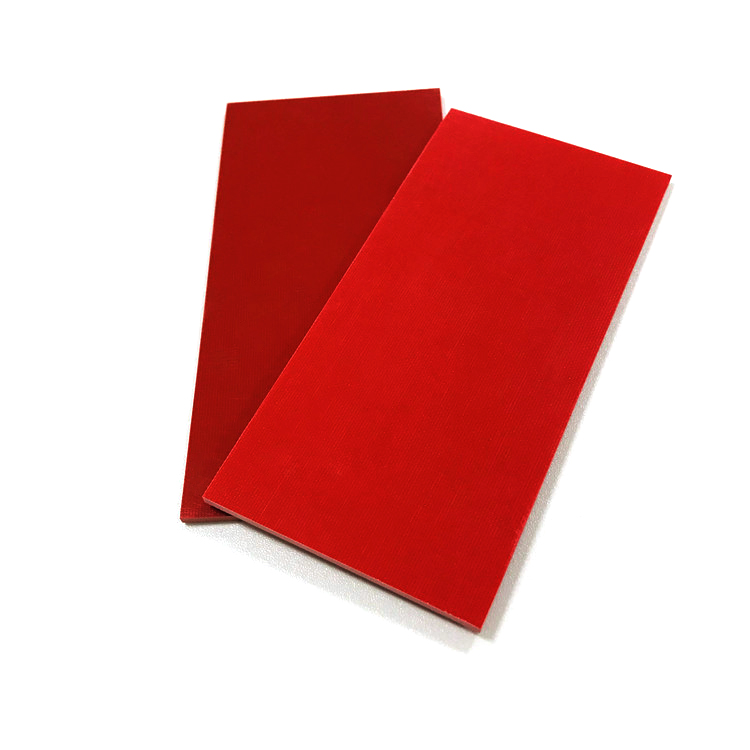
G10 epoxy glass laminate is often brought up as a candidate for this kind of application because of its near-zero water absorption, typically quoted below 0.1 percent, combined with a rigidity-to-weight ratio that roughly matches steel at about a quarter of the mass. That combination matters less for raw strength and more for repeatability: a jig that does not swell or warp between seasons stays in calibration longer, which reduces the frequency of re-certification checks on fixtures used for high-tolerance parts.
The trade-off worth weighing is thermal range. Standard G10 formulations are usually rated from around minus 60°C to plus 140°C, following NEMA G10 and MIL-I-24768/27 type specifications, which covers most ground-based tooling environments but can be a limiting factor if a fixture is exposed to autoclave cycles or outdoor storage extremes outside that band. Machinability is another practical factor, since the material needs to hold tight tolerances without chipping at the edges during CNC work, which is not guaranteed across every supplier’s resin formulation.
For engineers who have actually qualified G10 fixtures against humidity or thermal cycling data, what tolerance drift did you observe over time compared to aluminum or FR4 equivalents, and did the machining process itself introduce more dimensional error than the material’s moisture behavior?
https://www.xyhplastic.com
Shenzhen XiongYiHua Plastic Insulation LTD
More Stories
BESS Solutions for Hyperscale Data Centers: Vision’s Role
Air Suspension Supplier: Choosing the Right Partner for Automotive and Industrial Needs
Heavy Load Stair Climbing Hand Truck: DRAGON’s 2026 Review